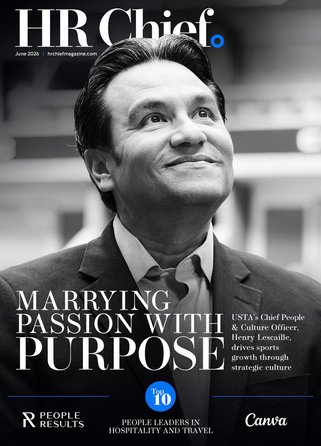
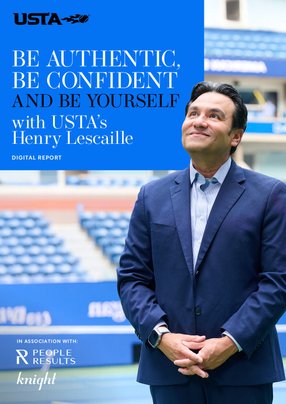
At 145 years old, the United States Tennis Association (USTA), which this year celebrates its 145th anniversary, is the national governing body for the sport in the US. It is an institution that has managed to balance a long and storied history with cutting-edge innovation and unparalleled forward thinking to establish itself as a globally respected entity. The USTA has become a model – not just for other sporting associations but for all businesses with its singular fusion of culture and people. Maintaining and strengthening that delicate blend is a challenge that sits squarely on the desk of Henry Lescaille, the USTA’s Chief People & Culture Officer.
The USTA functions as a non-profit but possesses the commercial power of a global sports brand. Lescaille describes this synergy as a “profitable engine” that exists to fuel a “noble mission.” As he explains: “The USTA has this very noble mission, which is growing tennis to inspire healthier communities and people everywhere. It isn’t just growing tennis for revenue or simply for the viral popularity of a sport, but to truly improve the communities that we live in and enhance the lives of those who make up those communities.”
Since joining the USTA, Henry’s primary objective has been to “add the why to the what.” While the organisation’s core focus is to facilitate the growth of the sport, Henry has worked to ensure that the workforce is aligned under a singular North Star.
As Henry explained to HR Chief Magazine: “The notion that we are a not-for-profit, but still have this very profitable engine that allows us to do this great work was also very compelling to me. Marrying a personal passion – tennis – with a role that allows me to explore purpose and mission was too exciting to pass up.”
Scaling quickly at mass
With more than 500 year-round employees, the USTA is required to undergo a massive, temporary expansion of that employee base each year as it stages the US Open – one of professional tennis’ four major events. Henry likens the tournament to an “enormous bake sale” – or a high-stakes commercial engine that funds the organisation's mission-driven work for the rest of the year. Executing this spectacular event requires increasing the USTA workforce by thousands in a matter of weeks to fill the enormous number of roles required to stage one of the world’s largest sports and entertainment events.
The process is a high-precision recruitment cycle that begins months before the first serve. As Henry explains: “We’ve got an incredible operations and talent acquisition team. They will scale leveraging the seasonal recruiting team – led by David Konecky – and several partners in the marketplace. They come together generally six months before the US Open and with this incredible team that, again, maintains that USTA premium service standard.”
To manage this scale, the USTA leverages data-driven systems to handle the “logistical coordination of thousands of interviews”, ensuring that every seasonal hire is properly vetted and aligned with the event's high expectations.
“We need to make sure we can get the right folks onboarded, background checked and that we can provide critical orientation because we want to make sure they understand the US Open isn’t just an event; it’s an experience,” Henry says. “It’s everyone’s job to make sure each guest, vendor and business partner enjoys themselves and feels well taken care of.”
A human-centred digital pivot
As the USTA navigates the complexities of the modern sports landscape, Henry is focused on redefining the intersection of human capital and technology. Rather than viewing automation as a threat to the workforce, Henry views it as a strategic tool to refine precision and employee satisfaction. This “digital and data-first pivot” is less about replacing roles and more about utilising data to make the massive scale of the US Open manageable for the people running it, and supporting the incredible work happening in areas of the organisation focused on growing participation.
However, Henry is clear that data analytics and AI integration are an educational process for the organisation, not just a technical one. “AI and data analytics are a core part of how that process is educated,” he explains.
By leveraging real-time insights, the USTA can optimise everything from crowd flow to resource allocation during the tournament, providing a greater experience for its customers.
The most profound shift, however, is cultural, as the organisation views the adoption of AI – both at the US Open and in the everyday operations of the USTA – as a major change management initiative. “I don't see AI simply as a technology. It's impacting the flow of work. It's so much broader than just a technology,” Henry says. To demystify AI, the USTA launched internal learning campaigns centred on a core message from Natalia Pedroza, Head of L&D: “Learning and AI can make your job easier, better and more impactful.” It’s a small effort for a massive return.
By encouraging the workforce to understand “how AI could be incorporated into the day-to-day to make jobs better,” Henry and the People and Culture team are fostering a culture that embraces innovation as a means to “introduce greater joy and inspiration into your day-to-day.”
DEI as a growth engine
DEI can often be a secondary metric or a compliance requirement for organisations, but for the USTA, it is the primary driver of market expansion. This focus is encapsulated in the US Open’s “Be Open” campaign, which is a movement that begins as a public-facing celebration of diversity during the tournament and translates into an internal mandate for long-term growth of the association and the sport it oversees.
The USTA’s primary goal is to grow tennis by removing barriers to entry – thus, making it inclusive and accessible to all. “Be Open is really the celebration of our aspiration of inclusion," Henry explains. “We want every single person to feel that tennis is for them. We want every single person to feel these outstretched arms that bring them into the sport.”
To bring this to life during the US Open, the USTA offers dedicated programmatic activities, including Asian American Pacific Islanders (AAPI) Day, Pride and Latine culture celebrations, and events honouring Historically Black Colleges and Universities (HBCUs) and those with disabilities.
However, Henry is quick to point out that these are not merely “viral moments” for social media; they are the front end of a data-backed strategy to diversify the sport. “How do we know whether we're successful? Well, the proof is in the pudding,” he asserts. “The Annual Tennis Participation Report, based on data from the Physical Activity Council (PAC), shows participation growth in each of these communities.”
The results are tangible. “The fact that there are more Latinos playing tennis than ever before, the fact that there's more Asian Americans playing tennis than ever before – that’s something that Marisa Grimes, our Chief Diversity Officer, and the entire Diversity, Equity & Inclusion team have worked on, which we’re incredibly proud of.”
“And while the work that happens at the US Open (“Be Open”) is impactful, it’s all the work the team does throughout the year that makes an even greater impact.”
Sustaining performance under pressure
While the “spectacular” of the US Open lasts three weeks, the “heavy lift” requires care and attention throughout the year. In a high-performance environment where the pressure can be 24/7, maintaining workforce resilience is a strategic priority.
To achieve this, the USTA’s People and Culture team has moved beyond traditional benefits to look at “holistic employee health.” They have implemented a framework centred on four distinct quadrants: physical, emotional, psychological and financial wellbeing. “We’ve now looked at the four quadrants of health and have optimised these offerings so that our employees are able to enjoy a more holistic wellbeing experience while at the USTA," he explains.
“We also have a comprehensive health wellness, and specifically mental wellness programme that provides proactive support. So before individuals are in the ‘crunch’ period event, we provide tools and resources that could help them prepare and to take some of the pressure off.”
Outside of the US Open each year, the innovation continues with “Refresh Weeks,” where the entire organisation shuts down for select weeks to ensure employees can truly disconnect and recharge.
The future of sports leadership: from policy to culture
As the USTA looks toward its next decade, Henry is redefining the CPO role by shifting the focus from “HR and policy” to “people and culture.” This evolution is a strategic necessity when competing for top-tier talent against tech, sports and entertainment giants.
“Changing the title from HR to People and Culture speaks to the fact that there's been an evolution where we look to optimise and automate our day-to-day practices, such that we can focus more on what really matters – finding ways to engage people through the richness of the work, our mission and the culture of our organisation,” Henry notes.
He acknowledges that while the USTA pays competitively, its “secret weapon” is the cultural experience it offers. “If I can't compete with you on a salary, I can absolutely compete with you on leadership, cultural and work experience,” he says. “At the end of the day, every research study I've read and considered in my work establishes that that's ultimately what keeps employees with a company. It’s what keeps them happy and engaged.”
By leveraging the USTA’s 145-year legacy while maintaining the agility of a modern organisation, Henry has turned “culture” into a measurable business metric, citing that organisations with good engagement practices are “two times more profitable.”
Ultimately, by “adding the why to the what,” Henry and his team ensure that whether someone is an elite coach or a community volunteer, they are united by a singular purpose: building a healthier, more inclusive future through the power of sport.
Company portals

Executives
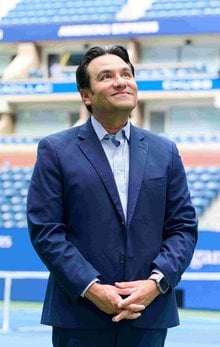
Henry Lescaille
Global CHRO