Why Life-Work Balance Now Tops Salary as Employee Priority

The way organisations approach employee wellbeing is undergoing a fundamental change, with many businesses rethinking traditional assumptions about what drives workforce satisfaction and productivity.
Remote, the human resources technology platform, has identified this evolution in its latest research.
The company argues that the familiar concept of work-life balance has been replaced by life-work balance, suggesting that in an era of rapid technological advancement and changing societal expectations, personal life must take precedence and work should adapt accordingly.
The platform's Global Life-Work Balance Index reveals that Europe is leading this transformation.
According to the index, seven European countries secured positions in the top 10 for 2025, with 16 European nations appearing in the top 20.
Europe leads global shift
Following this, remote examined several critical workforce factors to compile rankings for its European Life-Work Balance Index 2025, including statutory leave entitlement, minimum wage, healthcare access and average working hours. Each European country received a score out of 100.
The top five positions are held by Ireland, Iceland, Belgium, Denmark and Germany.
This European dominance could reflect a broader trend. According to international recruitment company Randstad's annual review of thousands of employees, life-work balance has ranked as the top priority over salary for the first time in 22 years.
However, Remote notes that while some nations are implementing strong employee-centric policies, others maintain more outdated approaches.
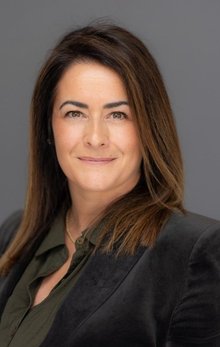
Barbara Matthews, Chief People Officer at Remote, says: "In 2025, the idea that productivity must come at the expense of our health or our personal time is being challenged in a serious way.
"This is especially the case across Europe, where policies are starting to reflect the simple truth that people are not machines. But life-work balance is about more than just working fewer hours."
Top performers set standards
Ireland leads the rankings for the second consecutive year with an index score of 82.89. According to Remote, the country's score improved by over four points, attributed to an increased public safety score ranked by the Global Peace Index and a shorter than average working week.
The Nordic countries continue to perform strongly. Iceland, Denmark, Norway and Finland all appear in the top 10, with these nations known for being among some of the happiest countries globally.
Iceland, ranking second, offers an annual leave entitlement of 40 days including public holidays.
Belgium has broken into the top three for the first time since the study launched in 2022, having placed fourth last year.
Remote attributes this to a significant jump in minimum wage, now equivalent to US$14.58 per hour, positioning it among the highest behind Luxembourg, the UK and Germany.

Understanding modern balance
The Netherlands has achieved the shortest average working week of any European country at 30.5 hours, contrasting sharply with Montenegrin employees who work an average of 43.5 hours.
Finland retains its position as the happiest country in the continent, emphasising the importance of gender equality and social support.
Remote acknowledges that life-work balance means different things across cultures. The study aims to highlight core statutory benefits and workplace systems that support this balance, while recognising several external factors that affect it:
- Hybrid and remote work offer increased flexibility, but as homes become offices it can be harder to switch off.
- Rising living costs, inflation and job security force many people to overextend themselves to stay afloat.
- Most households juggle work with some form of care in 2025, whether raising children or supporting ageing family members, and without support policies something has to give.
- Younger generations entering workforces are reportedly rejecting hustle culture, and forward-thinking companies are listening to the demand for living not just working.
Barbara added: "Employees must be given the time, space, and trust to live fully. When people feel like their lives outside of work are respected, they show up with more focus and resilience. And that's clearly good for business."
Company portals

Executives
Barbara Matthews
Chief People Officer