How will the CHRO role evolve in the next five years?

Although 89% of employers acknowledge that the HR function must evolve to meet changing talent and business needs, only 32% of organisations currently possess a talent advantage, according to market insights from EY.
This research suggests that, with HR becoming increasingly more central to business success, HR leaders must be prepared for the way the workforce is set to evolve, and ensure they have a strategy in place to successfully navigate it.
EY recommends that leaders strengthen the business, technology and humanistic capabilities within their organisations, while companies as a whole should place human resources as a central part of their overall strategy.

Human resources as a business critical function
Research from EY finds that, while 85% of employers feel that having a strategic HR function is crucial for business success over the next five years, 89% feel that the HR function within their organisation will need to change significantly to do so.
To successfully evolve a business’s approach to HR, leaders surveyed by EY put forward three areas of expertise that CHROs should focus on building: an understanding of financial and operational metrics, a strategy to integrate technology to enhance employee engagement and a cultivation of emotional intelligence to improve employee advocacy.
Businesses that prioritise their people in this way are more likely to deliver business success, with 78% of companies that take care of their employees likely to provide better products and services, according to a survey conducted by Morning Consult.
This success can be seen at Hilton, which was named the No.1 World’s Best Workplace by Fortune in 2025.
Discussing this recognition Laura Fuentes, Chief Human Resources Officer at Hilton, says: “We know that a culture begins on growth and opportunity doesn’t just create great careers but also creates great guest experiences.
“By building a culture where team members feel seen, welcomed and a part of something greater than themselves, we’re empowering our team members to deliver exceptional service and drive our business forward.”
HR to leverage technology and drive transformation
Insights from EY demonstrate that technology is set to transform the very definition of work. To ensure businesses remain competitive, HR leaders must proactively drive innovation, particularly when it comes to AI integration.
EY reported that AI and Gen AI were the top two technologies leading executives expect to change the employee experience in the next five years, and recommends that HR leaders take advantage of the opportunity AI provides to deliver additional business value.
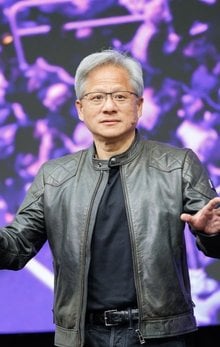
Many leading organisations are prioritising AI integration in their digital strategy, with NVIDIA CEO Jensen Huang suggesting in an interview with Citadel Securities in October 2025 that agentic AI will be employed like people in future.
He says: “I wouldn’t be surprised if you licence some and you hire some, depending on the quality and depending on the deep expertise.
“So future workforces in enterprise will be a combination of humans and digital humans.”
Managing shifts in workforce dynamics
By 2030, the global talent shortage is projected to exceed 85 million people, says EY, meaning that organisations urgently need to rethink their talent strategies.
The report finds that 70% of employers are raising a need for talent with new skills to meet emerging business needs to enhance performance – suggesting that talent acquisition strategies need to be more aligned with the wider organisation.
EY recommends that CHROs shift their focus from roles to skills-based hiring, and provide more clarity to talent on what the organisation needs to deliver through skills development and personalised career pathways.
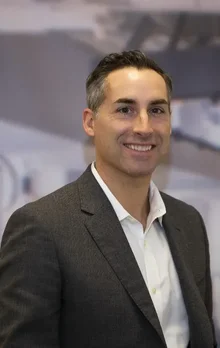
Commenting on these insights Joe Dettmann, PhD, Global People Experience Solution Leader at EY, says: “We can’t accomplish new things with old ways of working – it’s time to update how we lead and how we work. Tech disruption and social trends can be a threat, or an opportunity.”



Executives
Jensen Huang
Founder and CEO
Joe Dettmann
Global People Experience Solution Leader

Laura Fuentes
EVP, Chief Human Resources Officer and Hilton Supply Management