

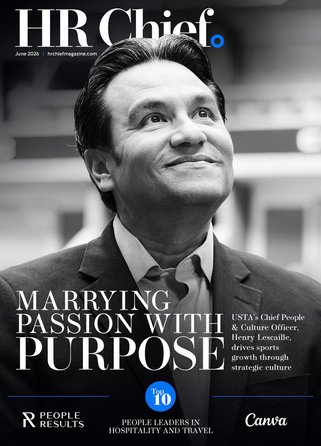
Be authentic and be confident with USTA’s Henry Lescaille
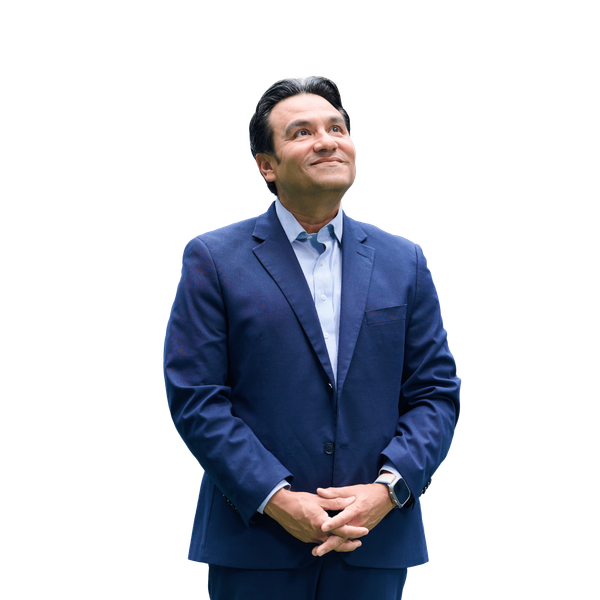
Be authentic and be confident with USTA’s Henry Lescaille
Henry Lescaille, the Chief People & Culture Officer at the USTA, operates at a unique intersection of rigorous data science and radical human authenticity. While many executives lean on either “soft skills or hard data,” Henry’s background combines a mastery of both. He holds a Bachelor’s degree from NYU in Business, Marketing and HR, but it is his MBA from the Muma School of Business (USF) – specifically focused on data and analytics – that provides the mathematical backbone for his leadership style. For Henry, data isn't just a reporting tool; it is a way to listen more effectively to the people he serves.
The Power of Presence
In an era defined by digital distraction, Henry’s greatest self-professed quality is his commitment to being “in the moment.” He views presence as a form of respect and a leadership tool. “I lean into every conversation I have,” he says. “I’m in the moment, and because I’m in the moment, I can provide others with the best possible counsel because I’m there with them.”
This philosophy of “leaning in” extends to his advice for the next generation of leaders. Henry is an advocate for the “Be You” mantra, emphasising that authenticity is a leader’s most valuable currency. His career has been guided by a simple but profound set of rules: “Be you, be authentic, and be confident, but don't be cocky. Confidence is attractive, cockiness is not.”
Navigating the Human Element
Despite his data-driven MBA background, Henry remains candid about the personal challenges of high-level leadership. He admits that even with evidence of success, the human ego is a delicate instrument. “I spend a lot of time on data, and sometimes it's the one comment where someone isn't happy that resonates most powerfully with me,” he reveals. “There can be nine really good comments, but the one negative thing... that can weigh me down, and that's something that I need to continue balancing.”
This vulnerability is what makes Henry’s leadership effective. He manages a macro-challenge that few in history have faced: architecting engagement practices that satisfy five different generations at work simultaneously. It is a logistical and cultural puzzle that requires a leader who is comfortable being both a teacher and a student. “Be humble in terms of recognising what you do not know,” he advises. “I want people to feel comfortable enough to ask someone who knows the subject matter, ‘Hey, teach me about this”
A Collaborative Success
While Henry has led the USTA to historic highs in employee satisfaction and onboarding ratings, he is quick to deflect the praise. For Henry, the “perfect work situation” isn't a top-down mandate; it's a co-creation. “I don't necessarily take credit for it,” he insists. “I give the credit to my team, to these partners and ultimately to the employees in helping to create the best version of the USTA working experience.” Through a blend of USF-trained analytics and NYU-rooted business savvy, Henry continues to prove that in the business of people, the most important data point is the human voice.
Honouring a 145-year legacy
When Henry joined the USTA, he wasn't looking to reinvent the wheel; he was looking to electrify it. As the organisation's first-ever Chief People & Culture Officer, Henry was tasked by the CEO to set people and culture at the centre of the strategy table. His objective was clear: “Adding the why to the what.”
Henry views the future of work, including the integration of AI, not as a technological threat but as an opportunity for joy. His internal campaigns emphasise that learning can make a job “10% better,” helping the organisation embrace innovation with agility.
By grounding a 145-year legacy in modern empathy and analytical precision, Henry Lescaille ensures the USTA’s mission remains vibrant. He proves that when leadership prioritises authenticity and the human voice, even the most traditional institutions can evolve into high-performance cultures built for the future.
Company portals

Executives
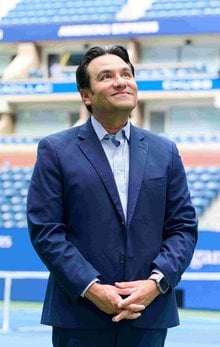
Henry Lescaille
Global CHRO
- How Highly Engaged Employees Improve Business PerformanceEmployee Experience
- How Apple Built a Culture of High Performance Over 50 YearsEmployee Experience
- Why Salesforce's 'Ohana' Culture is Driving Business GrowthHR Strategy
- Are Human Capabilities the Key to Business Success?Organisation & Culture