
Gartner: Why CHROs Must Accelerate Learning and Development

Research from Gartner predicts that 30% of businesses will face worsening decision-making quality because of organisations relying too heavily on AI.
This stems primarily from a lack of training for early career talent using AI – with Gartner anticipating an increase in errors, fewer opportunities to learn skills due to rising automation and weakening talent pipelines.
To combat this, the organisation encourages CHROs to build up learning and development opportunities for junior employees within their companies.
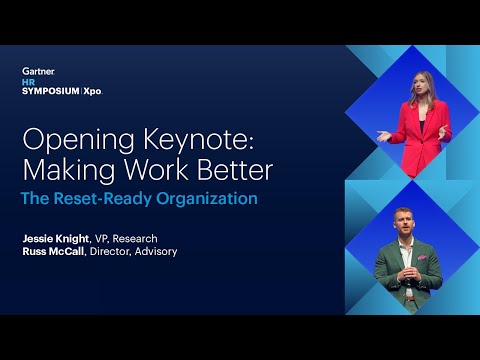
The impact of AI on the workforce
Industry leaders are anticipating significant workplace changes thanks to AI.
Jensen Huang, CEO of NVIDIA, shared in an October 2025 interview with Citadel Securities that he believes AI will one day be employed in the same way as people.
He said: “I wouldn’t be surprised if you licence some and you hire some, depending on the quality and depending on the deep expertise.
“So future workforces in enterprise will be a combination of humans and digital humans.”
Jensen has also encouraged widespread use of AI across his organisation, telling managers in a meeting reported on by Business Insider that “if AI does not work for a specific task, use it until it does.”
Gartner suggests that, while AI is changing the way people work, it is not impacting employees ‘consistently’.
The organisation suggests the approach employees take to AI usage can be split into four groups.
- Protégés: Early career talent in judgement-heavy roles. Gartner says those who fall into this group may struggle to accurately assess the quality of AI output without proper training.
- Maestros: This group encompasses more experienced employees, who are using AI to enhance their work.
- Keystones: Similar to protégés, this group has less workplace experience, but finds themselves in support roles rather than judgement-based work. Gartner suggests that, with training, this group can learn to execute work better with Gen AI.
- Stewards: More experienced employees, this group is seeking to boost efficiency with AI.
Kaelyn Lowmaster, Director, Research, at Gartner HR Practice, says: “Employees should be aware of the potential impact of AI on their roles, as we’ve seen some roles being impacted more than others.
“Some employees may benefit greatly from using GenAI tools, while others do not.”
How CHROs can facilitate learning for early-career talent
To help employees build critical thinking and judgement skills when it comes to AI usage, Gartner recommends companies build peer learning opportunities, offer chances to learn from more experienced employees and have team members practice with AI in a risk-free environment
This comes as many organisations look to take a more human-centric approach to AI implementation, with a 2026 Deloitte study finding that high performing organisations tend to prioritise human capabilities such as curiosity and emotional intelligence.
Julie Sweet, CEO of Accenture, shared at the World Economic Forum’s annual meeting in Davos that “the future of AI and companies is human in the lead”.
To best facilitate this, Julie believes companies should take a top down approach. She said: “When Accenture first started on our journey, the first thing we did was take our top 50 leaders.
“They got the most training in the first few months because if you don’t have the leaders understanding it, they can’t explain it to our people. They can’t drive the transformation.”
Gartner advises that, by ensuring leaders are in a position to mentor more junior employees with new technologies such as AI, organisations can develop a team that is ready to exercise judgement and truly take ownership of AI output.



Executives
Jensen Huang
Founder and CEO
Julie Sweet
Chair

Kaelyn Lowmaster
Director, Research

- F5 Bets on Culture, Hiring Wayfair's People ChiefTalent Acquisition
- Darren Minshall Joins WPP Media as UK Chief People OfficerTalent Acquisition
- Caterpillar Launches Texas Workforce CommitmentLearning & Development
- New UK Employment Law Pushes Avado to Retrain ManagersLearning & Development