
How Apple is Upskilling Supplier Employees in India
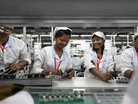
Apple has announced it is expanding its skill-building and training programmes in India with its new Apple Education Hub in Bengaluru, as part of its US$50m Supplier Employee Development Fund.
This fund is designed to empower supplier employees globally, deploying learning and skills growth opportunities to further employee development.
The company is also increasing its number of development courses available across 25 supplier sites in India.
Its newly developed learning curriculum will help supplier employees develop critical skills in areas such as digital literacy, automation technology and smart manufacturing.
Sarah Chandler, Vice President of Environment and Supply Chain Innovation at Apple, says: “The same spirit of innovation that drives our products also guides our commitment to supporting people across our global supply chain.
“We’re thrilled to expand our technical training courses in India, giving thousands of employees the opportunity to learn valuable new skills and explore new paths for career growth.”
Fostering supplier development at Apple’s education hub
According to Apple, it is partnering with the Manipal Academy of Higher Education, a private university in India, to develop its education hub.
Faculty staff from the university will coach supplier trainers in their curriculums, designing and delivering sessions suited to larger employee groups.
Lieutenant General Dr M.D Venkatesh, Vice Chancellor at the Manipal Academy of Higher Education, says of the partnership: “This collaboration brings together Apple’s commitment to its supplier employees and Manipal’s experience in applied education to create meaningful opportunities for growth.
“Supplier communities sit at the heart of India’s manufacturing ecosystem, and investing in their skills is more important than ever.”
The company plans for this hub to serve as a space that “brings together trainers and students” to learn from specialists in digital education. It will start by rolling out programmes in digital literacy and Swift coding for beginners.
Apple’s supplier upskilling opportunities
Apple has been increasing its rollout of new skills development opportunities for supplier partners in India, offering more than 75 courses.
One of its most successful supplier training programmes has been its robotics training, which it first launched in 2024. The programme offers hands-on learning to train factory educators at robotics labs. This then qualifies those educators to deliver sessions at their own facilities.
The company says it plans to expand this robotics training to more sites across India in 2026
Apple is also increasing its wider global supplier opportunities. Across its supplier network, the company is working with organisations to develop programmes that range from technical, professional and health education, rights awareness training and community resilience programmes.
Apple’s growing presence in India
In a January 2026 earnings call, Tim Cook, CEO of Apple, described India as a “huge opportunity” for company growth after what he called a “terrific quarter in India”.
Apple began further diversifying its supply chain strategy in 2025, including increasing its production in India, with more than a quarter of its iPhone production based in India as of early 2026.
This move comes as the company aims to reduce its reliance on China, particularly as stricter tariffs on Chinese imports could raise overall supply chain costs.
Company portals

Executives
Sarah Chandler

Tim Cook
Executive Chairman

- PepsiCo’s ‘Secret Sauce’ For Hiring and Retaining TalentTalent Acquisition
- Randstad: AI Investments Fail Without Talent InfrastructureLearning & Development
- Top 10: Leadership Development ProgrammesHR Strategy
- Walmart CPO Donna Morris to Develop Employees' AI SkillsLearning & Development