
LinkedIn's CEO: Why AI Will Strengthen Employee Skills
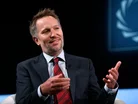
LinkedIn CEO Ryan Roslansky believes AI could enhance worker capabilities rather than replace them, highlighting five core human-centred skills that he argues will become increasingly valuable as organisations integrate the technology into their operations.
Ryan told the Tools and Weapons podcast that he outlined curiosity, courage, creativity, communication and compassion as five "soft skills" that AI could elevate.
"These turn out to be some really, really important skills to do your job well," Ryan said.
"The focus and emphasis on those, along with AI, is what I think gives us the opportunity to dream big and paint a much more positive picture that exists with humans and technology together moving forward."
Ryan told CNBC that while AI can assist with execution and efficiency, it lacks the human instinct needed to question, connect and create meaning in complex situations. He suggested these core skills will become more valuable as companies use AI to handle repetitive tasks.
"The people who are going to win are the ones who are asking better questions," he said, adding that communication will play an instrumental role in the process, as "being able to clearly articulate ideas and bring others along" cannot be automated in the same way as technical tasks.

Reimagining roles and responsibilities
Ryan argued that AI will reshape how people imagine their jobs and will encourage employees to view their roles as a collection of tasks rather than a fixed title. This perspective comes as a new poll released by Quinnipiac University on 13 April 2025 found that 70% of Americans believed that advancements in AI will lead to an overall decrease in job opportunities.
According to Ryan, employee tasks can be separated into three categories: tasks that can be fully automated by AI, tasks that AI can augment and tasks that need human understanding – such as resolving conflict, persuading a team or setting strategies.
"These skills, they're important, but they've historically been talked about as soft skills," he said on the Tools and Weapons podcast.
"In a professional world where people are actually much better at these skills and have really honed their craft on it, I think that it makes things a lot better."
Ryan added that agents could theoretically free up time for co-worker conversations, prioritising employee communication, judgment and emotional intelligence as AI takes on more responsibilities.
Balancing technology and human capability
LinkedIn Chief Economic Opportunity Officer Aneesh Raman shared Ryan's view that AI will enhance and not replace employees. According to Aneesh, embracing AI is important but finding balance in the technology is key.
"Your job is changing on you, even if you aren't changing jobs," Aneesh told MarketWatch.
"If you're overusing AI, that means you're not doing anything unique as a human in that process, which means you're going to be even more afraid of AI taking your job," he added.
Ryan's approach differs from other industry figures implementing AI in ways that could impact the workforce – such as OpenAI investor Vinod Khosla claiming that today's children won't need future jobs because of the technology or Anthropic's Claude Code suggesting software engineers could be made obsolete by agentic coding.
While Ryan believes his perspective offers a positive way of looking at the rise of AI, he remains aware of the technology's potentially negative impacts.
"Sometimes when you're mired in technology, and especially with AI, and you kind of draw out where this could potentially go, it leads you to some dark places," he said.
"AI can generate possibilities based on patterns," he added. "Humans decide which ones matter."
Company portals

Executives
Ryan Roslansky
Executive Vice President

- F5 Bets on Culture, Hiring Wayfair's People ChiefTalent Acquisition
- Six Flags Rebuilds Its C-Suite and Undoes a Merger MistakeOperations
- It's Coming Home: England's Lesson in Building TeamsOrganisation & Culture
- Darren Minshall Joins WPP Media as UK Chief People OfficerTalent Acquisition