
Volkswagen Weighs 100,000 Job Cuts, Four Plant Closures

One hundred thousand jobs. That is the figure looming over Volkswagen, alongside the closure of four German factories, in what would be the deepest cut in the carmaker's 89-year history, according to a report by Manager Magazin.
The cuts would wipe out roughly 15% of a 657,400-strong workforce and double the 50,000 reductions already agreed for Germany by 2030.
The company is squeezed by Chinese rivals, stiff US import tariffs and softening demand throughout Europe, a mix it has called unsustainable. Presenting first-quarter results earlier this year, in which net profit fell 28% to €1.56bn (US$1.78bn), Chief Financial Officer Arno Antlitz put it plainly.
"The cost savings planned so far are not enough," Arno says. "If we fail to do this, we are putting our future at risk."

The deepest cut in 89 years
Volkswagen Chief Executive Oliver Blume pitched the overhaul, 100,000 job cuts and four plant closures, to senior managers last week, ahead of a decisive supervisory board meeting earlier in June.
Four sites are marked for closure, home between them to more than 45,000 jobs:
- Hanover, the commercial-vehicles hub that builds the ID. Buzz electric van.
- Zwickau, the eastern German plant once paraded as a symbol of the firm's electric future.
- Emden, the coastal Lower Saxony site recently retooled for electric and passenger models.
- Neckarsulm, the historic home of premium brand Audi.
The restructuring plan would pare planned investment by about 15%, to just over €130bn (US$148.2bn) over the next five years. Volkswagen had already promised sweeping cuts and a wave of new models to lift profits, yet these figures blow past all of it. Its shares have slid more than 25% in 2026.
The scale recalls General Motors, which shed tens of thousands of jobs around its 2009 bankruptcy and 74,000 more across the early 1990s as it shut or idled 21 plants.
Outsold by BYD
The deeper ailment for Volkswagen is weak sales, above all in China, where the group was the top-selling carmaker for years before BYD knocked it into second place in 2024 and third in 2025.
Non-Chinese carmakers watched their share of the Chinese market collapse to 32% in 2025, from 57% in 2020, according to AlixPartners. The damage has spread to premium badges too, with BMW issuing a shock profit warning last week, blamed partly on China.
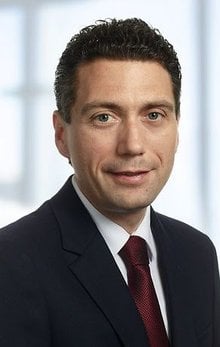
Some shareholders doubt that cost-cutting alone can fix it. "The high costs are merely a symptom, not the cause," Ingo Speich of Volkswagen investor Deka says.
"VW must bring attractive products to market that are in high demand."
A promise that runs until 2030
In late 2024 ,Volkswagen promised its unions no forced redundancies and no German closures before 2030, with Audi shielded to 2033. The plan on the table would tear up both.
The workforce also holds rare leverage to stop it. Co-determination rules give employee representatives half the seats on the supervisory board that must approve any overhaul, and Lower Saxony, the second-largest shareholder, rarely votes against local jobs.
The pushback has already started. "If such plans were to be pushed forward, we would prevent them with all our might," the General Works Council and IG Metall warns in a joint statement.
On 9 July, everyone will learn whether a 2024 promise can outlast the reality of 2026.
Company portals
Executives
Arno Antlitz
CFO
Ingo Speich
Head of Sustainability

Oliver Blume
CEO