Why Does Intuit’s CEO Focus on Resilience When Hiring?

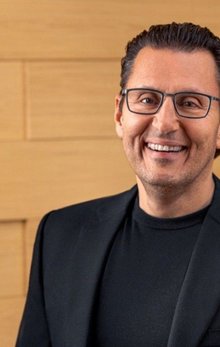
While many companies revamp their talent strategies to focus on hiring employees with AI skills, Intuit CEO Sasan Goodarzi is looking for something very different – grit.
At the Wall Street Journal Leadership Institute’s Technology Council Summit in Silicon Valley, Sasan shared that he seeks out prospective employees who can demonstrate levels of resilience, saying: “I was interviewing somebody yesterday, and the whole time my focus was do you actually have the grit?”
According to Sasan, employees who “know how to go through pain and suffering”, are more likely to be able to operate successfully in a high-stakes business environment and “create greatness”.
Developing these traits have shaped his own career in leadership, he says, as it encourages him to think “tomorrow will be a better day”.

How Intuit ‘Assesses for Awesome’
Intuit looks to hire top talent prepared to manage complex business decisions through its ‘Assessing for Awesome’ (A4A) talent strategy.
Designed to bring Intuit’s working environment and culture into the interview experience, the A4A approach assesses candidates through craft-based evaluations, in which candidates demonstrate their abilities through on the job scenarios.
The company also uses ‘awesome assessors’ as part of this hiring process, who are high performing employees working closely alongside the role Intuit is looking to fill. These assessors identify the skills an employee will need to be successful in the role, which are then tested in the hiring process.
Sherrey Whiteley, Intuit’s former Executive Vice President of People and Places, discussed this approach with Fast Company when it was first introduced by the business. She said: “We’re happy to say, it removes the bias in interviewing because it really focuses on the craft demonstration of the work that a candidate would do.”
She also shared that, since implementing this approach, the company’s hiring managers are “very invested in hiring top talent,” and that it has improved the company’s quality of hire.
Prioritising resilience to scale growth
Sasan has seen significant growth at Intuit since becoming CEO in 2019. He says: “When I took over, we were growing like 8% to 9% and we were about US$4bn in size. We’re now US$20bn in size, and we’re growing double the rate”.
This growth has been threatened somewhat by developments in AI, which is impacting the way software-as-a-service models operate.
In December 2024, Microsoft CEO Satya Nadella shared on the BG2 podcast that he believed that SaaS applications will “all collapse, right in the agent era”, as “once the AI tier becomes the place where all the logic is, people will start replacing the back ends”.
These concerns have translated into lower confidence from Intuit investors, with the company’s stock dropping to a 52-week low in February 2026, having fallen 30% in value over the course of a year.
According to Sasan, setbacks like these are why it is so important for the company to have a resilient workforce, saying: “When there’s so much turbulence around us, I’m built for these moments”.
This resilient “gritty” workforce is helping the company adapt rapidly to the AI era, developing a suite of AI tools called ‘Intuit Assist’ that are designed to automate manual financial tasks and provide customised business insights – allowing the company to remain competitive.


Executives
Sasan Goodarzi
Chief Executive Officer
Satya Nadella
Chairman and CEO