Is Improving Employee Confidence the Key to Business Growth?

Research from Randstad finds that, while 95% of business leaders believe they will grow across 2026, only 51% of employees agree.
The report suggests that this gap may signal that the global workforce is under significant pressure among economic uncertainty and rapid technological advancements.
It warns that, if left unresolved, there may be a significant divide between the goals of an organisation and the realities faced by employees, stunting business growth.
Randstad says workers are facing ‘the great workforce adaptation’. To mitigate the impact of this, it advises business leaders to prioritise AI upskilling and reshape their organisational approach to careers in order to provide further stability to employees.
Discussing the research Sender van ‘t Noordende, CEO of Randstad, says: “By embracing this Great Workforce Adaptation, we can bridge the confidence gap and enable growth for everyone.”
Conflicting views on AI integration
There is a significant divide in the way employees and employers see the role of AI – while business leaders estimate that the vast majority of tasks will be impacted by the technology, one in five workers believe AI will not affect their work at all.
This creates an environment where organisations may be investing heavily in AI, while employees are not using the technology available to them effectively.
Combined with the knowledge that there has been a 1,587% increase in roles requiring AI skills in 2025, this suggests that there may be more significant skills shortages in future, with businesses adopting capabilities their workforce cannot take advantage of.
To bridge this gap, Randstad recommends leaders help employees map AI to their daily tasks, building AI literacy and encouraging workers to further adopt the technology.
LinkedIn CEO Ryan Roslansky is taking steps to improve AI adoption within his organisation, having announced the publication of his AI self-help book ‘Open to Work: How to Get Ahead in the Age of AI’ in January 2026.
The book will explore how AI reshapes work, and its impact on employees.
In a LinkedIn post announcing the book, Ryan says: "The future of work is not off on the horizon. It is here now, moving fast, shaped by the choices we make today.
“AI is already changing how we learn, how we create and how we move forward. The real question is not what the technology can do. The real question is what we choose to do with it.”
Redefining career progression
One area employers and employees disagree on is the traditional career model.
Randstad finds that 72% of employers call the corporate ladder outdated, while over a third of workers want to work across a variety of jobs and sectors throughout their lives, rather than being tied to one company or career.
The organisation suggests this may be due to talent feeling secure when armed with a wide range of experiences, particularly in a more challenging job market.
Plus, with nearly a third (31%) of employees revealing to Randstad that they have quit a role due to a lack of collaboration, the report recommends that employers offer internal mobility and project based work to better retain talent.

Encouraging a collaborative culture in the workplace
Creating an office culture that properly fosters collaboration can be challenging, but leading employers are learning to re-evaluate their approach to workplace strategy.
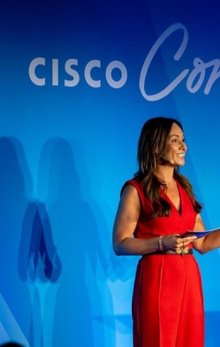
Cisco, for instance, redesigned its London office in November 2025, creating a space that is accessible to the different ways employees think, process information and experience their surroundings.
Christian Bigsby, Senior Vice President of Workplace Resources and Sarah Walker, Chief Executive of Global Sales in UK and Ireland for Cisco, shared a report revealing that their priority was on flexibility, adaptability and human experience.
“Today, the office is no longer just a place to get work done. It’s a destination for in-person collaboration, problem solving, career development and mentorship, and even for a stronger connection to the company culture,” they shared in the report.
“But everyone’s days are dynamic and while they may go into the office to take part in one of these activities with colleagues, it is unlikely the only thing they’re going to do while there.
“If employees can’t find spaces to focus, take a private call, or simply pause and reset during a busy day, the perceived value of going in drops, and they’ll seek other ways and places to connect with their team members.”



Executives
Christian Bigsby
SVP - Workplace Resources
Ryan Roslansky
Executive Vice President
Sarah Walker
Chief Executive UK & Ireland of Global Sales

Sender van 't Noordende
CEO