
Why does Palantir's CEO Prioritise Skills Over Credentials?

Alex Karp, CEO of AI defence organisation Palantir, has shared his opinion that AI will “destroy humanities jobs", while the World Economic Forum in Davos, setting out his belief that humanities-based learning will be “hard to market" in a changing world.
It echoes a key aspect of Palantir’s talent philosophy, which is centred around recruiting intellectually diverse individuals and a focus on aptitude and skills over formal education alone.
In 2025 the company launched its Meritocracy Fellowship, a paid engineering programme that invites high school graduates to study philosophy and history before contributing to real-world projects.
On its website, Palantir frames this fellowship as a way “to cultivate exceptional talent, increasingly overlooked, regardless of background”, noting that it prioritises “challenges”, “agency” and “responsibility” over credentials.
At Davos, Alex revealed he struggled to find work after completing a PhD in philosophy, suggesting that non-specific knowledge risks leaving candidates behind, and called for "different ways of testing aptitude".

The role of skills-based hiring in the modern workforce
Beyond Palantir, the way that companies are making their decisions on talent and other workforce issues is shifting.
Many leaders view AI as a force that will reconfigure work more than one that will simply replace it.
Most are defending the existing workforce by redesigning roles and workflows rather than cutting headcount: in a 2025 Forbes survey, 68% of respondents reported that their organisation was developing strategies focused on human–AI collaboration, and 94% predicted that fewer than 5% of jobs would be eliminated across 2026 and 2027.
High-performing organisations, according to a 2026 Deloitte survey, are leaning into human capabilities such as divergent thinking and curiosity that have the capacity to make technology deployments more valuable.
Doug McMillon, former CEO of Walmart, summed up the practical reality in September 2025, saying: “AI is going to change literally every job".
How job roles are evolving
For HR leaders, this fast rate of change is adapting the workforce significantly.
Hiring is evolving from degrees to demonstrable skills and potential, while organisations are experimenting with work samples, structured interviews and scenario-based assessments that surface reasoning, learning agility and judgement – where many humanities graduates are competitive even as routine tasks automate.
Job architecture is also becoming more granular, with 44% of Chief Human Resources Officers having already moved employees into AI-related roles, according to Forbes.
As traditional ways of working shift, roles are being decomposed into tasks to clarify where AI can automate, where it can augment and where distinctly human strengths remain central. Internal mobility platforms are emerging as a way to match people to short-term projects and new roles based on skills rather than title - useful as work shifts toward AI-enabled processes.
As AI touches more roles, governance and trust must also move from compliance topics to business fundamentals.
Boards and executive teams are paying closer attention to data privacy, model risk and bias auditing, but also to how these safeguards are communicated to employees.
When discussing this crossroads, Doug says: "I think the way for us all to approach it, especially here at Walmart, is just in a very transparent, honest, straightforward way, talking to people in real time about what we’re learning and what we’re doing and why we’re doing this.”
Company portals




Executives
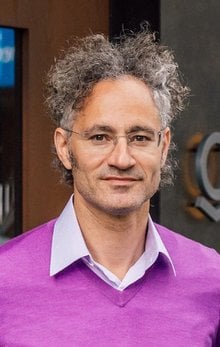
Alex Karp
CEO
Doug McMillon
President & CEO