
The End of the Degree? How AI Is Forcing a Strategic Rethink

A strategic change in talent acquisition is underway with business leaders signalling a move away from traditional qualifications towards skill-based hiring, particularly focusing on proficiency with AI. For C-suite leaders, this represents a fundamental change in how organisations should approach workforce planning and development.
The conversation is moving beyond whether AI will impact jobs to how it redefines the very attributes of a desirable candidate.

According to Ryan Roslansky, CEO at LinkedIn, employers are increasingly seeking AI-savvy staff. He suggests the future of work may no longer belong to individuals with the most prestigious degrees.
“I think the mindset change is probably the most exciting thing, because my guess is that the future of work belongs not anymore to the people that have the fanciest degrees or went to the best colleges,” he explained.
Ryan predicted that those most likely to be hired will be “adaptable, forward-thinking, ready to learn, and ready to embrace these tools,” referring to AI.
This perspective follows data from the New York Fed that shows unemployment rates for the latest graduates at 4.8%, compared to 4% for all workers.
The value of degrees in the AI era
The discussion around the diminishing currency of university degrees is gaining traction among technology leaders, many of whom have achieved success without them.
Figures such as Meta’s Mark Zuckerberg and OpenAI’s Sam Altman are notable examples.
Speaking on a podcast in April 2025, Zuckerberg questioned the role of higher education in preparing individuals for current workplace demands.
“I’m not sure that college is preparing people for the jobs that they need to have today. I think there’s a big issue on that, and all the student debt issues are really big,” said Mark.
The Meta CEO, himself a Harvard University dropout, added: “It’s sort of a taboo thing to say, ‘maybe not everyone needs to go to college’, and because there’s a lot of jobs that don’t require that, people are probably coming around to that opinion a little more now than maybe 10 years ago.”
AI platforms and employee certification
Reflecting this changing landscape, new tools are emerging to help organisations identify and verify modern skill sets.
OpenAI, led by Sam Altman, is set to introduce an AI-powered hiring and employee certification platform.
This product, the OpenAI Jobs Platform, aims to connect companies with workers who possess proven AI capabilities, potentially disrupting established professional networks like LinkedIn.
Fidj Simo, OpenAI’s CEO of Applications, announced in a blog post that businesses will “use AI to help find the perfect matches between what companies need and what workers can offer.”
She elaborated on the platform's purpose, stating: “If you’re looking to hire an AI-savvy employee, or you just need help with a specific task, finding the right person can be hit-or-miss. The OpenAI Jobs Platform will have knowledgeable, experienced candidates at every level and opportunities for anyone looking to put their skills to use. And we’ll use AI to help find the perfect matches between what companies need and what workers can offer.”
Integrating AI for executive productivity
The practical application of AI extends to the highest levels of leadership. Ryan, who also serves as an Executive Vice President of Microsoft, described using AI as like “having a second brain” that knows him “extremely well”. He highlighted its utility in crafting high-stakes communications with other senior leaders, including Microsoft CEO Satya Nadella.
“A lot of time when I’m sending a super high-stakes email to Satya Nadella or other CEOs or world leaders, etc, you’ve got to make sure you sound super smart when you do that. So, I would say that, without a doubt, almost every email that I send these days is being sent with the help of Copilot,” Ryan says.
This adoption by senior executives could signal a broader integration of AI tools across all business functions.
For graduates and the existing workforce, the message from leaders is clear: upskilling in AI is no longer optional.
As Ryan commented, this adjustment “really opens up the playing field in a way I’ve never seen before.”


Executives
Fidji Simo
CEO, Applications at OpenAI
Ryan Roslansky
Executive Vice President
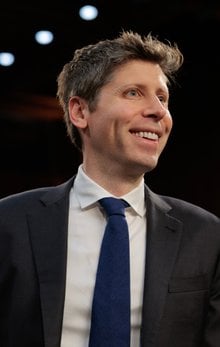
Sam Altman


- F5 Bets on Culture, Hiring Wayfair's People ChiefTalent Acquisition
- Six Flags Rebuilds Its C-Suite and Undoes a Merger MistakeOperations
- It's Coming Home: England's Lesson in Building TeamsOrganisation & Culture
- Darren Minshall Joins WPP Media as UK Chief People OfficerTalent Acquisition