Top 10: Internal Talent Marketplaces

The most valuable person for the job might be sitting two desks away.
That idea has spawned one of HR's fastest-growing tools, the internal talent marketplace, software that uses AI to match employees to projects, gigs, mentors and open roles by their skills rather than their job titles.
It promises to fill roles faster, cut the recruiting bill and give restless staff a reason to stay.
These are the 10 of the platforms that matter most, ranked by their standing in the category, from the established suites to the pioneers that defined it.
10. 365Talents
CEO: Loïc Michel
Location: Lyon, France
Revenue: US$15m
The smallest name here is also the newest addition to a bigger one. Founded in Lyon in 2015 by Loïc Michel, 365Talents built a skills-first marketplace that reads employees' expertise from the way they actually work, then points them towards internal jobs, projects and training.
Its independence ended in January 2026, when learning platform Docebo bought it, a sign that the marketplace and the learning system are converging into one tool.
Small, French and now better backed, it is the European specialist to watch.
9. Fuel50
CEO: Anne Fulton
Location: Long Beach, US
Revenue: US$21m

Fuel50 is an early trailblazer of the internal talent marketplace.
Founded in New Zealand in 2013 by organisational psychologist Anne Fulton, it built its marketplace on a hand-governed skills library rather than pure AI, which supporters say produces cleaner data and quicker roll-outs.
More than a million employees now use it. Fuel50 is a minnow next to the giants above, but it and Gloat were the two startups that pioneered the internal talent marketplace, and Fuel50 still sets the bar on skills quality.
8. Gloat
CEO: Ben Reuveni
Location: New York, US
Revenue: US$25m
Founded in 2015 by Ben Reuveni after he struggled to find an internal move at his own employer, Gloat was created with the idea of the AI talent marketplace and sold it to some of the world's biggest enterprises.
Its revenue, an estimated US$25m, looks small against the US$1bn valuation it touched at the 2022 peak, and against the suites now chasing it. But ask any HR leader who started all this, and the answer is Gloat.
7. Eightfold AI
CEO: Ashutosh Garg
Location: Santa Clara, US
Revenue: US$97m
Eightfold was built by former Google engineer Ashutosh Garg and runs one AI model across internal and external talent, so workforce planning is simplified.
That depth won it a US$2.1bn valuation, the richest of the pure-plays, on an estimated US$97m of recurring revenue. For a company that wants its talent marketplace wired into every other talent decision, Eightfold is the technically ambitious pick.
6. Beamery
CEO: Abakar Saidov
Location: London, UK
Revenue: US$113m
Beamery started in talent acquisition and worked its way inward. The London company, a British unicorn founded in 2013 by Abakar Saidov and valued at US$1bn on an estimated US$113m of recurring revenue, puts a skills graph at the centre of hiring, mobility and planning, with a marketplace that moves existing staff as readily as it recruits new ones.
Its bet is that the same skills data should run the whole talent lifecycle, not just the internal slice of it.
5. Phenom
CEO: Mahe Bayireddi
Location: Ambler, US
Revenue: US$232m

Phenom is the biggest of the specialists by revenue. The Pennsylvania firm, founded by Mahe Bayireddi, made its name in candidate experience, then pointed the same AI at employees, folding internal mobility and a talent marketplace into a wider talent-experience platform.
An estimated US$232m in revenue and a US$1.3bn valuation put it ahead of the pure marketplace vendors, and its breadth, recruiting and internal mobility in one system, is the pitch to big employers tired of stitching tools together.
4. Cornerstone OnDemand
CEO: Himanshu Palsule
Location: Santa Monica, US
Revenue: US$847m
Long a default name in corporate training, Cornerstone taken private by Clearlake Capital in a US$5.2bn deal in 2021 and led by CEO Himanshu Palsule, earns an estimated US$847m a year and launched its Opportunity Marketplace in 2023.
That heritage is the edge: Cornerstone can wire learning, skills and internal roles into one loop, so an employee who lacks a skill for a gig is pointed straight at the course that closes the gap.
3. Oracle
CEO: Clay Magouyrk and Mike Sicilia
Location: Austin, US
Revenue: US$57.4bn

Oracle is the biggest company on the list, even if internal mobility is a smaller part of what it does.
The group turned over US$57.4bn in its 2025 financial year, and its Opportunity Marketplace lives inside Oracle Grow and the Oracle ME experience platform, part of the same Fusion Cloud HCM it sells to HR departments the world over.
Employees get matched to gigs and stretch assignments by the AI that new co-CEOs Clay Magouyrk and Mike Sicilia are threading through everything Oracle makes. It is not the specialist's pick, but its reach, data and budget dwarf everyone below.
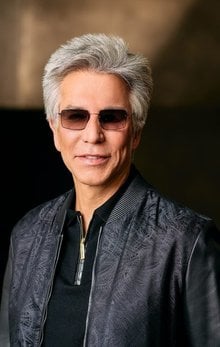
2. ServiceNow
CEO: Bill McDermott
Location: Santa Clara, CA
Revenue: US$13.3bn
The workflow giant ServiceNow, run by Bill McDermott, snapped up talent-marketplace pioneer Hitch Works in 2022 and turned it into an Opportunity Marketplace inside its Talent Development suite, matching employees to internal roles, gigs and stretch projects by skill.
With US$13.3bn in revenue and a platform already sitting on the IT and HR service desks of much of the corporate world, ServiceNow can push internal mobility to a workforce it reaches every single day. Few rivals start from a bigger base.
1. Workday
CEO: Aneel Bhusri
Location: Pleasanton, US
Revenue: US$8.446bn
No HR system carries more of the corporate world's employee data than Workday, and that is why its talent marketplace leads.
The US$8.4bn giant, run by CEO Aneel Bhusri., offers its Talent Marketplace and Career Hub inside the platform thousands of large employers already use to run payroll, performance and planning, so switching on internal mobility is less a new purchase than a new habit.
For the enterprises standardised on Workday, the marketplace runs on data the company already trusts, an edge none of the specialists can match. Reach, adoption and incumbency put it first.
Company portals









Executives

Abakar Saidov
CEO & Co-Founder
Aneel Bhusri
CEO and Co-Founder

Anne Fulton
CEO

Ashutosh Garg
CEO

Ben Reuveni
CEO & Co-Founder
Bill McDermott
Chairman and CEO

Clay Magouyrk
CEO
Himanshu Palsule
CEO

Loïc Michel
CEO

Mahe Bayireddi
CEO & Co-Founder
Mike Sicilia
Chief Executive Officer