
Get Loud About Culture with The Walt Disney Company
In the modern workplace, the traditional “top-down” internal communication model is vanishing; employees want to be part of a narrative.
Dr Adam Hickman, Vice President of Org and Employee Development at Partners Federal Credit Union, argues that the most effective communications are those that are rooted in a community-led ecosystem rather than those that use a corporate megaphone.
For Dr Hickman, the key to creating a harmonious company culture isn’t through utilising technology or listening to a select few – it’s much more human. While working with Gallup, the concept of followership and what the needs of employees were studied and have since been made public as four specific needs followers have: trust, hope, stability, and compassion. Dr Hickman then identified key pillars, which are divided into two parts: ensuring employees feel seen, heard and valued, followed by instilling trust, hope, compassion and stability.
“When I’m writing a framework – or helping someone else write one – I’m thinking through two specific sides,” he says. “First, is every employee seen, heard and valued within what I’m writing? Then, how do I instil trust, hope, stability and compassion into the message?
“I wouldn’t say it’s a secret sauce, but it’s a proven way, backed by research, to ensure that no matter what level you’re at, you feel those three core elements. It builds a sense of followership in everything we communicate.”
In fact, the report highlights that 64% of those surveyed emphasised the need to see hope from organisational leaders, with only 33% able to thrive without a hopeful leader. Dr Hickman, therefore, highlights the importance of communicating this change through each of these key pillars.
He explains: “To ensure employees are seen, we have to acknowledge their 'day job' and where our message intersects with what they actually do. To ensure they are heard, we must accept feedback before the change is final and tell them: 'We listened to you, and here is why we’re doing what we’re doing.' Finally, to ensure they are valued, there must be something in it for the reader. You can hit all three of these pillars regardless of the employee's level.”
Dr Hickman is explicit about what "heard" means in practice: "If they're heard, are we accepting feedback before we've made the change and giving that back to say, 'Hey, we listened to you, and we've heard you. Here's why we're doing what we're doing."
Putting these pillars into action
To bridge the gap between ‘hearing’ feedback and actually ‘acting’ on it, Dr Hickman and his team introduced ‘listening posts’. These are dedicated, often anonymous, channels where the dialogue remains open long after a meeting ends.
Yet Dr Hickman explains that for community-led communications to work, leaders must be hungry for the results, as a listening post will only be as effective as the executive team behind it.
“After every organisational forum or CEO huddle, we ask for input,” he shares. “I typically run the analysis to identify what was said and, crucially, what action we need to take because of it.”
“For example, after our recent CEO town halls, we had enough feedback to act on. Within a week or two, we not only had our CEO but the executives asking, 'What was the feedback given?'. We then had to be very succinct and clear on what we needed to do differently based on that feedback.”
Through this feedback, Dr Hickman noted that while there is a high appreciation for their current communications, employees were still looking for more clarity. This allowed his team to pivot to focus on defining the specific purpose of their different organisational forums.

He explains that “you can say it a hundred different ways,” but you must always restate the basics: “What's the purpose of this org forum and what would somebody walk out the door with? It’s the different in theory and application. Organisations are flooded with theories, but what’s needed for employees is the intentional thought processes behind what is shared and application to what needs to be done.” For Dr Hickman, it isn't about providing a long list of details, but rather ensuring “clarity around the role” of each org forum.
Beyond the need for clarity, Dr Hickman noted that employees are increasingly looking for a clear line of sight regarding transparency and accountability. For example, if changes were going to be made, employees requested “clear insight” as to who gets ownership, as well as how these changes would be executed.
For Dr Hickman, this is a vital part of the "heard" pillar, as it highlights to employees that feedback hasn't just been recorded, but has been assigned to a specific leader for action.
Taking accountability and becoming great
For small businesses, maintaining a community-led feel is much more manageable than leading conglomerates. As a result, Dr Hickman acknowledges that scaling microcultures across global workforces requires a different tactical approach.
For example, rather than fighting against organisational silos, he suggests leaning into them through “consistency meetings.” Drawing from his experience at AT&T, Dr Hickman describes the use of “meetings in a box”, which are typically bi-weekly, 15-to-20-minute scheduled sessions prepared by HR and L&D teams.
These toolkits allow managers in hundreds of locations across the world to lead local discussions that remain culturally consistent with the global mission, based around operations and other strategic drivers.
However, Dr Hickman is clear that these meetings are only half the battle. He emphasises that the quickest way to ensure these initiatives stick is through leadership accountability: “After you’ve said it, do your managers and leaders hold people accountable to what has been said and what you expect?”
Without that follow-through, even the best-packaged communication risks losing its authenticity. To stay true to this, Dr Hickman shares a motto that he and his colleagues work by via the council of Partners CEO, Ricky Otey: “We’ll only do what we can do well.”
By this, Dr Hickman means that leaders shouldn’t give themselves a “laundry list” of tasks to achieve throughout the year. They should rather choose five to seven “big ticket items” and focus on those. “There might be sub-tasks underneath these, but we’re really signalling that good is not good enough. You've got to be great. So rather than spread ourselves thin on millions of different tasks, we just select a few priorities and make sure we’re great at those,” he says.
People are still looking for people
As the workplace is becoming increasingly crowded with AI-driven solutions, Dr Hickman concludes the conversation by sharing a vital reminder: culture cannot be automated. While he acknowledges the seemingly never-ending list of benefits that AI can bring, he notes that business leaders should never replace the fundamental human connection that employees need.
“Your culture is not a machine, so don’t treat it like one,” he notes. “You’ve got the head and the heart – so you’ve got to utilise both. You can use AI to support you as a thought partner, but don’t try to put a machine against something that doesn't respond well to machines; people are still looking for people.”
But for Dr Hickman, his key piece of advice was for leaders to “get loud”. He says: “If you know what you want your culture to be, don’t be quiet about it – it’s not a disease. That’s been my campaign for a while.
“If you look at other companies – ones where you know their culture just by saying the brand name – it’s because they are loud and they’ve built that around that. It doesn’t matter what sector you’re in; just don’t give up the rights to AI on what your people want. They still need humans.”
Company portals

Executives
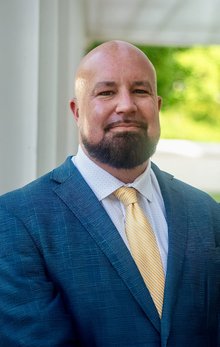
Dr Adam Hickman
Vice President, Org and Employee Development