
Siemens: Be Curious and Embrace Constructive Conflict

“Joyous performance,” is a term that Nanda Burke, Global Head of Talent and Organisation at Siemens, used to describe how she encourages others to show up in the workplace.
As an HR leader, Nanda recognises that there’s “always a high bar,” in terms of delivering performance in the workplace, but this edge can be delivered with “more lightness and joy – in a way that generates energy”.
Nanda's perspective is rooted not only in her professional expertise but also in her personal experience, which, she explains, has been shaped by the early stages of her career.
Reflecting on her early days in the workforce, Nanda describes how her first-time line manager lacked a background in talent management and, in this specific case, left her feeling unseen, unheard and unvalued in her role – despite trying her best.
This early experience crystallised a vital truth for Nanda: when it comes to talent management a good line management is crucial.
For her, it brought the duties of a manager into sharp focus, while highlighting how a capable, well-supported leader is often the deciding factor in whether an individual feels empowered or whether they become an untapped resource.
The skills currency
Fast forward to the present moment, and Nanda attributes much of her success to her multi-disciplinary background that spanned marketing, sales and general management, and of course, HR – named People and Organisation (P&O) within Siemens.
While climbing the corporate ladder can sometimes feel like a series of tick boxes that need to be checked in the right order, Nanda argues that crossing functional boundaries provides the “outside-in” perspective necessary to innovate in P&O.
She says: “Talent managers in the past have always told me to ‘stay in your lane’, but I must say that going out of my lane for me has been super enriching.”
Yet in a global technology company that employs about 318,000 people, traditional hierarchies can become bottlenecks. Instead, she views talent as an integral portfolio of leadership, learning and organisational transformation.
“The space is moving so quickly that we really need to not only think in structures, but we need to think in fluidity,” Nanda explains.

To achieve this, she has championed skills as the organisation's global currency. By focusing on capabilities rather than job titles, Siemens can move talent across the business with speed.
HR must grow its own timber
Retention is top-of-mind for all leaders, but for Nanda, it is not just about keeping great people; it is investing in them to make sure they stay great. As a result, arguing that for an organisation to be truly resilient, the engagement for growth must be shared between the employer and the employee.
“If you really want to build a resilient and sustainable organisation, you need to have a good combination of growing your own timber, developing internal talent and investing in your own people on an ongoing basis – complemented by external talent we should always remain curious about,” she adds.
While Siemens provides the framework for development, Nanda believes that the final mile of professional resilience rests with the individual’s drive to evolve.
“It’s also about our people,” she says. “People need to have a sustainable talent strategy for themselves.
"They need to be able to develop themselves, and they need to be able to ensure that they stay relevant as well."
The emphasis on skills is a core part of how Siemens interacts with the world. Nanda highlights that technology only reaches its full potential when it’s accessible to everyone, and that starts with empowering people to master the skills of tomorrow.
“That’s why we are committed to driving continuous learning and aim to empower three million people globally by 2030 through Siemens’ learning offerings, with a focus on sustainability and digitalisation.”
A new spin on psychological safety
While more businesses are recognising the need for psychological safety, Nanda offers a refreshing, slightly different take on the concept.
“If you are a technology company that centres around innovation – which we are – and if you combine people with very different perspectives, the ability for them to speak up is essential,” she adds.
Yet she also notes people need to “dare” to speak up, especially in the case of conflict, highlighting that it should be seen as a launchpad for courage, overcoming comfort.
For Nanda, the true goal is “constructive conflict”. She believes that for an organisation to innovate, it must move beyond polite consensus and embrace the friction that comes from diverse perspectives.
“Regardless of the environment you find yourself in, be curious, be courageous, have constructive conflict,” she urges, “because at the end of the day, that leads to better business outcomes". Ultimately, this courage is what Nanda believes unlocks the full potential of a global workforce.
To solve complex industrial problems, Siemens encourages a collision of ideas. “We need every voice. We need everyone to be able to challenge others,” Nanda explains. “We need people to really talk to each other in different languages – and I don’t only mean German and English.”
The collision of two worlds
As a global tech company, Siemens faces a competitive market for talent. To differentiate from its competition, Nanda leans into the company’s unique identity – the intersection of industry and cutting-edge technology. Nanda believes that magic happens when the real and the digital worlds collide.
“What makes us unique is the combination of real and digital,” she explains. For AI natives, the draw is seeing abstract code manifest in physical reality through “digital twins” and tangible engineering.
“It’s about having digital twins that translate into real products... Something that you can touch,” she says. This synergy attracts a specific kind of talent – those who want to see their work solve “real steel” problems.
Reflecting on her time in the workplace, Nanda says that sustainability was a key factor that differentiated Siemens from every other business. “Without missing a heartbeat, it was sustainability,” she recalls. “And this is something that really matters to people.
“I hear people saying that they want to work for a company that actually can make an impact – and a large part of our portfolio, in fact, more than 90% of our business enables customers to achieve a positive sustainability impact .”
Yet Nanda’s final piece of advice is not for the people employed, but rather for her peers. She argues that the P&O profession must continue to evolve quickly, which means “unlearning” many of the rigid, prescriptive habits.
“We have a lot of work to do in terms of developing our profession to keep pace with the rest of the world,” she challenges. For Nanda, this means being willing to scrap legacy processes that offer no proven ROI. She explains: “We have let go of a lot of things where we see a lot of effort, but no proven value.”
Instead, she advocates for a more commercial, data-driven approach to talent. “Let’s open the gates of P&O. Let’s get really curious about what’s happening in the world and reinvent ourselves,” she says. “We need to be commercial – bottom-line impact, data science.”
By blending this commercial rigour with her signature “lightness and joy”, Nanda believes leaders can create an environment where performance isn't just a high bar to clear, but a rewarding experience. As she reminds us: “You only live once, so you need to have a joyous performance.”
Company portals
Executives
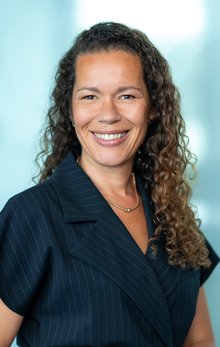
Nanda Burke
Global Head of Talent and Organisation