Top 10: HR Leaders in Construction
Construction has never had more to build or fewer people to build it. In the US alone, contractors need to recruit roughly 349,000 extra workers this year just to keep pace, according to Associated Builders and Contractors, and more than half of that gap exists only to replace tradespeople retiring out of the industry.
The median construction worker is now 42, and almost one in five is 55 or older. The workforce that built the modern world is quietly ageing off the jobsite.
Demand, meanwhile, has gone vertical. The energy transition and urban retrofitting are chasing the same shrinking pool of electricians, engineers and project managers.
That collision has rewritten the construction CHRO's job description. These people chiefs no longer administer headcount; they decide whether their firms can staff electrification, autonomous machinery and digital-native delivery faster than rivals can.
This week, HR Chief profiles the 10 leaders setting the tempo in that race, the ones redefining how the sector recruits, develops and retains the workforce that will build the next decade of critical infrastructure.
10. Cheryl Lim
Company: Jacobs Solutions
Revenue: US$12.03bn
Location: Dallas, US
Jacobs recruited its new people chief straight from the front line of the data-centre boom. Cheryl Lim arrives as Chief Human Resources Officer in May 2026 from Vertiv, the US$10.2bn power-and-cooling firm whose kit keeps hyperscale facilities running, and inherits one of the largest workforces in infrastructure: around 45,000 people across engineering, water, transport and national security solutions.
"Jacobs has deeply talented people and a clear sense of purpose," Cheryl says of the move, framing culture as "a true driver of business success."
Reporting to Chair and CEO Bob Pragada, she now owns technical recruiting across 40 countries and the integration following the Amentum spin-out.
9. Tracey Cook
Company: Fluor Corporation
Revenue: US$15.5bn
Location: Irving, Texas, US
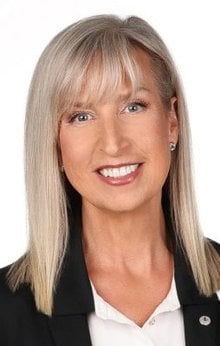
The AI buildout has handed Fluor a megaproject windfall and a staffing problem to match. As hyperscalers and nuclear developers compete for the firm's engineering muscle, that talent strategy falls to Tracey Cook, promoted to Executive Vice President and Chief Human Resources Officer in April 2025.
Hers was an internal rise across 35 years, through finance and operations before HR, at one of the world's largest engineering and construction firms. Tracey is the public voice of Fluor's people-first mandate, saying the company exists to "build careers, relationships and a culture where every employee's contributions matter."
That pitch targets retention on contracts that span decades, stretching its roughly 27,000 people against a backlog now swelling past US$28bn.
8. Emily Gepner
Company: AECOM
Revenue: US$16.4bn
Location: Dallas, Texas, US
At AECOM, engineering work follows the sun. The firm's Enterprise Capabilities arm shifts project tasks across time zones so design never sleeps, and the executive who runs it now also runs human resources.
Emily Gepner became Chief Human Resources Officer in March 2025, succeeding Shirley Adams, but kept her grip on the workshare organisation she built. That dual remit is that her people strategy has to optimise for delivery efficiency and talent attraction at once, across a global workforce of roughly 53,000.
Having risen through operations rather than classic HR, Emily was tapped explicitly to advance AECOM's talent strategy as the fight for civil and structural engineers sharpens.
7. Aaron Wiebelhaus
Company: Turner Construction
Revenue: US$17.5bn
Location: New York, US
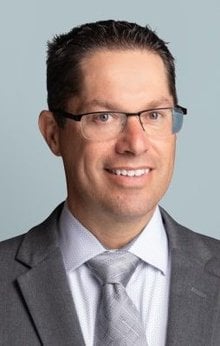
Turner Construction has spent the AI boom building the warehouses of the cloud, and in April 2026 it moved to staff the surge from the top. The largest US general contractor created a Chief People Officer role and handed it to Aaron Wiebelhaus, an operator rather than a career HR executive.
He spent a decade running Denver and North Central operations, then oversaw all nine regions as Managing Director from late 2024, carrying the revenue responsibility most people chiefs never touch. That P&L credibility is the point of the hire. Aaron takes the function as Turner, a subsidiary of Spain's ACS and sister to HOCHTIEF and CIMIC, works a record backlog of which roughly 40% is now data-centre construction.
6. Susan Masters
Company: EMCOR Group
Revenue: US$17.75bn
Location: Norwalk, Connecticut, US
Few people chiefs also carry a legal portfolio. Susan Masters does, holding the dual title of Vice President of Human Resources and Assistant General Counsel at EMCOR Group, the Fortune 500 mechanical and electrical contractor.
It is a rare pairing in construction, and a telling one: EMCOR runs more than 46,000 employees across over 400 sites in the US and UK, one of the most decentralised workforces in the sector.
Susan oversees recruiting and retention where the work is hands-on and the talent scarce, spanning data-centre fit-out, fire protection and energy services. The retrofitting wave in ageing commercial real estate keeps her pipeline of electricians, mechanical specialists and HVAC engineers under sustained strain.
5. Therese Tegner
Company: Skanska
Revenue: US$18.5bn
Location: Stockholm, Sweden
Therese Tegner has served as Executive Vice President, Human Resources at Skanska since April 2022, sitting on the Group Leadership Team of one of the world's largest construction and project development companies. Skanska employs around 27,000 people across the Nordics, Europe, the UK and the US.
She inherited a people strategy already focused on safety and sustainability, and has expanded both. Skanska has made low-carbon construction a defining commercial pillar, reshaping the talent profile toward engineers and project managers who can deliver low-carbon programmes. Her remit covers group-wide people strategy with particular focus on the values architecture that holds Skanska's multinational operation together across regions.
4. Dr C. Jayakumar
Company: Larsen & Toubro
Revenue: US$28.9bn
Location: Mumbai, India
At Larsen & Toubro, the AI shift is a reskilling project measured in the tens of thousands. India's largest engineering and construction conglomerate has put 50,000 staff through a generative-AI academy as it embeds digital twins and AI-led project management into core operations.
The architect of that human pivot is Dr C. Jayakumar, Executive Vice President and Head of Corporate Human Resources, who steers more than 60,000 permanent employees alongside the hundreds of thousands of contract workers on L&T's sites across India and the Gulf.
His 38 years in the company give him the standing to retrain it at speed. Beyond L&T, Jayakumar serves as National President of the National HRD Network, one of Asia's most influential HR platforms.
3. Martina Steffen
Company: HOCHTIEF
Revenue: US$36.5bn
Location: Essen, Germany
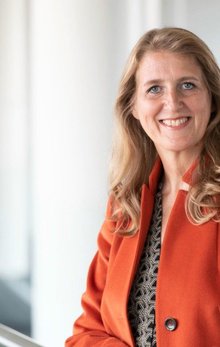
Martina Steffen joined HOCHTIEF in 1989 and has spent her entire career at the German construction giant, rising to Member of the Executive Board level. Since 2021 she has served as Chief Human Resources Officer and Chief Sustainability Officer.
Her dual brief reflects a structural shift in construction. Sustainability targets and workforce design are now inseparable. The talent required to deliver low-carbon programmes differs fundamentally from that which built the legacy portfolio. HOCHTIEF operates globally through major subsidiaries including Turner Construction in the US and CIMIC in Australia, making hers one of the industry's most geographically complex HR remits, covering three continents simultaneously.
2. Christy Pambianchi
Company: Caterpillar
Revenue: US$64.8bn
Location: Irving, Texas, US
Caterpillar wanted a CHRO who had already rebuilt workforces around new technology, so it hired one from the chip and telecom worlds. Christy Pambianchi became Chief Human Resources Officer in May 2025 after steering Intel's people function through its foundry pivot and running HR at Verizon during the 5G build-out.
She now joins the Executive Office of the world's largest construction-equipment maker as autonomy, electrification and AI-driven dealer operations reshape what its 113,000 employees do.
Her playbook leans on candour about the technology. Companies should "be transparent with your employees and engage them in the process," Christy says, treating AI as something to design with workers rather than impose on them. She succeeds the retiring Cheryl Johnson at one of heavy industry's most cyclical employers.
1. Ludovic Demierre
Company: VINCI
Revenue: US$76.3bn
Location: Nanterre, France
Running human resources at VINCI means staffing for a workforce that outlasts most governments. The French group wins concession contracts that run 30 years, operating the motorways and airports it builds long after the ribbon is cut, which makes talent continuity less a soft metric than the business model itself.
That is the brief handed to Ludovic Demierre, who became Vice President, Human Resources in August 2025 and joined the Executive Committee of the largest construction group outside China. He answers for some 285,000 employees across more than 120 countries.
A VINCI lifer, Ludovic joined in 1995 as an engineer and climbed through HR roles at Eurovia and VINCI Construction before succeeding Jocelyne Vassoille. He inherits a group at full stretch, with a record order book of €74.9bn at the end of Q1 2026 and both energy and concessions still growing.
Company portals








Executives
Aaron Wiebelhaus
Chief People Officer
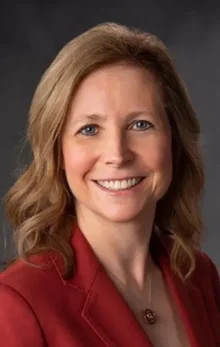
Cheryl Lim
Chief Human Resources Officer
Christy Pambianchi
Chief Human Resources Officer
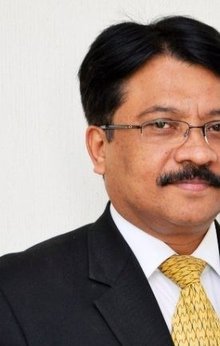
Dr C. Jayakumar
Executive Vice President & Head of Corporate Human Resources
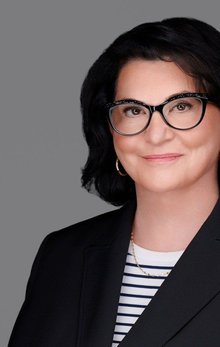
Emily Gepner
Chief Human Resources Officer
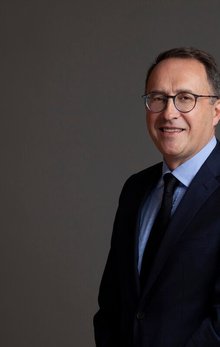
Ludovic Demierre
Vice-President, Human Resources
Martina Steffen
Chief Human Resources Officer and Chief Sustainability Officer

Susan Masters
Vice President of Human Resources & Assistant General Counsel

Therese Tegner
Executive Vice President Human Resources
Tracey Cook
Executive Vice President & CHRO