
Top 10: CHROs Leading the Future of Work
As businesses undergo significant transformations – largely driven by advancements in technology, environmental commitments and a growing need for flexibility from employees – having a future-facing people strategy has never been more important.
The HR leaders who are helping define the future of work are those who are able to blend human-centric leadership with technological adoption to ensure their companies remain resilient and competitive.
This list highlights the top 10 HR leaders who are pioneering cutting-edge strategies – from massive upskilling initiatives to ESG-aligned people plans – setting the standard for preparing workforces for the challenges and opportunities of the decades ahead.
10. Anna Lundström
Company: Spotify
Revenue: US$19.4bn
Spotify’s people strategy to prepare for the future of work includes a commitment to flexible working and an employee-first approach to AI transformation.
The company has remained steadfast in its Work from Anywhere (WFA) model, but has introduced ‘Core Weeks’ – an annual, in-person gathering where remote-first teams meet at local offices to encourage collaboration and social connection between employees.
When upskilling employees, CHRO Anna Lundström has said Spotify encourages a culture of accountability by providing staff with the tools they need to develop and allowing them to learn at their own pace.
9. Rebecca Pearson
Company: Bupa
Revenue: US$24.66bn
As technological advancements reshape healthcare, Bupa is focusing on upskilling its staff to help it remain competitive.
In February 2026, the company announced that it was launching a series of bespoke apprenticeships for its employees to help develop what it refers to as ‘future-focused specialists’ in an evolving healthcare environment.
These apprenticeships fall into the categories of leadership, AI, change and data and tech.
8. Isabelle Esser
Company: Danone
Revenue: US$32.15bn
By 2030, Danone is aiming to reallocate 1 million training hours per year and a budget of US$117.77m to upskill its workforce, which stands at close to 100,000 people globally.
This plan – which falls under the company’s DanSkills programme – is designed to prepare its workforce for the skills they will need to stay agile as its needs evolve, and allows the company to have the tools in place to fill the growing number of positions it anticipates it will need in the future.
7. Alejandra Piñol
Company: Ingka Group
Revenue: US$48.87bn
Ingka Group has said that its people-first culture – led by CHRO Alejandra Piñol – is helping the company better prepare for the future of work.
Instead of standardising learning when developing new skills, Ingka Group is developing a “contextual” training experience to ensure employees are prepared for how new technologies will reshape a range of different roles – from corporate to in-store staff.
The company has said it is aiming to have roughly half of its global workforce trained in AI by the end of 2026, with most employees trained by the end of 2027.
6. Treasure Heinle
Company: NIKE
Revenue: US$51.4bn
As Chief Human Resources Officer, Treasure Heinle’s role involves leading the company’s people vision and strategy, which hinges on ensuring NIKE employees and future talent have what they need to succeed.
This involves ensuring in-store staff are trained to use AI and digital tools as it pivots towards an omnichannel retail approach.
By upskilling employees in AI, NIKE is able to improve the in-store experience for customers by streamlining inventory management and improving point of sale systems.
This helps make the customer experience more personalised and offers employees the skills needed as work evolves.
5. Darrell Ford
Company: UPS
Revenue: US$88.7bn
UPS Chief Human Resources Officer Darrell Ford leads the company’s people and health and safety strategies – areas that have seen significant evolution in recent years.
The company is deploying technology to handle repetitive or physically demanding tasks, such as sorting parcels, unloading trailers and moving irregular packages that do not fit on a conveyor belt.
This reduces the physical strain on employees and frees up time, offering staff an opportunity to develop new skills through Nadia, an AI coach that can help frontline employees develop new skills through personalised mentoring.
4. Judith Wiese
Company: Siemens
Revenue: US$91.36bn
Since becoming Chief People and Sustainability Officer of Siemens in 2020, Judith Wiese has been responsible for managing the company’s talent and sustainability strategies.
To help the company prepare for a net-zero economy, Siemens has developed a DEGREE framework: Decarbonisation, Ethics, Governance, Resource efficiency, Equity and Employability.
It includes pursuing pay equity, maintaining a work wellbeing score of 80 or above and increasing its average total annual learning hours to 40 per person.
By integrating ESG targets and people strategies into wider business operations, DEGREE helps the company address its evolving workplace needs on a global scale.
3. Rachel Solway
Company: Shell
Revenue: US$273.731bn
Shell’s HR strategy is headed by Rachel Solway as its Chief Human Resources Officer, and is focused on aligning workforce capabilities with business transformation in order to help drive the energy transformation.
This includes helping staff develop skills that can aid the company in meeting its net-zero goals and creating an inclusive environment to increase female representation in technical roles and help close skills gaps.
To avoid long-term skills shortages, Shell has also created a graduate programme to offer younger generations an opportunity to learn by doing through hands-on experience and mentoring.
2. Amy Coleman
Company: Microsoft
Revenue: US$281.7bn
As the skills needed for specific roles evolve, Microsoft’s Chief People Officer Amy Coleman has reworked what the company looks for when hiring.
Instead of looking for specialisms, hiring teams at Microsoft assess for adaptability and a drive to learn, with the ability to relearn and build new skills becoming more important for modern tech workforces as AI and emerging technologies reshape the way work is done.
Interviewers are asked to look for traits such as collaboration in the hiring process, and the company uses AI to help recruiters pull out specific skills and attributes from candidates’ CVs.
1. Beth Galetti
Company: Amazon
Revenue: US$716.9bn
Since becoming Senior Vice President of People Experience and Technology at Amazon in 2021, Beth Galetti has driven initiatives to help modernise the employee experience and upskill employees to prepare Amazon’s workforce for a more AI-enabled future.
This includes Future Ready 2030, a US$2.5bn investment in skills training for Amazon employees, students and the broader workforce to prepare them for the future of work.
Designed to help workers and future workers thrive in a rapidly changing labour market, Amazon’s Future Ready 2030 connects education directly to real employment opportunities – such as AWS Educate, which prepares students for cloud-based jobs, and Machine Learning University, designed to train employees to build AI solutions for Amazon’s business challenges.
The company has already upskilled more than 700,000 employees globally, and is continuing to prepare its employees for the changing workforce.
Company portals










Executives

Alejandra Piñol
CHRO

Amy Coleman
Executive Vice President, Chief People Officer
Anna Lundström
CHRO
Beth Galetti
SVP, People eXperience and Technology
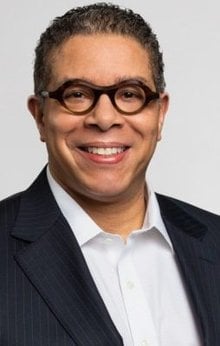
Darrell Ford
Chief Human Resources Officer

Isabelle Esser
CHRO
Judith Wiese
Chief People and Sustainability Officer of Siemens AG (CPSO)
Rachel Solway
Chief HR & Corporate Officer

Rebecca Pearson
Chief Sustainability & People Officer

Treasure Heinle
Chief People Officer