
How Employee Experience Drives Retail Transformation

The strategic role of AI in business transformation continues to dominate boardroom discussions, particularly around its impact on employee experience and operational efficiency.
Increasingly, leaders across industries are evaluating how the technology could reshape strategic decision-making, workflows and the human and cultural elements that define their organisations.
Michael Fiddelke, Target's incoming Chief Executive Officer and current Chief Operating Officer, is navigating this balance at the retailer's Minneapolis headquarters in Minnesota. His approach centres on incorporating AI capabilities whilst protecting the employee-driven brand experience that could differentiate Target in a challenging retail environment.
The company has announced significant investments in its physical estate and technology infrastructure, committing billions to address a period of declining sales.
This includes approximately US$5bn in capital spending in 2025, which Target said will "support new stores and remodels, enhancements to the store experience and advancements in technology and digital fulfilment capabilities".
An additional US$1bn will be invested into the business.
Investing in operational capabilities
According to a report by Retail Dive, Michael told analysts during a 19 November earnings call discussing Target's third-quarter results that the investment will support changes to "key floor pads throughout the store, which will accelerate both our merchandising authority and our experience".
The strategic focus is designed to address weaker footfall whilst leaning into growth categories such as beauty, which is outperforming other departments.
The technology push includes AI to accelerate product development and marketing, synthetic audiences to test campaigns and a ChatGPT-powered beta to simplify multi-item purchases.
According to Retail Dive, Michael explained this will "simulate real consumer populations to preview how different groups could respond to campaigns and products before they ever launch."
Chief Commercial Officer Rick Gomez said on the call that Target will make changes to its home category product offering while adjusting the store environment to "facilitate more discovery".
These operational adjustments come as the company works through disappointing results, with net sales dropping 1.5% year-over-year to US$25.3bn and comparable sales decreasing 2.7%.
Merchandise sales decreased 1.9% whilst store comparables dropped 3.8%, partly offset by digital sales growth.
Understanding generational shopping behaviours
The strategic value of physical retail experiences could be validated by shifting consumer preferences, particularly among younger demographics.
Malina Ngai, Chief Executive Officer of AS Watson Group, told audiences at the Fortune Innovation Forum that Gen Z customers are returning to physical stores for consultation, product interaction and community.

According to Fortune, she said this trend is particularly evident in beauty departments, which validates investment in store experiences that online retail cannot replicate.
Discussing the Hong Kong-based brand she leads, Malina told Fortune that US retailers could benefit from the footfall seen with young people in Southeast Asian beauty stores: "For younger customers, they want to be in the store, they want to get consultancy, they want to be able to touch the product - and this is what we can offer."
This consumer insight could inform how organisations structure employee roles and training programmes to deliver the consultative experiences that younger customers seek.
Defining leadership priorities for transformation
Michael was announced as Chief Executive Officer Designate on 20 August and will assume the role on 1 February 2026, taking over from current CEO Brian Cornell, who will transition into the role of Executive Chair of the board.
In an interview with CNBC on 19 November at the Minneapolis headquarters, Michael outlined three key priorities as he prepares to lead the organisation: regaining Target's reputation for style and design, providing a more consistent customer experience and using technology to accelerate business operations. He said that improving its merchandise, nicknamed 'Tarzhay', is a critical first priority for me.
"When we lead with style and design," Michael added, "when our guests can walk into a Target store or scroll through the app and find that stylish, unique thing that ideally they could only find at Target, that's at an unexpected value, that's when we're at our best."
These priorities underscore how employee capability and consistent service delivery could influence customer perception and business performance. Nearly a third of Target's annual sales came from the festive quarter in 2024, making the upcoming period a critical test of whether the company's refresh strategy can deliver results.
Company portals

Executives
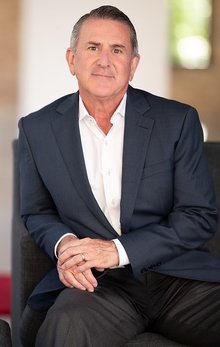
Brian Cornell
Chair and Chief Executive Officer

Michael Fiddelke
Chief Operating Officer

Rick Gomez
Chief Commercial Officer