Spotify and Netflix: Moving Away From 'Work Family' Culture

Is the ‘work family’ well and truly dead?
For decades, the idea of a company being ‘like a family’ was the aspirational gold standard for company culture – a place of comfort, support and unquestioning loyalty. More recently, however, this approach is being seen as a major red flag.
According to research from People Managing People, nearly one in five job candidates considers it a warning sign when a workplace is referred to as a family during the interview process, as it can often disguise business practices that blur professional boundaries and justify overworking, which may lead to burnout.
Instead, HR leaders at major global players like Spotify and Netflix are looking at their culture strategies in an entirely new light – positioning themselves as a band, or a professional sports team.
New cultural metaphors such as these can help develop a high-performance environment while maintaining professional boundaries, so employees can feel valued within a team and avoid a sense of vague familial obligation.

Building Spotify’s ‘unique creative environment’
While Spotify has built a collaborative and inclusive culture that could be seen as similar to a family model, the company prefers to position its team as a band.
This ‘bandmate’ culture, the company says in its culture manifesto, means that it needs all employees to be in sync, as everyone is “dependent on each other to create the best experience.”
To scale this model to more than 7,000 employees worldwide, Spotify has built a people strategy designed to align employees on its wider mission while building learning opportunities to give staff room to grow.
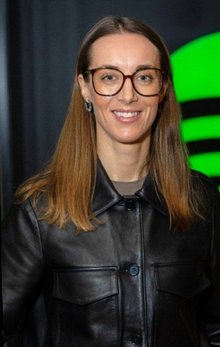
Anna Lundström, Chief HR Officer at Spotify, says of the company’s culture: “Our culture is built on giving our bandmates runway to exercise good judgment and move fast wherever they sit, whatever their title.
“We have a fun – and dare I say unique – creative environment where we empower and inspire people to do the best work of their careers.”
To build this environment, the company has created five cultural values – innovation, sincerity, passion, collaboration and playfulness. Designed to give its ‘band members’ support and autonomy, these values were developed by employees – more than 70 were suggested in workshops, and staff voted on these options to reach a final five.
Together, these values encourage staff to take risks, give candid feedback, care about the company mission, work with others across the organisation and share in success.
Anna says: “We’ve built a culture of trust and flexibility where people feel empowered to be creative and have the ability to drive impact. It’s something I’m so proud of, and it is heavily influenced by our Swedish roots.”
The ‘Keeper Test’
Similarly, Netflix has prioritised cultivating a team of high performers as part of its wider culture strategy – a group the company refers to as its ‘Dream Team.'
It has developed this strategy through its ‘culture memo,” originally developed by Netflix Co-Founder Reed Hastings as a 125-page PowerPoint presentation in 2009. This manifesto has been revised several times since then to best encompass the experiences of its global workforce of around 14,000 people.
Building this high-performance culture is similar to managing a sports team, according to Netflix. In its culture memo, the company says it has decided to: “Focus on performance and picking the right person for every position, even when that means swapping out someone they love for a better player.”
This act of swapping and tweaking refers to Netflix’s ‘Keeper Test’, developed by Reed. The test is used to assess employees, with managers encouraged to ask themselves: “If X wanted to leave, would I fight to keep them?” or “knowing everything I know today, would I hire X again?”
If managers do not fight to retain an employee, Netflix suggests that “it’s fairer to everyone to part ways quickly.”
“We believe that our culture is key to our success,” says Sergio Ezama, Chief Human Resources Officer at Netflix. “So we want to ensure that anyone applying for a job here knows what motivates Netflix – and all employees are working from a shared understanding of what we value most.”
Opening doors for employees
Investing in a company's workforce is essential for fostering these high-performance cultures, which, distinct from 'family style' models, thrive on granting employees greater autonomy and trust to maintain motivation and engagement.
Spotify, for instance, is dedicated to ensuring its bandmates remain at the top of their game through an ‘always-on’ approach to learning, which encourages social knowledge sharing and offers frequent opportunities to learn.
This approach has been designed to be mutually beneficial for both employee and employer, by helping employees develop in their careers, while fuelling innovation and growth for the company.
Anna says: “We pride ourselves on having some of the most creative minds in the business, and my top priority is to continue nurturing this.
“We have to keep evolving the band experience, reflecting not only where we are as a company but where we aspire to go.
“This means setting bandmates up for success by opening new doors to explore creativity and deliver tangible impact, whatever your role.”

Netflix, meanwhile, encourages employee autonomy by cutting back on what it considers unnecessary processes.
The company explains in its culture memo that managers should “practice context” rather than control by giving employees the “clarity needed to make good decisions.”
In practice, this means keeping rules as minimal as possible – its holiday policy is simply “take a vacation,” and employees have no set hours. Instead, performance is measured largely on output.
“You might think that this kind of freedom leads to chaos,” says Sergio. “While we’ve had our fair share of failures – and a few people have taken advantage of our culture – our emphasis on individual autonomy has created a very successful business.”
This approach can be traced back to 2009, with the company’s initial culture memo criticising company models that are too process-driven.
While this may deliver near-term results, the initial memo says, this lack of agility can create a company that could “grind painfully into irrelevance.”
Sergio continues: “Off the beaten path is how we have decided to lead the people's agenda at Netflix. By now, I have no doubts this team will succeed in keeping our unusual ways at scale and in doing so, creating the conditions for everyone to do the best work of their lives.”
Company portals


Executives
Anna Lundström
CHRO

Reed Hastings
Chairman
Sergio Ezama
CHRO