
Why Remote Work Is Winning and CEOs Cannot Reverse It

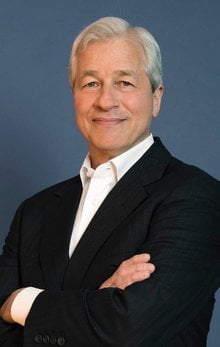
Jamie Dimon speaks for plenty of frustrated bosses.
In a recording leaked in early 2025, the Chief Executive of JPMorgan Chase is heard rounding on the empty desks around him. "I come in, and where is everybody else?" he complains, months before ordering staff back to the office five days a week.
His was the loudest voice in a two-year chorus. Home Depot, Target, Microsoft, 3M and Intel all issued return-to-office orders to great fanfare. Yet step back from the headlines and the great return barely registers. Across the US economy, the share of work done from home has stopped falling. The mandates are real but the data refuses to obey them.

Remote work has found a floor
The headline figure is stubborn. An average of 26% of paid full days were worked from home in May, flat compared to 27% two years earlier and 30% in 2022, according to the monthly survey run by Stanford economist Nicholas Bloom and his co-authors. Before the pandemic the figure sat near 7%.
"The data does seem at odds with the narrative Dimon tells, where remote work is dead," says Emma Harrington, an economist at the University of Virginia who studies remote work.
The other gauges back her up. Kastle Systems, which tracks access-card swipes, finds office occupancy across ten major cities slightly higher than a year ago, while phone data from Placer.ai puts May office visits about 32% below their 2019 level, an improvement of just three points in twelve months.
That gap reflects a simple reality: the giants making headlines are a sliver of a 163-million-strong workforce, where nearly two-thirds are on-site full time, roughly one in ten fully remote and most of the rest hybrid.
Remote work has not collapsed. It has found a floor.
The mandates lose to the calendar
The chief executives leading the loudest returns tend to be older, formed in an office-first era.
Bloom's research finds that employees at firms run by younger bosses work from home more often than those under older ones. "If you look at CEOs who were 40 or under during the pandemic, they're far more likely nowadays to have at least hybrid in their companies," says Bloom. "Older CEOs generationally are just less used to it."
That is why he expects more remote work ahead, not less. Older bosses retire. Younger ones, at ease with distributed teams, take their place.
The same holds for young companies. Prithwiraj Choudhury, an economist at the London School of Economics, points out that fast-growing startups are the ones engineering the management practices to make hybrid work.
"Some of these companies will scale up and become the next set of large companies," says Choudhury. They bring those operating models with them as they grow. The office debate, in other words, may be settled less by any memo than by who is left in the room to write it.
What hybrid is quietly doing to people
Emma Harrington, an economist at the University of Virginia, doubts remote rates will surge, but expects a slow climb as the technology keeps improving.
The upside is real and uneven. Her work with economist Matthew Kahn shows remote options have kept more mothers in work, and Labor Department figures record a marked rise in employment among people with disabilities since 2020, likely driven by workplace flexibility.
The cost is slower to surface. In research published this month in the journal Science, Harrington and two co-authors find remote work has left Americans lonelier and more mentally distressed, and preliminary research suggests it has dented the prospects of young graduates, who learn by sitting near senior colleagues.
The commute saved is immediate. But skill gaps develop silently, emerging only when those capabilities are needed. "You're not building the skills that you would have in person," says Harrington, "and that kind of slow burn can make people less productive in the long run."
Dimon and his peers can keep filling the airwaves, and some staff will be coaxed back by promotions that reward the visible and rules that bind new hires. But the line on the chart has scarcely twitched in two years. The office argument will not be won by the loudest voice.
It will be settled, quietly, by the next generation to run the place.



Executives

Emma Harrington
Economist
Jamie Dimon
Chairman of the Board

Nicholas Bloom
Professor
- Spotify and Netflix: Moving Away From 'Work Family' CultureOrganisation & Culture
- M&S and Amazon Bet on Potential Over College DegreesLearning & Development
- Oracle, Amazon and Meta Drive Record AI LayoffsOrganisation & Culture
- Amazon Axes AI Leaderboard After ‘Tokenmaxxing’ BackfiresOrganisation & Culture