Why Are Oracle and Netflix Embracing Co-CEO Leadership?

The corporate leadership landscape is experiencing a change. An increasing number of prominent companies are moving away from the traditional model where a single CEO occupies the top seat and instead embracing a dual-leadership structure based around shared responsibility.
Spotify's recent announcement that it will appoint co-CEOs in 2026 places it alongside other major players like Netflix, Oracle and Comcast that have adopted this approach. The trend prompts a closer look at the strategic and organisational implications of having two individuals at the helm.
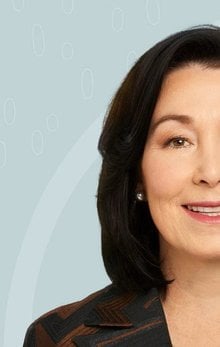
For decades, Safra Catz held a top leadership role at Oracle, first as co-CEO with Mark Hurd and later as the sole Chief Executive.
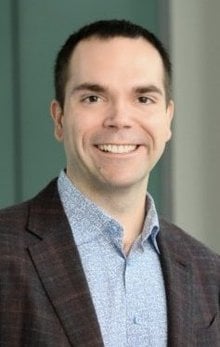
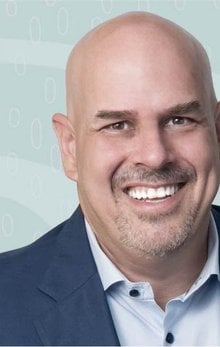
Her recent move to Executive Vice Chair of the Board has paved the way for a new co-CEO partnership between Clay Magouyrk and Mike Sicilia. Catz’s own tenure as co-CEO saw Oracle's major transition towards cloud computing.
The new appointments suggest a continuation of a strategy that leverages distinct expertise, with the pattern of pairing leaders with complementary skills becoming a notable governance strategy.
Structuring leadership for growth
The co-CEO model is not a new concept, but its adoption by high-profile companies suggests a renewed interest in its potential benefits.
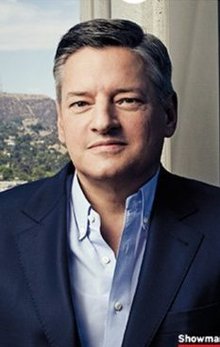
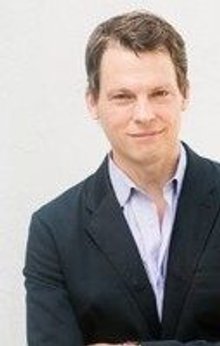
When Netflix promoted Ted Sarandos to share the top job with Reed Hastings in 2020, it marked a formal recognition of a collaborative leadership style already in place. After Hastings stepped down, Greg Peters was elevated to co-CEO alongside Ted in January 2023.
Netflix has since seen subscriber growth alongside increases in advertising revenue and operating margins.
The success at Netflix could be attributed to a clear demarcation of duties. Ted focuses on brand and content, while Greg is responsible for product, advertising, pricing and partnerships - a division that allows each leader to apply their specific expertise without overlap.
“Having two CEOs is an incredibly powerful model,” Peters has previously stated in an interview with The Verge, adding: “It’s hard to pull off, but our culture is an enabling function for why the co-CEO model works at Netflix.”
For Ted, the partnership provides a unique form of support. Discussing the benefits with Fast Company he said that “having someone to talk to who is not an employee or a board member – who is your peer – is so helpful [...] it helps combat that lonely-at-the-top thing”.
Complementary expertise and performance
Data indicates that the benefits of a dual-CEO structure is tangible. According to a study by leadership psychology organisation AAPL, which analysed 87 public companies with co-CEOs between 1996 and 2020, they generated average annual shareholder returns of 9.5%.
This compares to 6.9% for the relevant index for each firm. The study also found that nearly 60% of these companies outperformed their benchmarks. At Oracle, the appointments of Magouyrk and Sicilia reflect a similar strategy of combining complementary strengths.
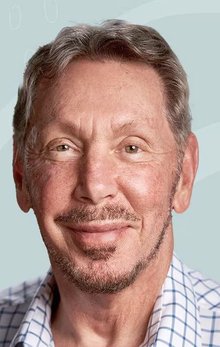
Larry Ellison, Chairman of the Board and Chief Technology Officer at Oracle, highlighted their combined experience.
Magouyrk was a foundational member of Oracle's cloud engineering team, while Sicilia has focused on updating its industry applications with AI.
“A few years ago, Clay and Mike committed Oracle’s Infrastructure and Applications businesses to AI - it’s paying off,” said Ellison. “They are both proven leaders, and I am looking forward to spending the coming years working side-by-side with them. Oracle’s future is bright.”
Trust and succession
For a co-CEO structure to succeed, trust and collaboration are essential. The recent appointment of Michael J. Cavanagh as co-CEO at Comcast to serve alongside Chairman Brian L. Roberts highlights this point.

Michael has been with Comcast since 2015, serving as Chief Financial Officer and later as President.
“Since joining Comcast a decade ago, Mike has proven himself to be a trusted and collaborative leader,” says Brian.
He adds: “He is the ideal person to help lead Comcast as we manage the change we are making to promote growth across Comcast. Mike and I work seamlessly together, and I am thrilled to be partnering with him as Co-CEO and with the rest of our talented management team for years to come.”
However, the model is not without its challenges. According to Harvard Business Review, ambiguity in decision-making and a lack of clarity for shareholders can trigger failure. Internal fragmentation may also arise if the dynamics between the two leaders are not managed carefully.
Successful arrangements often share common traits, including complementary expertise, enhanced organisational resilience and better succession planning.
For organisations considering this path, the key appears to be a clear mandate and a strong pre-existing relationship between the chosen leaders.
Company portals




Executives
Clay Magouyrk
CEO
Greg Peters
Co-CEO
Larry Ellison
Co-Founder, Chairman and Chief Technology Officer at Oracle
Mike Sicilia
Chief Executive Officer
Safra Catz
Former Oracle CEO
Ted Sarandos
Co-CEO