
AI Killed the Org Chart, Says HPE's Chief People Officer
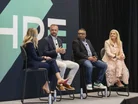
Most companies are still built for a world that has quietly disappeared. That is the argument Stacy Dillow, Chief People Officer at Hewlett Packard Enterprise (HPE), made this June after moderating a panel on the future of the workforce at the company's Discover conference.
"We are still running companies built for a world that no longer exists," Stacy writes on LinkedIn, pointing at the org charts, job descriptions and pay models designed for a time when work was fixed and humans did everything.
Built for a world that has gone
She is not making the tired claim that AI has already remade business at its core. Everyone says that. What Stacy sees is that work has turned fluid, and decisions now outrun the chain of command built to approve them.
Every major AI investment is, underneath, a decision about people and what the workforce truly costs. Yet most companies bolt AI onto old machinery when the moment asks them to build something new.
Bolting a fast engine onto an old chassis does not make a fast car.
"The future of work isn't artificial," Stacy says. "It's AI-powered and human-led." The distinction puts the work back on leaders to design the thing rather than wait for it to arrive.
Once an agent can approve a transaction that used to need a manager's signature, the layers of sign-off that defined the old org chart stop being control and start being friction.
The people chief's new brief
For a Chief People Officer, this redraws the job. If AI now steers where investment and headcount go, people strategy and financial strategy stop being separate conversations. Stacy's prescription is to re-architect three things at once, fast enough to lead the shift rather than trail it:
- Skills, so the workforce is organised around what humans do best
- Organisations, so structure matches how work actually flows
- Investment, so every pound spent on AI is weighed as a workforce decision
The aim, in her words, is to "leverage AI to remove what's mechanical so humans can focus on what's meaningful". It is a tidy line, and it hides real upheaval, redrawing roles, retraining people and rethinking how a company counts the cost of its own staff.

Recent surveys put roughly nine in ten senior HR leaders expecting AI to reshape the nature of jobs, not merely automate a few tasks.
The CPO now sits on every AI budget line, because each one carries a headcount and a cost.
HPE's AI overhaul is an HR warning
HPE spent most of Discover 2026 talking about infrastructure rather than people, which oddly makes Stacy's case for her.
"As AI becomes more autonomous, organisations need a new architecture to run it securely, govern it responsibly and scale it economically," says Antonio Neri, HPE's President and CEO, in HPE's Discover 2026 announcement.
Swap "architecture" for "organisation" and you have Stacy's argument about people, word for word. Her panel, which included HPE Financial Services chief Maeve Culloty, HR leader Ajit Chouhan and Dallas Cowboys CIO Matt Messick, kept circling one warning.
Any company that leaves its own structure untouched will spend the next cycle chasing a future it could have led. Work has to be architected; it will not architect itself.
Company portals

Executives
Antonio Neri
President & CEO

Stacy Dillow
Chief People Officer