Top 10: CHROs in Automotive and EVs
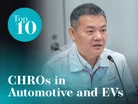
The car industry is reinventing itself on two fronts: first with electric powertrains, then with software and AI. Everyone who builds and sells cars must transform alongside it.
That job falls to the Chief Human Resources Officer. At the world's largest automakers, the HR chief now leads reskilling, restructuring and the delicate task of moving tens of thousands of workers from engines to batteries and code.
If they falter, the entire strategy stops on the factory floor. Meet the 10 leaders bearing this responsibility at the industry's giants, ranked by the revenue they oversee.
10. Toru Ihara
Company: Nissan Motor
Revenue: ¥12tn (US$80bn)
Location: Yokohama, Japan
Toru Ihara holds one of the industry's hardest people jobs. As Chief HR Officer of Nissan, he is steering the workforce through plant closures, deep cost cuts and heavy losses as the ¥12tn (US$80bn) group fights to stabilise.
With the on-off alliance dramas behind it, the task left to Ihara is human, leading strategies to retaining engineers and rebuilding morale while Nissan bets on a fresh EV lineup.
9. Kathleen Wilson-Thompson
Company: Tesla
Revenue: US$94.83bn
Location: Austin, Texas, US
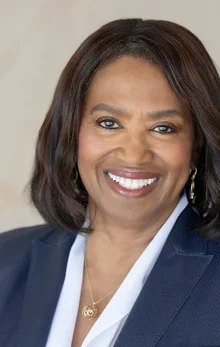
Tesla is the anomaly on this list. It has no CHRO, so its most senior HR authority sits on the board.
Kathleen Wilson-Thompson, a Tesla independent director since 2018 and former Global Chief Human Resources Officer of Walgreens Boots Alliance, brings decades of people expertise to the oversight of a US$95bn company famous for running lean.
8. Hae In Kim
Company: Hyundai Motor
Revenue: KRW 186.3tn (US$135bn)
Location: Seoul, South Korea
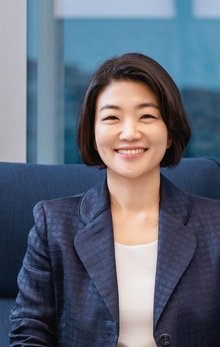
Hyundai spent a decade turning itself into an EV powerhouse, which requires key support from the people function. Hae In Kim offers that support as Executive Vice President and Head of HR.
She oversees people strategy across a KRW 186tn (US$135bn) business that now courts Silicon Valley engineers as hard as it hires line workers.
From the new Georgia Metaplant to robotics and software, Kim is building a workforce for a carmaker that increasingly thinks like a technology company.
7. Britta Seeger
Company: Mercedes-Benz
Revenue: €132.2bn (US$143bn)
Location: Stuttgart, Germany
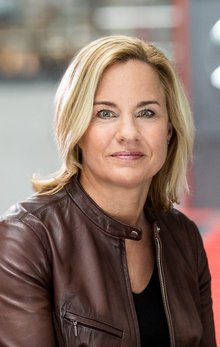
Britta Seeger changed jobs without changing companies. In May 2025 she moved from running Mercedes-Benz sales to its board seat for People and Enterprise Tech, a portfolio deliberately renamed from Human Resources.
That rebrand is the point, a signal that people and technology are now one agenda at the €132.2bn luxury maker. Britta oversees a workforce shifting from combustion craft to electric and software, and a labour-relations brief that still carries real weight in German industry.
6. Ilka Horstmeier
Company: BMW Group
Revenue: €133.45bn (US$144bn)
Location: Munich, Germany
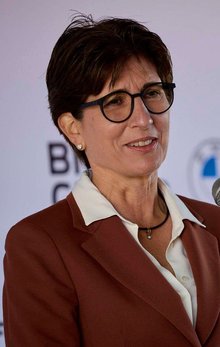
At BMW, human resources and real estate sit under one board member. Ilka Horstmeier holds that seat, as Member of the Board of Management for People and Real Estate and Labour Relations Director.
She steers the people side of a €133.45bn (US$144bn) group that has bet on offering combustion, hybrid and electric side by side. Ilka's job is keeping a huge workforce fluent across all three.
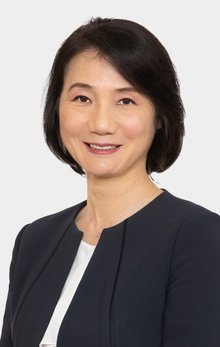
5. Asako Suzuki
Company: Honda Motor
Revenue: ¥21.8tn (US$145bn)
Location: Tokyo, Japan
Asako Suzuki is Honda's Chief Officer for Human Resources. As Director and Executive Vice President, she leads people strategy across a ¥21.8tn (US$145bn) group juggling motorcycles, cars and an urgent EV push.
Suzuki's challenge is cultural as much as operational, moving a proud engineering company built on the engine towards software and electrification without losing the craft that made its name. It is a delicate rewrite of what a Honda career means.
4. Xavier Chéreau
Company: Stellantis
Revenue:€153.5bn (US$166bn)
Location: Amsterdam, Netherlands
Few CHROs carry a title this broad. Xavier Chéreau is Executive Vice President for Human Resources and Transformation at Stellantis, and since May 2026 his remit also covers the group's new Global AI Transformation Office.
He runs people strategy for a €153.5bn (US$166bn), 14-brand giant, in charge of reskilling and resizing a sprawling global workforce while folding AI into how the company actually works, all at the same time.
3. Arden Hoffman
Company: General Motors
Revenue: US$185bn
Location: Detroit, US
Arden Hoffman took over people strategy at General Motors in 2023, and the EV plan she inherited has since been redeveloped multiple times in the years since.
As Senior Vice President and Chief People Officer, she manages the workforce of a US$185bn carmaker evolving its electric targets while protecting the profitable trucks that fund everything else.
Arden's brief spans union relations, reskilling and the retention of the software talent GM needs to compete. Steadiness is the assignment, keeping people focused while the strategy above them keeps moving.
2. Jennifer Waldo
Company: Ford Motor
Revenue: US$187.3bn
Location: Dearborn, US
Jennifer Waldo came to Ford from Apple and GE, and she landed in the middle of one of the industry's messiest transitions.
As Chief People and Employee Experience Officer, she runs the workforce of a US$187.3bn carmaker that split itself in two, Ford Blue for combustion and Model e for electric, then watched the EV unit pile up billions in losses.
Jennifer's job is to keep both halves motivated, reskill plant workers for batteries and software and hold onto engineers courted hard by Tesla and start-ups. Ford has since leaned back into hybrids as pure-EV demand cooled, which means her people must stay fluent in every powertrain at once.
Few HR strategies in cars are being stress-tested harder right now.
1. Takanori Azuma
Company: Toyota Motor
Revenue: ¥48.04tn (US$314bn)
Location: Toyota City, Japan
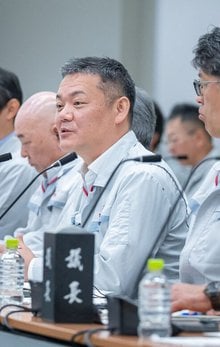
No one oversees more car workers than the HR chief of Toyota. Takanori Azuma holds that job as Chief Human Resources Officer, part of the leadership running a ¥48tn (US$314bn) giant, the largest carmaker on earth. His challenge is contrarian.
While rivals bet everything on battery-electric, Toyota has hedged across hybrids, hydrogen and EVs, and Azuma must keep a global workforce of more than 375,000 skilled across all of them rather than pushing everyone towards one answer.
That means reskilling at vast scale, defending Toyota's famed production culture and readying people for software-defined cars without losing the engine expertise that still pays the bills. He also carries the Chief Risk Officer title, a hint that at Toyota people and risk are now handled as one job. It is the biggest human balancing act in the industry.
Company portals









Executives
Arden Hoffman
Chief Human Resources Officer
Asako Suzuki
CHRO
Britta Seeger
People & Enterprise Tech and Labour Director
Hae In Kim
Executive Vice President and Head of HR
Ilka Horstmeier
CHRO
Jennifer Waldo
Chief People and Employee Experience Officer
Kathleen Wilson-Thompson
Board Director and Strategic Advisor
Takanori Azuma
Group Chief Officer
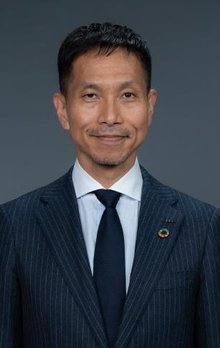
Toru Ihara
CHRO, Executive Committee Member
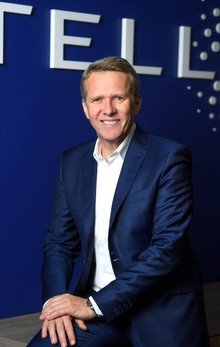
Xavier Chéreau
CHRO