
Are AI Investments Stalling Small Business Hiring?

Small business hiring may be reducing as tech investments increase, according to the Bank of America’s Small Business Checkpoint.
The report finds that spending on tech services for small businesses grew 14% in February, the highest since the start of its data series, with Bank of America suggesting that this is because these businesses are investing in “tools that boost productivity and streamline operations.”
Meanwhile, the hiring landscape “remains relatively depressed,” says the report – despite the fact that small businesses employ close to half of US workers. The number of small businesses who planned to hire also fell 4.4%.

AI investments increasing across organisations
According to KPMG, nearly 80% of CEOs say 5% of their total capital budgets are being allocated to AI, while 35% put the number at between 11% and 20%, which Tim Walsh, CEO of KPMG, described as ‘dizzying.’
He said: “It’s stressful if you’re not investing, if you’re not keeping up. Because if you’re not keeping up, you have the risk of losing market share.”
But, as AI investments increase, entry level workers are reckoning with a job market that is becoming increasingly more complex.
Increases in AI layoffs
Research from Ernst & Young finds that 41% of employees believe AI is evolving too quickly – and with Challenger, Gray & Christmas reporting that companies announced 54,000 AI related layoffs in the US in 2025, it is easy to see why.
Widescale layoffs are being seen across industries, with fintech company Block announcing in February that it was laying off 40% of its workforce due to AI investments.
CEO Jack Dorsey said these cuts were made because AI has “changed what it means to run a company.”
HSBC is also rumoured to be considering cutting around 20,000 roes over the next five years, with reports from Bloomberg suggesting that the company is anticipating that AI is going to decrease its workforce needs.
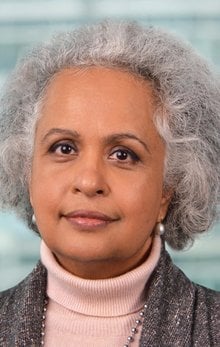
The bank is yet to comment on the rumoured job cuts, but Pam Kaur, Chief Financial Officer at HSBC, has said the bank is focusing on strategically deploying its AI investments.
At a Morgan Stanley press conference, she said: “The real shift where we are doing in terms of our investment is really trying to drive operating leverage whether it’s by focusing on scale businesses or indeed focusing on the benefits we can get through AI, whether it’s on better productivity around the revenue line or just the cost benefit.”
Has the hiring landscape changed?
Despite the trend of AI investments increasing and hiring drives reducing, as reported on by the Bank of America, many leaders feel AI will not have a significant impact on hiring and the workforce.
Dan Rogers, CEO of Asana, has discussed career prospects in an interview with Fortune, saying that he believes workplace competitiveness has not increased.
Reflecting on his career progression, Dan said: “I don't remember it being easy back in the day, honestly. For me, for example, it was never going to be possible that I'd go straight to the hottest tech company in the hottest role.
“I always felt like I was going to have to work my way in, and I was going to have to work through experiences elsewhere that I would shine at.”
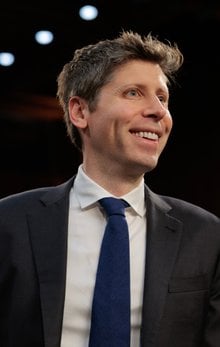
Sam Altman, CEO of OpenAI, has also said that he believes many companies are unfairly attributing layoffs to increased investments in AI – often referred to as ‘AI Washing.’
At the AI impact summit, Sam told attendees: “I don’t know what the exact percentage is, but there’s some AI washing where people are blaming AI for layoffs that they would otherwise do, and then there’s some real displacement by AI of different kinds of jobs”.
Company portals





Executives
Dan Rogers
Chief Executive Officer

Jack Dorsey
Pam Kaur
Group Chief Financial Officer
Sam Altman
Tim Walsh
Chair and CEO
- F5 Bets on Culture, Hiring Wayfair's People ChiefTalent Acquisition
- Darren Minshall Joins WPP Media as UK Chief People OfficerTalent Acquisition
- Ford Rehires 300 Engineers to Improve Manufacturing QualityTalent Acquisition
- JPMorgan Names Two Co-Presidents in Dimon SuccessionOrganisation & Culture