
JPMorgan Names Two Co-Presidents in Dimon Succession

How do you replace a man who has run a bank for 20 years and shows no sign of leaving? JPMorgan Chase gave its clearest answer this week, and it came with a casualty.
On 25 June the bank named Doug Petno and Troy Rohrbaugh co-presidents, effective at once; the two front-runners are now visibly ahead in the long race to succeed Jamie Dimon. The same day, Marianne Lake, a 25-year veteran once tipped for the top role, announced her retirement.
In the bank's statement, Jamie calls the reshuffle "an important step in our Board's thoughtful process around succession planning". He says he has "never been more excited about the future of JPMorganChase".
Exit of a front-runner
Marianne's departure should give every talent committee pause. She joined in the late 1990s and served as chief financial officer from 2013 to 2019, a period that included record profits and a pandemic.
Most recently she ran the consumer and community bank, the firm's largest division by customers.
For years Marianne sat on every shortlist for the corner office, the leading female contender in a succession long dominated by men. Jamie calls her "an outstanding partner and friend" who "dedicated her career to championing our people and customers ... always with unquestioned integrity", in the bank's statement.
Her exit still thins the field and removes its most prominent woman, a signal analysts read as being about timing rather than ability.
Bank of America analysts see the reshuffle, especially her retirement, as a sign that Jamie, now 70, intends to stay several more years. The longer he stays, the more succession arithmetic favours youth over seniority. This calculation now hangs over everyone left in the running.
A relationship banker and a risk manager
The two men still standing could hardly be less alike. Doug, 61, is the relationship banker, a 35-year company man who once meant to be a vet. He rose to run commercial banking, where revenue more than doubled under him. Jamie told Bloomberg early last year that Doug is "a great client guy and a culture carrier".
Doug keeps sole charge of the Commercial & Investment Bank and helps steer a US$1.5tn Security and Resiliency Initiative close to the chief executive's heart.
"People took chances on me, including Jamie", he told his alma mater in 2019, a line that lands differently now that the biggest chance of all is in view.

Golden handcuffs, longer game
A combined US$100m buys a lot of patience. That is the price JPMorgan just put on keeping four executives in their seats, according to a regulatory filing. Doug and Troy receive US$30m each. Mary Erdoes, who keeps Asset & Wealth Management, and Jennifer Piepszak, who stays chief operating officer, receive US$20m apiece. All four now report to Jamie.
The grants pay out only if the bank clears a 12% return-on-tangible-equity hurdle, subject to clawback provisions. The message to the quartet is blunt. Stay, and perform.
Which is exactly how JPMorgan likes it. The largest US bank by market value at more than US$890bn has spent years making sure its eventual handover reads as an anticlimax. A deep bench and a thicket of pay and governance rules stand between the firm and any nasty surprise.
Boards everywhere are running the same drill this year, from Domino's to Nike, auditioning the next leader while the current one stays put. At JPMorgan it has come down to two names and no deadline. "It's a question of timing more than anything," says Wells Fargo analyst Mike Mayo.
Company portals



Executives
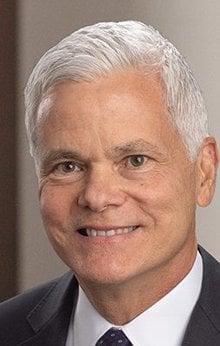
Doug Petno
Co-president
Jamie Dimon
Chairman of the Board
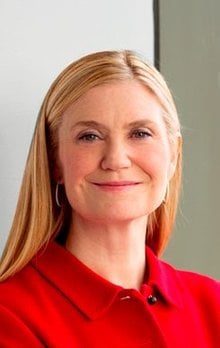
Marianne Lake
CEO of Consumer & Community Banking

Mike Mayo
Analyst

Troy Rohrbaugh
Co-president

- Why Remote Work Is Winning and CEOs Cannot Reverse ItHR Strategy
- Gillette Names First Female CEO as Senior Women Exit P>alent Acquisition
- What Organisational Changes Could Mean for Manchester UnitedOrganisation & Culture
- Reward Gateway | Edenred Appoints UK Managing DirectorHR Strategy