
What Organisational Changes Could Mean for Manchester United

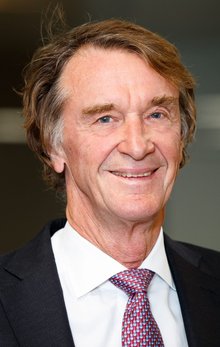
As Manchester United nears three years under the watch of UK billionaire and INEOS CEO Jim Ratcliffe, the team has seen several club-wide changes to its organisational structure and work culture, in addition leadership pressures.
Following the purchase of a minority 25% stake (US$1.68bn) in the club in 2023 and a £79.3m (US$106.7m) increase in that stake in 2024, Jim currently owns 28.94% of the club.
Under Jim’s leadership and investment from INEOS, Manchester United has enacted seismic change across the club, including several newly appointed senior positions and the implementation of team oversight during its player scouting process.
Additionally, Jim has announced plans to construct a new 100,000-seater stadium, designed to host other international sporting events and enhance the event atmosphere for attendees, rather than regenerate The Old Trafford Stadium.
Organisational and cultural changes like these are demonstrating a real-time case study in company restructuring, employee morale and public reaction on a national scale.
As an organisation with the power to influence both business and wider culture, changes at Manchester United are likely to impact HR practices across the sports industry and beyond as the club remains an institutional touchstone and as a regular point of public interest.

Balancing competition and support
With a new leader at the helm of the club, there is potential for a new company culture at the club.
Jim’s company, INEOS, uses its own special tool to influence work culture through guiding and embedding certain values and behaviours in the workforce.
The INEOS Compass houses two categories titled “Words We Like” and “Words We Don’t Like,” highlighting positive and negative terms that are integral to INEOS’s company philosophy.
Words like “relentless,” “doggedness” and “tenacity” feature under the “Words We Like” section, whereas terms like “arrogance,” “gloating” and “moaners” come under “Words We Don’t Like.”
While there might be evidence of this work culture philosophy in the performances of more public-facing company employees, this approach may also feature behind the scenes and impact the company on a foundational and less-visible level.
Changes like these could impact leadership, the design of working environments, infrastructure and systems that could affect performance across the organisation.
Jim discussed these company mantras and methods of influencing work culture in an interview with Manchester United’s Senior Digital Editor Sam Carney, saying: “We have three words that we use in INEOS, which I think encapsulate INEOS really well, which is: grit, rigour and humour. I think that a lot of that applies to football, you know.”
He added that he plans to use this approach to challenge the way things work at the football club, both on and off the pitch.
“People in INEOS, for whatever reason, they don't leave. We've had very, very few people of the senior management, the executive, ever leave INEOS and they do tend to work on, quite late in life.
“And I think a lot of those things that relate to the working environment equally apply to a football club.
“One of our challenges is to make sure the environment at Manchester United is a good environment for people to be supportive, but you're in elite sport, so it needs to be driven, it needs to be challenging, it needs to be competitive, but equally it needs to be supportive.”
Necessary changes to improve club culture
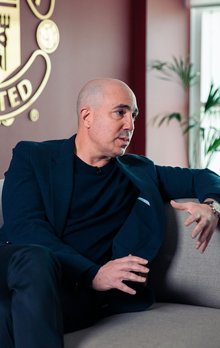
Despite recent cost-cutting measures to improve the club’s financial position, Manchester United CEO Omar Berrada has said organisational changes like these, while not preferable, are necessary in transforming the culture of the brand.
“We are initiating a wide-ranging series of measures which will transform and renew the club,” Ben said in a club statement.
“Unfortunately, this means announcing further potential redundancies and we deeply regret the impact on those affected colleagues. However, these hard choices are necessary to put the club back on a stable financial footing.”
On the official club website, Manchester United states its commitment to nurturing excellence with both players and employees of the organisation.
The website states that its team “thrives in a high-performance environment” and that it elevates performance through “collaboration and continuous growth” in a space where everyone is integral to the club’s success.
While the club will undoubtedly face challenges amid its plans for growth and its goal to empower employees with enhanced working environments, with new leadership comes new perspectives.
Changes at the top will play an important role in the transformation of business structures in all aspects of the business. While they could prove drastic – and could face pressure from public criticism – they could eventually benefit the company in the long term and enhance previously less efficient work practices.
Company portals

Executives
- Six Flags Rebuilds Its C-Suite and Undoes a Merger MistakeOperations
- It's Coming Home: England's Lesson in Building TeamsOrganisation & Culture
- Air India's Chairman Takes Charge as CEO Search DragsOrganisation & Culture
- Air Canada Makes French a Condition of its Next CEOTalent Acquisition