
Air India's Chairman Takes Charge as CEO Search Drags

Most chairmen appoint a CEO and step back. Natarajan Chandrasekaran has done the opposite, stepping in to run Air India himself until he finds the right one.
With CEO Campbell Wilson leaving and no successor named, Natarajan has set up an interim committee, himself included, to run the loss-making airline until the right leader is in place.
"This is not an election where popularity is the deciding factor," one executive told the Economic Times. "The person chosen has to be capable of fixing the issues confronting the airline."
A chairman takes the controls
Natarajan is not waiting on the sidelines. He has been holding weekly reviews of Air India, ordering flight operations, commercial and finance to report to him directly and pressing for tighter coordination across departments.
Beside him sits Pradeep Singh Kharola, a former Air India Managing Director and civil-aviation official brought in as his executive adviser in June, tasked with streamlining operations and improving execution.
Natarajan's own focus, insiders say, is operational rigour, tighter quality control and a faster route back to profit.

A contested succession
Campbell, who resigned in April after nearly four years, will work his notice until 30 September. The two frontrunners to replace him are Nipun Aggarwal, Air India's COO since 2022, and Vinod Kannan, an executive at part-owner Singapore Airlines.
Neither is a straightforward pick. Nipun's proposed appointment has met resistance from senior figures including Noel Tata, Chairman of Tata Trusts, which holds about two-thirds of the group's main holding company.
Vinod until recently ran Vistara, the full-service carrier Air India absorbed last year, and knows the enlarged group from the inside.
Campbell had steered that integration, consolidating four Tata airlines into two, which makes this handover more delicate than a routine change at the top.
Tata Group controls roughly 75% of Air India and Singapore Airlines the rest.
Campbell leaves at the end of September whether or not a successor is ready, so the committee is less a preference than a necessity, buying time without leaving the top chair empty.
Why the vacuum is dangerous
Air India and its budget arm posted a record combined loss of more than US$2bn last year, even as revenue more than doubled after it absorbed Vistara.
The airline is still under scrutiny after a Boeing Dreamliner crash in Gujarat and it has cut more than 350 daily flights as the closure of Pakistani airspace and higher fuel costs bite into its network.
It is also still knitting together the staff of the carriers it merged, each with its own pay scales, culture and union history, a people problem that outlasts any single quarter.
Steadying a workforce through all that, without a permanent leader to rally behind, is the harder job beneath the boardroom manoeuvring.
It is also where the interim model is most exposed. "An airline is a people-centric business, whether it is employees, cabin crew or customers," one executive said.
That is why the search, however delayed, remains the decision that counts, and why Natarajan has framed it as a hunt for a fixer rather than a favourite.
Company portals

Executives

Campbell Wilson
CEO
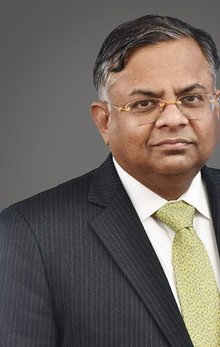
Natarajan Chandrasekaran
Chairman
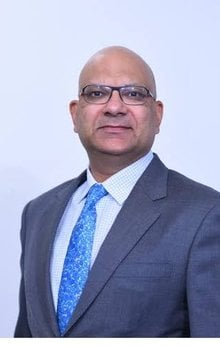
Nipun Aggarwal
COO
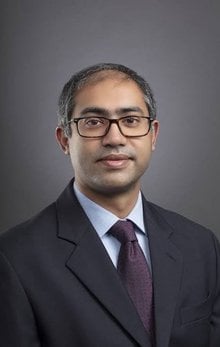
Vinod Kannan
Senior Vice President
- Air Canada Makes French a Condition of its Next CEOTalent Acquisition
- The Silent Killer of Every Reorg, and How Leaders Beat ItHR Strategy
- Heidrick Tells CEOs to Own Culture, Not Delegate ItLearning & Development
- Coca-Cola CFO Takes North America as Jennifer Mann ExitsOrganisation & Culture