
Air Canada Makes French a Condition of its Next CEO

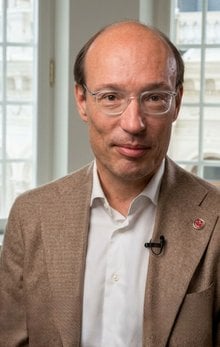
Air Canada has named Anko Van der Werff its next President and CEO, and the job specification says as much as the appointment.
When the airline ran its global search, the ability to communicate in French sat on the list of performance criteria, a rare thing to spell out for a CEO and a direct answer to the crisis that ended his predecessor's run: an English-only video address on a fatal crash that inflamed French-speaking Canada.
"I am mindful of the importance of serving Canadians in both official languages," Anko says in a bilingual greeting posted with the announcement, calling it a fundamental responsibility of the airline.
A language failure that became a hiring spec
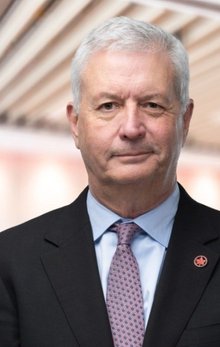
Michael Rousseau retires on 31 August after 19 years at Air Canada, and for most of that run he was seen as a safe pair of hands, steering the carrier through the pandemic and the recovery that followed.
His exit still came sooner than planned. In March he faced a storm over a video address on a fatal collision at New York's LaGuardia Airport, where an Air Canada Express flight was lost along with both pilots, one of the deceased from Quebec, and a number of passengers were taken to hospital.
Michael delivered the four-minute message almost entirely in English, bookended by a "bonjour" and a "merci".
Parliament's official languages committee called him to Ottawa, and Prime Minister Mark Carney was among the politicians who weighed in.
In 2021, Michael had drawn criticism for speaking almost only in English to a room of Montreal business leaders, which pushed then-Deputy Prime Minister Chrystia Freeland to write to the board asking him to improve his French.
Michael later said he regretted that his French had distracted from the tragedy, admitting that despite his efforts he still could not express himself adequately in the language.
Succession as remediation
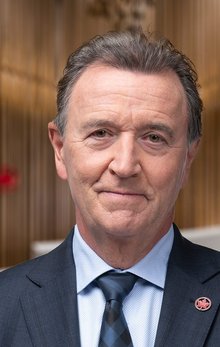
For HR, this is a study in correcting a leadership failure through the hiring criteria themselves. Air Canada leaned on a "comprehensive global search", and Vagn Sørensen, Chair of the Board, frames the result around calibre.
"We are delighted to have attracted and recruited an executive of Mr Van der Werff's stature," Vagn says, pointing to "an exceptional breadth of international aviation experience and a proven 25-year track record".
A skill that became a liability under one CEO is now written into the specification for the next.
Succession is the moment when cultural and reputational risk is either designed out or quietly carried forward, and Air Canada has chosen to design it out in public.
It also raises the bar for the pipeline underneath: if bilingual fluency is now non-negotiable at the top, it has to be built years earlier, in who gets the stretch roles and the sponsorship.
A two-airline domino
Anko's move triggers a succession of its own. He arrives from Scandinavian Airlines, where he steered the carrier through bankruptcy and out the other side under Air France-KLM part-ownership, and his departure by January 2027 leaves SAS hunting for its own leader.
Before SAS he was CEO of Avianca, and earlier held senior commercial roles at Aeroméxico, Qatar Airways and KLM.
The carrier he leaves is still steadying itself after its restructuring, which makes the timing of a leadership handover a test in its own right.

On the criterion that decided it, Air Canada is careful.
As a native of the Netherlands, Anko speaks Dutch and, in the airline's words, "is able to communicate in French", alongside English, Spanish, Italian and Swedish picked up across his career. Whether that clears the bar Michael could not will be tested the first time a crisis demands he face Quebec in its own language.
Company portals

Executives
Anko Van der Werff
President & CEO
Michael Rousseau
President and CEO
Vagn Sorensen
Board Chair
- Air India's Chairman Takes Charge as CEO Search DragsOrganisation & Culture
- The Silent Killer of Every Reorg, and How Leaders Beat ItHR Strategy
- Heidrick Tells CEOs to Own Culture, Not Delegate ItLearning & Development
- Coca-Cola CFO Takes North America as Jennifer Mann ExitsOrganisation & Culture