Bupa CEO: Employees Need Better Jobs, Not Work-Life Balance

The relationship between work-life balance and job satisfaction has sparked debate among business leaders, with implications for how HR professionals approach employee wellbeing strategies.
Iñaki Ereño, CEO of Bupa, has suggested that employees' desire for work-life balance could indicate underlying issues with job satisfaction.
In an interview with Fortune, Iñaki says: "When the balance of your life becomes a topic, then you have a problem. You need to like your job, to not feel that your life needs to be balanced."
However, employee sentiment appears to contradict this view. According to Randstad, 83% of employees consider work-life balance an important factor in current or future work, with the statistic outranking pay.

This disconnect between leadership perspectives and workforce priorities presents a challenge for HR teams navigating retention and recruitment strategies.
Iñaki's personal approach involves "thinking about business things on the weekends". "I do emails, and I read my papers and all of that," he continues. "Do I feel that that is a big pressure? No, I enjoy doing that. So I don't feel I need to think about how I balance my life."
His advice to employees centres on finding work they enjoy. Rather than seeking roles with good work-life balance, he suggests workers should "think about what you like doing," and "don't do a job that you don't like," to avoid being in a position where balance is needed.
Leadership perspectives on working hours
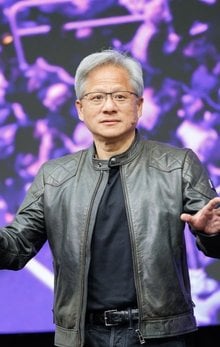
Iñaki is not alone in his stance. Jensen Huang, CEO of NVIDIA, says in an interview that he works "from the moment I wake up to the moment I go to sleep," seven days a week.
He continues: "When I'm not working, I'm thinking about working. I sit through movies, but I don't remember them because I'm thinking about work."
Eric Schmidt, former CEO of Google, has said that he believes work-life balance can reduce business competitiveness. He tells the All-In podcast in 2025 that the US needs to remember they are "up against the Chinese," – referring to the 9-9-6 model of working, where employees work from 9am to 9pm, six days a week.
While this schedule is illegal in China, "they all do it, and that's who you're competing against," Eric says.
Employee wellbeing and retention
For HR professionals, the data on employee preferences could prove more relevant than executive working habits.
According to the American Psychological Association's 2023 Work in America survey, 80% of respondents believe that they would be happier and just as effective with four days at work.
Results from the UK's trial of the four-day work week model found that it can offer a significant talent advantage, with employee turnover reducing by 57%.
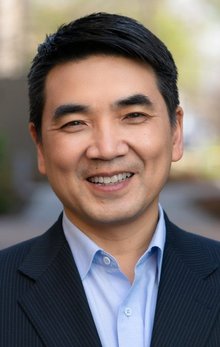
Eric Yuan, CEO of Zoom, predicts that by 2030, the workweek could be reduced to just three days. "I hate working five days," he tells the Wall Street Journal. "I'm pretty sure actually we really do not need to work for five days."
Eric's prediction relies on the implementation of AI agents to handle routine tasks, allowing employees to focus on higher-value work whilst maintaining productivity levels.
"I do not think we need to work for five days because literally, we all employ so many digital agents," he continues.




Executives
Eric S. Yuan
Founder & CEO
Eric Schmidt
Former CEO and Chairman of Google
Iñaki Ereño
Group CEO
Jensen Huang
Founder and CEO