
Daikin Invests US$30m in Workforce Training Facility
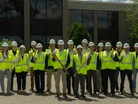
Daikin Applied has started construction on a US$30m training facility in Plymouth, Minnesota, US. The institute is designed to develop technical and engineering talent for HVAC systems used in data centres and other critical environments.
The workforce shortage in skilled cooling professionals has become a business constraint, with Daikin Applied revealing that industry reports indicate thousands of HVAC technician positions could remain unfilled by 2030.
That gap affects operations across commercial buildings, healthcare sites, manufacturing plants and data centres. In facilities where cooling performance determines uptime and reliability, the absence of qualified personnel creates operational risk that can impact service delivery and business continuity.
The 64,000-square-foot Solutions & Technical Institute will train employees, partners and customers. It is scheduled to open in 2027.
Addressing a technical skills shortage
The training hub responds to what Daikin Applied describes as an evolving set of demands on cooling infrastructure. As systems become more complex and energy efficiency requirements tighten, the need for people who can design, deploy and maintain them has intensified.
Yu Nishiwaki, Chief Operating Officer for Daikin Applied, says: "The demands placed on our industry are evolving rapidly and workforce capability has become a true differentiator.
"The Daikin Applied Solutions & Technical Institute reflects our commitment to developing the next generation of technical, engineering, service and sales talent while helping our customers succeed in an increasingly complex environment. We are investing in the people, knowledge and capabilities that will power the future of our industry."
The facility includes more than 50 operational HVAC units installed on site, and participants will troubleshoot systems while working in conditions that replicate real-world environments.
Daikin Applied says the institute will support up to 120 training pathways, spanning cover advanced controls, diagnostics, system optimisation and sustainable technologies.
Practical training for field roles
The institute is moving away from classroom instruction towards hands-on learning. Field technicians and engineers will work directly with equipment to build competency in system performance and maintenance.
Nine classrooms and six breakout spaces will be dedicated to engineering, technical development, sales training and leadership programmes. The building can be expanded by a further 40,000 square feet if required.
A digital studio will allow training content to be delivered remotely, which could extend access to distributed teams, customers and partners outside of Minnesota.
James Moe, Executive Vice President of Sales, Service and Solutions at Daikin Applied, says: "Our customers expect systems expertise and strong execution. This investment will help ensure we continue to deliver on both."
The design allows technical knowledge to be shared beyond the physical location. For organisations managing cooling infrastructure across multiple sites, this could support skills development without requiring personnel to travel.
Supporting data centre workforce needs

Data centre operators are facing increased pressure to maintain cooling performance as capacity expands. That creates demand not only for advanced systems but also for people capable of servicing and optimising them.
The institute is intended to prepare field technicians and customer-facing teams for these roles, training professionals in the deployment and maintenance of cooling solutions used in hyperscale environments.
The US$30m training facility sits alongside a separate US$163m research and development test laboratory that Daikin Applied is also building in Plymouth, US. Both projects are scheduled to open in 2027 and represent a combined investment approaching US$200m.
The R&D facility will provide a testing environment for advanced cooling technologies, with the training institute designed to create a pipeline of professionals able to support those technologies once they are deployed in the field.
Together, the two investments create a focus on both product development and workforce readiness. For Daikin Applied, the availability of skilled engineers and technicians is being treated as equally important as the equipment itself.
Company portals
Executives
James Moe
Executive Vice President, Sales, Service and Solutions
Yu Nishiwaki
Chief Operating Officer, Americas