
HiBob: Businesses Race to Make AI a Requirement

AI is moving fast from a specialist skill to a workplace expectation.
New research from HiBob – the people platform helping organisations adapt and thrive in the age of AI – finds that 77% of UK organisations expect AI proficiency to become a baseline requirement across most non-technical roles within the next two years.
While employers are responding to that shift, the study suggests few have settled on a consistent way to build the workforce it demands.

Investment without a common playbook
More than four in five organisations (82%) are already investing in AI upskilling or reskilling, and 80% say they have a defined strategy for sourcing AI-skilled candidates.
Yet no single hiring approach is used by more than 35% of employers: a third build talent communities and nurture sequences featuring AI content, 31% use applicant tracking system tagging and 29% rely on referral campaigns.
The same pattern shows up in learning and development, with around a third of organisations offering funded AI learning (33%), protected time to practise with AI tools (33%), or prompt and workflow libraries (31%).
HiBob suggests this is evidence that businesses are experimenting rather than converging on a shared model.
Too many organisations are still trying to manage a changing workforce with disconnected systems and fragmented skills data. That is the wrong model for the AI era."
AI skills are already reshaping talent decisions
AI capability is starting to influence core workforce decisions well ahead of any settled strategy.
Nearly two-thirds of organisations (63%) already factor AI skills into promotion decisions, 61% consider them during performance reviews and 31% weigh them when setting pay.
Competition for that capability is intensifying too, with 97% of organisations saying they would pay at least a 10% salary premium for at least one AI skill.
A framework to close the gap
To help organisations move from fragmented experimentation toward a more structured approach, HiBob has launched an AI Skills Framework alongside a new AI Skills Assessment Guide.
The framework gives leaders a practical way to define the AI capabilities needed for different roles, providing a shared language to shape job expectations, guide employee development and align talent decisions with business needs.
The assessment guide builds on this with a structured method for evaluating AI skills during hiring.
Ronni said the organisations that succeed in the AI era will be those able to define a shared language of skills, identify where capability truly sits and pivot talent to where it creates the most value. He said this is the system HiBob is now enabling through the new resources.
Skills as organisational infrastructure
"Skills are no longer just a people topic. They are central to how organisations adapt, grow and compete," said Ronni Zehavi, CEO and Co-founder of HiBob.
"With the AI Skills Framework, the AI Skills Assessment Guide and Bob's Skills and Jobs Catalogues, we are helping organisations move from abstract AI ambition to a more connected, practical and actionable view of workforce capability."
HiBob positions the launch within a wider shift in how skills data is used: not simply as an HR process, but as a strategic layer of organisational intelligence connecting hiring, performance, learning and workforce planning.
Turning skills data into strategy
The launch reflects HiBob's broader view that organisations cannot adapt to what they cannot understand.
As AI reshapes roles across every function, the research suggests that visibility into where capability sits within a business will become essential infrastructure for resilience, decision-making and sustained performance, rather than a one-off response to a passing trend.
Whether employers close the gap between AI ambition and AI-ready talent will depend less on how much they invest and more on whether they can turn scattered skills data into a coherent, business-wide strategy.
Company portals

Executives
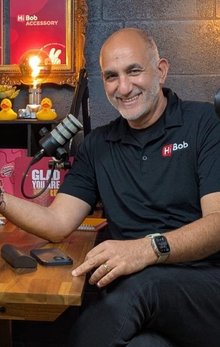
Ronni Zehavi
Co-Founder and CEO