How Does Procter & Gamble Prioritise Internal Mobility?

According to Procter & Gamble (P&G), 99% of its senior leaders are promoted within the company, with the business primarily hiring for entry level roles.
The company claims on its website that it creates more future senior corporate leaders “than any other company in the world" through its training and development opportunities as well as its employee value proposition.
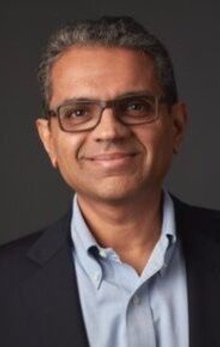
Bala Purushothaman, Chief Human Resources Officer at P&G, says of the company’s people strategy: “Our people have been at the heart of who we are since this company began”.
Bala, who has worked for the company for more than 30 years, explains that the company chooses to “invest in a superior employee value equation” in the same way it creates its consumer experience.
When it comes to developing this strategy, he says: “It starts with insights. We need to truly understand our consumers – their hopes, their fears, their dreams, their lives.
“Then we apply those insights to deliver superior products, packaging, communication, retail execution and value. We’re applying the same concepts with our employees to deliver a superior employee value equation.”

A talent strategy built for long-term excellence
Hiring data from P&G finds that the majority of employees have either less than one year of experience within the company (24%) or more than 11 years (18%).
This structure is a product of P&G’s “Build from Within” approach to growth, with the company hiring early career talent and prioritising internal mobility.
To ensure it finds talent that will be a long-term asset to the brand, the company assesses prospective candidates for traits such as ownership, resilience and leadership, using cognitive ability tests to filter for specific competencies.
P&G says it will automatically filter out applications based on the results of these assessments, saving a significant amount of manual time for recruitment specialists within the company.
This is particularly useful given the high rates of applications it receives, with the company suggesting that only 1% of applicants are hired.
Developing entry level talent into senior leaders
When it comes to developing its talent, P&G is creating an environment where employees can build skills, have an ongoing dialogue with their manager and set individual goals that are tied to business objectives.
According to the company, this provides employees with a sense of ownership and accountability in their work and the wider business strategy, building its culture of growth.
In their first 10 years, the average P&G employee will hold five different roles, designed to be across different brands, businesses and even locations within the organisation.
This helps employees build a broader understanding of the business as a whole and develop new skills, preparing them for senior leadership roles.
To ensure new team members are prepared to take on new roles and experiences, the company has developed extensive training and development support.
It uses a 70/20/10 approach to learning and development. This means that 70% of learning is rooted in on-the-job experience, 20% is social learning from colleagues and mentors, and 10% is structured courses.
P&G says it finds this approach is best suited for helping employees upskill to prepare them for long term growth.
Company portals

Executives
Bala Purushothaman
Chief Human Resources Officer