
How Robotics is Changing Mining Workforce Strategies
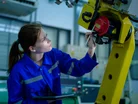
Following ongoing pressure to meet increasing demand, mining companies around the world are implementing automation and robotics to address workforce challenges while enhancing safety protocols.
Robotics in mining is becoming more common, with businesses utilising technology to tackle persistent skills shortages and protect employees from dangerous working conditions.
The human workforce alone can no longer meet industry demands, prompting leaders to integrate robots and autonomous equipment alongside their teams.
Much of the advancement aims to reduce the risk exposure for human workers, fundamentally changing how mining companies approach workforce safety and deployment strategies.

Addressing workforce safety challenges
The mining industry faces inherent hazards that make workforce protection a critical priority.
Traditional safety measures rely on proactive risk management through training and strict personal protective equipment (PPE) requirements, but companies are now expanding their approach through technological integration.
Automation and robotics are assuming central roles in modern mining operations, enabling companies to remove workers from the most dangerous environments.
Mining organisations around the world are integrating remote-controlled machinery, autonomous equipment and robotic systems to enhance safety, reduce exposure to hazardous environments and maintain operational continuity.
Chilean copper miner Codelco's El Teniente Division is utilising the Arkytas MU-2.1 robot by Kinamics in its pursuit of zero-exposure mining.
The technology operates in the Esmerelda mine's unsupported sectors where human entry is prohibited.
Rather than waiting for these areas to be secured before teams can enter, the robot captures images to digitally recreate the environment.
This approach protects workers while maintaining project momentum. Instead of delaying operations until sites are cleared and secured, staff can continue working without interruption.
Javier Valenzuela, an engineer with the Innovation Unit of the El Teniente Division, says the robot was introduced to operations "because of how risky it is to enter the front".
He adds: "After a blast, the area had to be isolated for a long time, so the aim was to reduce the exposure of workers to these risks."
The process transforms 22 photos into 3D models, providing accurate site representations without requiring human presence.
The robot also extracts additional data including humidity, granulometry and dilution, enabling analysis through high-quality information while eliminating worker risk.
Evolving workforce technology adoption
According to Persistence Market Research, the global mining robotics market size will be valued at US$1.7bn in 2026, reaching US$3.3bn by 2033.
This growth reflects rising demand for automation in hazardous environments, persistent labour shortages and the need to increase operational efficiency.
The autonomous haulage systems segment could lead this growth due to widespread adoption in large-scale open-pit mines.
North America is anticipated to see the most significant adoption, given early automation implementation, substantial investments in digital mining transformation and advanced infrastructure.
The mining robotics market encompasses autonomous haulage systems, robotic drilling equipment, underground robotic loaders, robotic crushers, inspection and surveillance robots and teleoperated mining vehicles.
Inspection robots are seeing increased adoption as companies focus on risk assessment and predictive maintenance in deep mining shafts, while robotic drilling systems provide precision and safety in underground operations.

Redefining operational workforce models
The Reward Gold Mine site in Australia is deploying the Aramine L350D autonomous mining loader, equipped with Epiroc's AutoNav Tele software from RTC.
The technology is designed for narrow-vein mining, allowing for increased efficiency in accessing previously unreachable areas.
"This is more than just a machine installation," says Owen Perrott, RCT's East Coast Branch Manager.
"We're introducing technology that can access areas previously unreachable, in this narrow-vein mine, unlocking gold reserves left behind for decades."
Remote operators control the loader from safe locations, accessing tight areas without physical risk exposure.
NVIDIA and Caterpillar recently expanded their partnership to bring physical AI capabilities to mining operations, optimising extraction processes and enabling autonomous machinery across global sites.
Through robotics innovations, the mining industry is addressing critical workforce challenges while improving safety outcomes.
This proves particularly valuable as demand increases for critical materials.
Jensen Huang, CEO of NVIDIA, says of the partnership: "For a century, Caterpillar has built the industrial machines that shaped the world. In the age of AI, NVIDIA and Caterpillar are partnering across the full spectrum – from autonomous construction fleets to the AI data centres powering the next industrial revolution.”
Company portals
Caterpillar Inc.
Codelco
Epiroc
NVIDIA



Executives
Jensen Huang
Founder and CEO

Caterpillar Inc.
Codelco
Epiroc
NVIDIA
- The Mobility Fix That Cost HelloFresh NothingTechnology
- Cisco's Employee Advocacy Approach Under Francine KatsoudasEmployee Experience
- Spotify and Netflix: Moving Away From 'Work Family' CultureOrganisation & Culture
- Nationwide: AI Adoption Can Reshape Women's Finance CareersTalent Acquisition