How Uber is Preparing its Workforce for Increased Automation

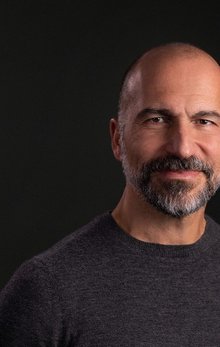
Uber CEO Dara Khosrowshahi has predicted that many of the company’s rides could be automated in the next two decades.
Speaking in an interview on The Diary of a CEO podcast, Dara said: “You can imagine the majority of our trips being fulfilled by robots of some kind. Probably not 10 years from now, but you go 15 to 20 years from now, you’re going to start getting there.”
Globally, Uber has around 9.5 million active drivers and couriers – a number Dara believes will grow in the coming years, despite predictions around increased automation.
New work for contractors
At the All In Summit in Summer 2025, Dara shared that he thinks human drivers will work alongside self-driving cars. He told the audience: “For the next five to seven years, we're going to have more human drivers and delivery people, just because we're going so quickly”.
While the company expects to see this short term growth, Dara said at the summit that there was no “neat answer” for what will happen when capabilities for self-driving cars grow.
He said: “This is a big, big societal question that we're going to have to struggle with, and lots of others are going to struggle with too”.

Human and AI collaboration
Uber has been developing a strategy to balance its human contractors alongside new AI innovations.
In October, the company launched a pilot programme for contractors called ‘Digital Tasks’, which allows drivers to be paid to complete short, in-app assignments that help train AI models.
Designed to be completed during rider downtime, this includes uploading photos and documents to help with data categorisation, and recording short audio clips to develop speech to text and translation capabilities.
The company has also diversified the kinds of work riders can do, as part of its long-running strategy to become what Dara described on CNBC as a “super app” to provide “all kinds of services” to consumers.
Early iterations of this included Uber Eats for delivery for delivery and shipping and the company's “Uber Tasks” pilot, which allowed contractors to take on jobs such as furniture assembly – all things Dara believes will need human intervention for longer.
At the All in Summit, he said the company was “expanding into other kinds of on-demand work as well to be able to adjust the kind of work available to people who want to earn on our own platform”.
The role of customer-facing staff
As self-driving car capabilities grow, Dara has said the human element is still crucial for ride share work. Speaking on the podcast, he said “We don’t operate in the virtual world, we operate in the physical world”.
Having customer facing staff can make a significant difference to the rider experience, says David Risher, CEO of Lyft.
In a company newsletter, David shared that he likes to regularly drive for the company, saying that it gives him “insight into riders and drivers that I’d never get sitting in my office.”
Conversations David has had with riders have led to new features for the company.
He told Fortune: “I picked up a woman in Sausalito, California, who told me how surge pricing impacted her daily stress levels. She’d wake up each morning not knowing if she was going to need to spend US$20 or US$40 to get to work.
“The thing is, economists love surge pricing as a way to balance supply and demand. But it was listening to this woman that helped me understand why riders hated it so much.”
According to David, this led to the company developing price lock, a subscription feature that can cap fares for regular routes. Changes such as this have led to significant growth for Lyft, with the company’s stock rising 75% since David became CEO in 2023.


Executives
Dara Khosrowshahi
CEO
David Risher
Chief Executive Officer