
Is Klarna Planning to Reduce its Workforce?

Sebastian Siemiatkowski, CEO of Klarna, has predicted that the company’s headcount will drop from 3,000 to 2,000 workers by 2030.
The company has already reduced its workforce from 7,000 to 3,000 workers, through a combination of job cuts and natural attrition.
Speaking on the V2C podcast, Sebastian said: “I want to be honest about the fact that I do think there's going to be a very big shift.”
“I'm an optimist at heart, but I also want to be a realist around what's going to happen in the shorter term, and it's going to be a lot of turmoil in this”.

Klarna’s rapid AI growth
Klarna has seen rapid growth following significant AI adoption, with its Q3 2025 earnings reaching US$903m, up 28% from the previous year.
The business has embedded AI across its teams globally to drive further efficiencies – including an AI assistant that now handles two thirds of its customer service chats, reducing resolution times from 11 minutes to under two.
Internally, the company has created Kiki, a generative AI assistant designed to boost employee productivity and streamline workflows. According to Klarna, Kiki can help employees evaluate the sentiment of documents and draft common types of contract.
To ensure its workforce was prepared for AI integration, team members were trained to manage the technology, while its hiring focus shifted to prioritising AI-ready talent – with 96% of its staff using AI for tasks.
The company has said high rates of AI adoption have driven a 152% increase in revenue per employee since Q1 2023.
As this growth scales, the company is slowing down its hiring.
Sebastian said that while Klarna “hire[s] somebody here and there”, if you “go to LinkedIn and look at the insights, you’re going to see how the company is shrinking”.
Hiring for human connection
Sebastian isn’t the only leader who believes AI is set to change workplaces significantly.
Mustafa Suleyman, CEO of Microsoft AI, told the Financial Times that he believes white collar roles will be automated by AI within a year and a half.
He said: “White-collar work, where you're sitting down at a computer, either being a lawyer or an accountant or a project manager or a marketing person – most of those tasks will be fully automated by an AI within the next 12 to 18 months”, as the company focuses on developing advanced AI capabilities.
According to Sebastian, the jobs that will remain are those where “it’s going to be vital to offer a human connection”.
For many organisations, this means investing in both AI and human capabilities at scale – with research from Deloitte finding that organisations who nurture a combination of these skills are more adaptive.
Other companies are ensuring they have this balance in place by increasing their headcounts, such as IBM.
Nickle LaMoreaux, Chief Human Resources Officer of IBM, shared at Charter’s Leading with AI summit that the company is looking to triple its US-based entry level workforce across 2026 alongside its AI developments.
Arvind Krishna, CEO at IBM, told the Wall Street Journal: “While we have done a huge amount of work inside IBM on leveraging AI and automation on certain enterprise workflows, our total employment has actually gone up, because what it does is it gives you more investment to put into other areas.”



Executives
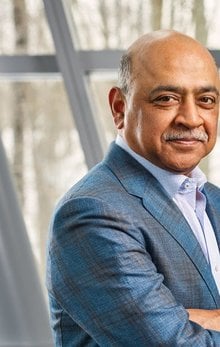
Arvind Krishna
CEO

Mustafa Suleyman
CEO of Microsoft AI

Nickle LaMoreaux
Chief Human Resources Officer
Sebastian Siemiatkowski
Co-Founder / CEO