Salesforce Resets Operating Model for an AI-first Workforce

Salesforce is reshaping its top team as it deepens its push into AI and reconfigures parts of its workforce. The company has hired or promoted six senior leaders to replace five-high profile departures, according to Business Insider, aligning oversight of core platforms and security while streamlining operations across go-to-market and product areas.
This leadership reset sits alongside job reductions reported in marketing, product management, data analytics and Agentforce.
Leadership changes at Salesforce
Among the most notable changes, Adam Evans, the previous head of Agentforce, is leaving the company.
In a LinkedIn post, Adam wrote he was returning “to what I love most: building startups”.
He will be succeeded by Joe Inzerillo, currently Chief Digital Officer, bringing Agentforce closer to digital execution as it scales.
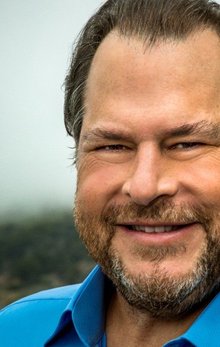
Marc Benioff, CEO of Salesforce, once described Agentforce as “the core of every product we make now” in an interview with CNBC, and joked that the company could even be renamed Agentforce during a December 2025 Business Insider interview.
Salesforce has also appointed Patrick Stokes as Chief Marketing Officer, succeeding Ariel Kelman, now President and Chief Marketing Officer at AMD.
Iain Mulholland joins from Google Cloud as Chief Security Officer. These appointments round out a slate of six moves that rebalance accountability across product, security and go to market at a time of accelerated platform change.
AI’s reshaping of support work
Alongside the reshuffle, Salesforce is reportedly eliminating around 1,000 roles across selected teams, Business Insider reported.
The company previously cut 4,000 customer support roles in 2025, with automation advancing across its service model.

On the Logan Bartlett Show, Marc said of these cuts: “I was able to rebalance my headcount on my support. I’ve reduced it from 9,000 heads to about 5,000, because I need less heads.
“If we were having this conversation a year ago and you were calling Salesforce, there would be 9,000 people that you would be interacting with globally on our service cloud, and they would be managing, creating, reading, updating, deleting data.”
While the same customer support interactions continue, Marc said “50% are with agents, 50% are with humans".
Thais approach has built an operating model in which AI agents handle routine tasks while people focus on exceptions, relationship work and higher risk cases.
Signals from Amazon and Workday
Similar recalibrations are underway elsewhere. Amazon confirmed in January 2026 that it is cutting more than 16,000 jobs after reducing its workforce by 14,000 in 2025, as part of efforts to streamline operations.
Beth Galetti, Senior Vice President of People, Experience and Technology at Amazon, wrote in a company blog post: “As I shared in October, we've been working to strengthen our organisation by reducing layers, increasing ownership and removing bureaucracy.
“While many teams finalised their organisational changes in October, other teams did not complete that work until now.”
This framing highlights a phased redesign for the company, as it reshapes its operating model amid AI transformation.
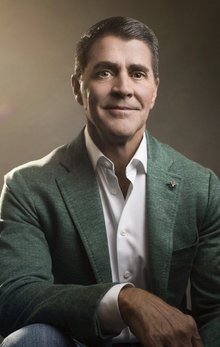
Workday is also reducing its workforce in 2026, with Bloomberg reporting a 2% cut, or about 400 jobs, to fund further AI investment. Carl Eschenbach, former CEO of Workday, said in a note to employees: “We have so much opportunity ahead of us, especially with the potential of AI, and we have a strong foundation to build upon.”
Following these job cuts Carl has announced his resignation, with Co-Founder Aneel Bhusri returning to the company as CEO.
Company portals


Executives
Beth Galetti
SVP, People eXperience and Technology
Carl Eschenbach
Chief Executive Officer
Marc Benioff
Chair & CEO