This Week's Top Five HR Stories
NASA Launches Talent Track to Increase Headcount
After an estimated headcount reduction of around 4,000 employees in 2025, NASA has announced the launch of NASA Force – a dedicated talent track that is designed to recruit and deploy top talent in the engineering and technology sector to support the space programme.
The programme is placed within Tech Force, which is a US federal programme that has attracted interest from early to mid career technologists who are looking to transition into public service.
Jared Isaacman, Administrator of NASA, says of the initiative: “America’s leadership in space depends on extraordinary talent.
“NASA Force will help us attract the next generation of innovators and technical experts who are ready to solve the toughest challenges in exploration, science and aerospace technology.
“This partnership strengthens our workforce and helps ensure the United States remains the global leader in space.”
Why Accor's New Chief People Officer Will Focus on Talent
Accor has announced it is appointing Laurent Choain as its new Global Chief People and Culture Officer, effective as of 1 April 2026.
The company says he will play a key role in shaping its talent strategy in this role, with a focus on developing growth opportunities for employees and evolving the company culture.
Sébastien Bazin, Group Chairman and Chief Executive Officer of Accor, says of the appointment: “We are thrilled to welcome Laurent to Accor. His proven track record in nurturing talent and shaping strong corporate cultures aligns perfectly with our vision for the future.
“We are confident his leadership will be instrumental as we continue to cultivate an environment of excellence and innovation.”
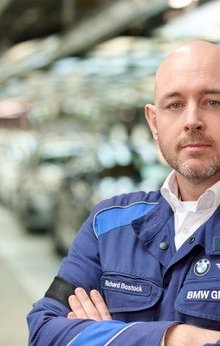
How BMW Kept Staff Happy During Munich Factory Overhaul
BMW Plant Munich's shift to electric vehicles demonstrates how strategic HR management can turn industrial upheaval into opportunity
When the last combustion engine rolled off the production line at BMW's Munich plant in late 2023, it marked more than the end of 75 years of engine manufacturing.
For Ilka Horstmeier, Member of the Board of Management of BMW AG, People and Real Estate, Labour Relations Director, it represented a profound moment of human transformation that would define the company's approach to the electric vehicle revolution.
"I knew many of the people who worked there personally – because I had the privilege of leading that plant and our worldwide engine production for seven years in total. I'll never forget that day," Ilka says.
"Standing in front of them, saying: 'This chapter ends here.' That was a tough moment for everyone. We all shed a few tears, I can tell you."
That emotional moment encapsulates the human resources challenge at the heart of BMW's ambitious transformation of its Munich plant – a facility preparing to become the company's first existing factory to convert fully to all-electric vehicle production by the end of 2027.
With serial production of a new electric sedan based on the Neue Klasse architecture scheduled to begin in 2026, the plant faces the dual challenge of undertaking a US$750m overhaul while managing the most significant workforce transition in its century-long history.
Why Atlassian Has Cut 10% of Jobs as AI Reshapes Workforce
Atlassian has announced it will cut 1,600 jobs – around 10% of its workforce – as it adapts to AI-driven changes in how the company operates and the skills it requires.
Employees affected by the redundancies were notified via email. In a memo shared on the company's website, Atlassian CEO Mike Cannon Brookes acknowledged that AI had fundamentally altered the organisation's workforce requirements.
He writes: "It would be disingenuous to pretend AI doesn't change the mix of skills we need or the number of roles required in certain areas. It does."
Mike continued: "I believe this is the right decision for Atlassian. But that doesn't mean it's easy. Far from it. I know this has a huge impact on each of you, and it weighs heavily on me and Atlassian today."
Workers on the assembly line at Volkswagen factories no longer need to consult physical diagnostic manuals when spotting a fault.
Instead, an AI system called KI4UPS pinpoints the issue within seconds.
For the automotive group, this reduces the time spent manually diagnosing problems across multiple vehicle production lines. However, for the human resources sector, it signals a distinct shift in how industrial roles are performed.
Across global industries, AI-driven predictive maintenance is reshaping the daily realities of the workforce. While the technology is frequently cited for cost-cutting and sustainability benefits, its impact on employee safety, training requirements and administrative efficiency is equally significant.
The evolution from reactive repairs to predictive interventions delivers results that influence the physical wellbeing of the workforce and the nature of their daily tasks.
Company portals





Executives
Dr. Mohan Noronha
Project Lead Structural Transformation of BMW Factory Munich

Jared Isaacman
Administrator
Laurent Choain
Global Chief People and Culture Officer

Manish Kumar
Executive Vice President of Digital Energy
Mike Cannon-Brookes
CEO and Co-Founder
Richard Bostock
Head of HR Management BMW Group Plant Munich