
Why JPMorgan's CEO Champions Smaller, Focused Teams

JPMorgan Chase CEO Jamie Dimon has outlined his vision for optimal team structures in his latest shareholder letter, arguing that smaller, focused units deliver better results than large, diffuse groups spread across multiple priorities.
In the 6 April 2026 letter, Jamie said companies should build teams that operate with military precision. "The teams needed to tackle [specific problems] should be small and authorised with the decision-making ability to move and act like Navy SEALs or the Army's Delta Force," he said. "This is trench warfare; it's about fighting for every inch, moving quickly and getting things done."
Despite JPMorgan Chase employing around 320,000 people globally, Jamie contends that the "real competitive battles" are won by smaller teams with a refined focus. He argues that industry competitions are decided in highly specific areas – whether a segment of investment banking, a particular client type or an individual product feature – rather than through broad organisational strength.

The case for dedicated focus
According to Jamie, smaller teams with concise task lists are incentivised to give their full attention to assigned work. "When efforts are 1% of a lot of people's jobs, it will never get done. You need a team 100% dedicated to the mission – and everyone else supports them," he said.
This philosophy stands in contrast to traditional corporate structures where responsibilities are distributed across large departments. Jamie's approach prioritises concentrated effort over shared accountability, suggesting that diluted ownership of tasks leads to diluted results.
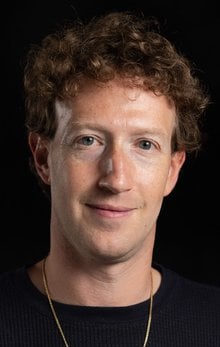
The approach reflects a growing trend among major employers. Meta has restructured around smaller teams, with CEO Mark Zuckerberg suggesting on an earnings call in 2025 that this might be the "optimal configuration for driving frontier research." However, Meta's implementation differs significantly – the company is expecting small teams to replace entire departments as part of an AI-driven transformation.
Structural challenges and workforce implications
Meta has already laid off hundreds of workers in 2026 and implemented a worker-to-manager ratio of 50-to-1 within its AI engineering organisation. This represents a significant departure from the current average ratio of 11.5-to-1, according to Gallup.
Whilst eliminating management layers could increase decision-making speed and innovation opportunities, Jamie warns that accountability for tasks could become diluted. Despite these risks, US companies continue implementing flatter structures and increasing the number of direct reports per supervisor. Average team sizes are now nearly 50% larger than when Gallup began tracking them in 2013.
André Spicer, Executive Dean of Bayes Business School, suggests flat structures often prove unsustainable. "What happens in most organisations is eventually either a formal or an informal structure appears sort of underneath direct reports," he said.
Amazon founder Jeff Bezos previously established the "two-pizza" rule for ideal team sizing – suggesting teams should be small enough to feed with just two pizzas, which AWS Insights estimates at fewer than 10 people.
Technology and workforce transitions
Whilst championing small units, Jamie emphasised that companies need enterprise-wide AI, data and financial platforms. He said these systems shouldn't create bureaucratic hurdles but should instead focus on being "highly efficient."
He added that employees need connectivity across the enterprise and must "perform like a well-functioning sports team."
As Jamie plans to integrate AI further into JPMorgan Chase's operations, he acknowledged in the letter that whilst AI will likely eliminate some jobs, it will create others. The company intends to "support and redeploy" affected workers.
"[AI] platforms need to be companywide and easily deployed," he said. "Before they are deployed, it may require consensus that they are the best platform to use. This makes them reusable and highly efficient. The trick is to have great platforms without creating bureaucracy and to build great teams for speed."
Company portals



Executives
Jamie Dimon
Chairman of the Board

Jeff Bezos
Founder and Executive Chairman at Amazon
Mark Zuckerberg
CEO

- F5 Bets on Culture, Hiring Wayfair's People ChiefTalent Acquisition
- Darren Minshall Joins WPP Media as UK Chief People OfficerTalent Acquisition
- Heidrick Tells CEOs to Own Culture, Not Delegate ItLearning & Development
- BT and Verizon Merger Could Affect 68,000 Jobs GloballyOrganisation & Culture