
Will Disney's CEO Succession be a Joint Leadership Model?

The concept of a joint leadership model is gaining traction in the corporate world, a trend that has seen several major companies appoint co-CEOs in recent months.
Following Bob Iger’s planned retirement in 2026, this conversation is now extending to The Walt Disney Company, where a dual-CEO structure could be under consideration as the business prepares for a change in leadership.
Disney has a formal succession plan in place, managed by a dedicated Succession Planning Committee. According to its 2025 proxy statement, Disney is developing a timeline for the search process, identifying desired CEO skill sets and reviewing both internal and external candidates with the intention of announcing a new chief executive in early 2026.
This follows Bob's return to the role after his initial successor, Bob Chapek, was fired by the board amid concerns over financial performance.
Upon his return, he said, “I am extremely optimistic for the future of this great company and thrilled to be asked by the board to return as its CEO.”

Disney’s CEO succession planning
Two internal candidates are frequently mentioned as potential successors to the CEO role: Dana Walden, Co-Chairman of Disney Entertainment and Josh D’Amaro, Chairman of Disney Experiences.
Their respective backgrounds cover Disney’s vast portfolio, from streaming and television to theme parks and resorts.
Dana joined Disney in 2019 through the acquisition of Fox, where she had a 25-year career culminating as Chairman and CEO of Fox Television Group. She currently oversees brands like ABC, Hulu, FX and National Geographic.
Josh is a long-serving Disney executive, having been with the company since 1998. His previous roles include President of Walt Disney World and President of Disneyland Resort.
In his current position, he is responsible for Disney's parks, resorts and consumer products and is leading a multi-year US$60bn expansion programme.
A report from CNBC suggests that one theory involves the pair sharing the top job “given Walden’s and D’Amaro’s complementary skill sets – and given momentum behind co-CEO appointments both in the media and beyond”.
The co-CEO model in practice
The co-CEO structure has been recently adopted by companies such as Oracle, Comcast and Spotify. Netflix offers a prominent case study, having appointed its then-Chief Content Officer, Ted Sarandos, as co-CEO alongside Reed Hastings in mid-2020.
When Hastings stepped down in January 2023, Greg Peters was promoted to join Sarandos at the helm. Since then, Netflix has reported record subscriber growth and an increase in revenue and operating margins.

The success at Netflix is often attributed to a clear division of responsibilities. Ted focuses on brand and content while Greg manages product, advertising, pricing and partnerships.
Discussing the dual leadership model with Fast Company, Ted noted that “having someone to talk to who is not an employee or a board member – who is your peer – is so helpful… it helps combat that lonely-at-the-top thing.”
The report from CNBC also mentioned a call between Bob and Ted last year, where the Disney chief reportedly enquired about Netflix's shared leadership model.
Dual leadership feasibility at Disney
Whether this model could be successfully implemented at Disney remains a topic of discussion.
Potential challenges include the fact that Dana and Josh have limited experience working directly with one another and the cultural differences between Disney and a company such as Netflix.
Corporate governance experts also point to the inherent difficulties of a dual-power structure.
“When you create two sources of authority in an organisation, that’s never good,” says Charles Elson, founding director of the Weinberg Center for Corporate Governance at the University of Delaware, according to CNBC.
He explained that “Two in charge means no one is in charge.” Elson also suggested that one leader often emerges as dominant in such arrangements. “Inevitably, one CEO dominates and the other one goes away. That’s the nature of humanity,” he added.
As Disney's board continues its search, the viability of a co-CEO structure will likely be weighed against these potential organisational complexities.
Company portals


Executives
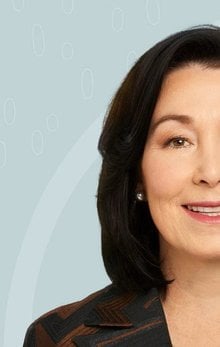
Safra Catz
Former Oracle CEO
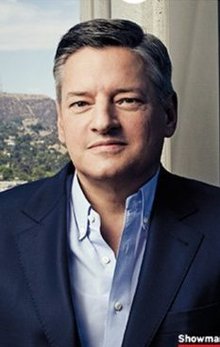
Ted Sarandos
Co-CEO
- Spotify and Netflix: Moving Away From 'Work Family' CultureOrganisation & Culture
- Disney to Reduce Stock Based Compensation for Tech EmployeesEmployee Experience
- Netflix Chairman Exits After Building Culture LegacyOrganisation & Culture
- Inside DENSO and Oracle's Strategic PartnershipOperations