
Inside Hyundai's People-First Strategy for Future Mobility
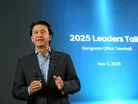
At Hyundai Motor Company’s 2025 Leaders Talk, President and CEO José Muñoz outlined a strategic vision for 2026 and beyond, placing people at the core of Hyundai's future.
Speaking from Seoul, José reflected on a transformative year, attributing Hyundai’s progress to the resilience and adaptability of its workforce.
His address emphasised a leadership philosophy rooted in shared purpose and open communication, signalling a continued focus on a people-first culture to navigate the rapidly changing automotive landscape.
Under José's direction, Hyundai has sharpened its focus on agility, transparency and collaboration. He stressed that these values are crucial for success in an industry undergoing significant transformation.
José said: “As I reflect on my first year as CEO, I'm grateful for the dedication and resilience of our global team. The automotive industry is transforming faster than ever, but I've never been more confident in our ability to navigate what’s ahead. Our success in 2025 proved that adapting is truly part of our DNA.”
He called on employees to lead with confidence and unity to sustain Hyundai’s growth trajectory.
Workforce resilience and strategic alignment
Hyundai's strategy for 2026 is built on three pillars: resilience, adaptability and cross-functional alignment.
José describes these as “key strengths to confidently lead future mobility”.
He credited the talent and determination of Hyundai’s global workforce for enabling Hyundai to manage a complex year and achieve strong results. This highlights the critical role of human capital in executing corporate strategy.
By aligning its global operations and reinforcing a standard of excellence, Hyundai is positioning its workforce to lead with purpose.
“Looking toward 2026 and beyond,” José said, “our strength lies in the quality and safety of our products, the flexibility of our strategy across powertrains and markets, and most importantly, the talent and commitment of our people.”

This statement reinforces the message that employee talent is not just a component of the strategy but a central pillar, enabling both product quality and market flexibility.
Talent development in an era of electrification
Hyundai’s commitment to electrification is a core element of its long-term vision, a change that carries significant implications for talent and skills.
Hyundai has a goal to reach 5.55 million global vehicle sales by 2030, with electrified models planned to represent 60% of this total volume.
This transition requires a workforce equipped with new competencies. Hyundai's luxury brand, Genesis, is leading this evolution, with new hybrid and extended-range models set to debut in 2026.
Partnerships are also shaping Hyundai's path. According to the company, its collaboration with Amazon has resulted in a 41% increase in dealer engagement, while projects with Waymo and GM are advancing vehicle co-development.
These collaborations could show a strategic move to leverage external expertise while simultaneously creating development opportunities for internal teams. José said that these partnerships “position us to lead the future of mobility".
Investing in global HR and cross-functional growth
To compete in a changing global market, Hyundai is focusing on more than just technology; it is investing deeply in its people.
Yeongho Lee, Executive Vice President and Head of Global Operations, says: “We are responding to new competitors with differentiated service experiences, strategic financial partnerships and a strengthened eco-friendly powertrain portfolio.”
This response is dependent on a skilled and adaptable workforce.
Hae In Kim, Executive Vice President and Head of HR, provided details on Hyundai's approach to human capital.
Hae In explains: “In the age of AI, deep and broad expertise is essential. We’re investing in global HRD frameworks like H-SENSE and career solution maps to help employees expand their capabilities.”
This investment in structured development frameworks indicates a clear strategy to prepare employees for future challenges.
Hae In added: “At Hyundai, growth through work – particularly on global and cross-functional projects – offers a distinctive opportunity, as Hyundai’s success is intrinsically linked to the growth of its people.”
José concluded the event by linking the strategy to a wider mission, stating: “Our Executive Chair’s ‘Progress for Humanity’ vision is a commitment to make mobility safer, more sustainable and more accessible for everyone. That starts with how we treat each other, how we serve our customers and how we show up in our communities every day."
This people-centric vision frames Hyundai's journey not just as a pursuit of technological advancement, but as a commitment to fostering a culture of purpose and confidence.
Company portals

Executives
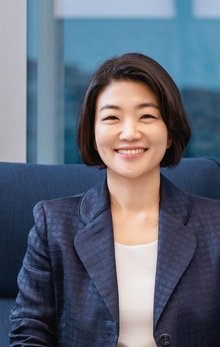
Hae In Kim
Executive Vice President and Head of HR
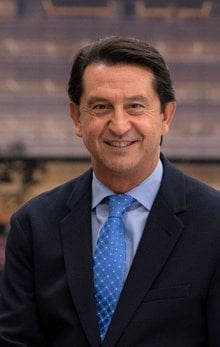
José Muñoz
CEO
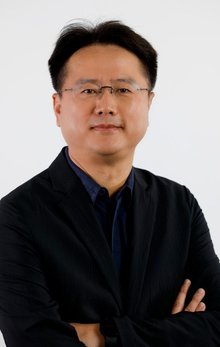
Yeongho Lee
Executive Vice President and Head of Global Operations