
CEO Turnover On The Rise Even Among Top-Performing Companies

Even among executives who are delivering strong results for their companies, CEO turnover is rising along with hiring from outside the firm.
In the S&P 500, CEO successions at firms in the top three performance quartiles, ranked by total shareholder return, jumped from 7% in 2024 to 12% in 2025, according to The Conference Board.
This narrowed the gap with low performers, with lower-performing companies in the bottom quartile seeing elevated turnover in 2025, though slightly lower than 2024.
Ariane Marchis-Mouren, co-author of the report and Senior Researcher at The Conference Board, said: "The rise in departures, even among strong performing companies, reflected today's higher CEO turnover. Many leadership changes in 2025 reflected strategic realignment and long-term succession planning rather than immediate performance triggers."
This trend signals a critical shift in how organisations approach talent pipeline development and succession planning at the highest levels.
The changing turnover rates align with research by Boston Consulting Group (BCG) published in October, showing that the average tenure for outgoing CEOs in the first half of 2025 was 6.8 years – down from 7.7 years in the same period of 2024.
Succession planning accelerates
In 2025, CEO succession announcements increased significantly among S&P 500 companies, increasing the projected annual rate to 13% as of October. This is 3% higher than what was recorded in 2024. However, among Russell 3000 companies, CEO succession announcements remain at 11%.
Brian Campbell, Leader of The Conference Board Governance and Sustainability Centre, said: "The rise in CEO transitions among large companies signals boards' readiness to act with greater confidence - advancing planned successions and then re-establishing a more measured cadence later in the year."
For HR leaders, this acceleration could mean increased pressure to maintain robust leadership development programmes and ensure executive pipelines remain well-stocked with qualified internal candidates.

External hiring trends rising
The report also highlights that it's becoming more common for external hires to become CEOs, with 33% of S&P 500 leader appointments being external, pushing internal promotion rates below 70% for the first time in eight years.
This shift poses particular challenges for HR leadership teams responsible for talent retention and development. When internal candidates are repeatedly passed over for external appointments, it could impact employee engagement and retention among high-potential executives.
Umesh Chandra Tiwari, Executive Director of ESGAUGE, a data mining and analytics firm, said: "The growing share of external hires points to a shift in how boards think about leadership succession.
"They're increasingly prioritising strategic renewal and the infusion of new perspectives, seeking leaders who can navigate disruption, accelerate transformation and respond to evolving stakeholder expectations."
HR-CEO partnership critical
The BCG report highlights that CEO tenures are shortening due to intensifying external pressures and rising internal expectations. The market environment has become "increasingly unforgiving", shaped by geopolitical uncertainty, shifting trade dynamics and rapid technology disruption, particularly from AI.
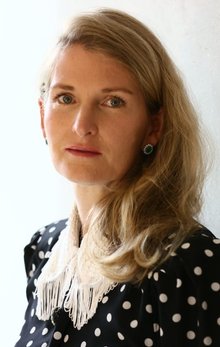
Judith Wallenstein, BCG Managing Director and Senior Partner who leads the consulting firm's CEO Advisory, said: "CEOs today feel enormous pressure. They have dramatically less time to show real, tangible value creation. In an era of shorter tenures, a strong partnership between the CEO and both their board and HR leadership increases the probability that the company will succeed."
Chuck Gray, co-Leader of the US CEO and Board Practice at Egon Zehnder, said in The Conference Board report: "In 2025, boards appeared to take a more proactive stance – executing transitions deferred during recent volatility, initiating leadership changes to adjust strategy, and reshaping executive teams to address evolving market and stakeholder expectations."
Understanding these dynamics could be essential for developing workforce strategies that support leadership transitions whilst maintaining organisational stability during periods of executive change.



Executives
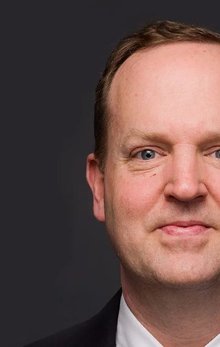
Brian Campbell
Leader of the Conference Board Governance and Sustainability Centre
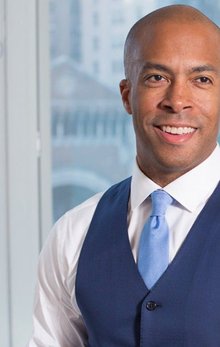
Chuck Gray
Co-Leader of the US CEO and Board Practice
Judith K. Wallenstein
Global Head of BCG's CEO Advisory Practice
- Why Accor's New Chief People Officer Will Focus on TalentHR Strategy
- Hasbro Turns Talent Acquisition into a Strategic Board GameTalent Acquisition
- KPMG: Key CEO Priorities for Strategic HR LeadershipOrganisation & Culture
- The C-Suite Mandate: Building a Unified Human-AI WorkforceLearning & Development