JPMorgan to Hire More AI Staff and Fewer Bankers

Jamie Dimon, CEO of JPMorgan Chase, has set out the clearest picture yet of how AI will reshape the workforce of the largest bank in the US.
“There will be all different types of jobs, and I think we will be hiring more AI people and fewer bankers in certain categories, and it will make them more productive,” Jamie said in a Bloomberg Television interview at the bank’s China Summit in Shanghai, aired on 21 May.
The bank employs more than 300,000 people and uses AI across risk, marketing, and coding. Jamie called that “the tip of the iceberg”.
He was equally direct about the destination AI is headed: “I think it will reduce our jobs down the road.”
Attrition as the new layoff
The JPMorgan difference is how people leave. Nobody gets a redundancy letter. Staff exit the way they always have, and the bank simply stops refilling the desks they leave behind.
Its annual attrition rate runs at roughly 10%, between 25,000 and 30,000 departures a year, Bloomberg reports. That churn gives the bank room to retrain staff, redeploy workers into growing functions and offer early retirement where roles disappear.
In effect, natural turnover becomes the restructuring programme. Roles touched by AI are not cut; instead, they are simply not refilled in their old form.
Banks put hard numbers on ‘lower-value’ work
JPMorgan is not the only global bank converting AI ambition into workforce arithmetic. Standard Chartered plans to remove about 7,800 back-office roles by 2030, more than 15% of its corporate-functions workforce.
Bill Winters, CEO of Standard Chartered, drew criticism reported by Fortune after describing the strategy as replacing “lower-value human capital” with investment capital.
“It’s not cost cutting,” Bill said at the bank’s investor day in Hong Kong, adding that role reductions “in favour of the machines” will accelerate as AI adoption deepens.
The functions most exposed, compliance, risk and HR shared services, sit squarely inside the corporate centre. The bank’s support-services workforce stood near 51,000 in mid-2025, underscoring the scale of the overhaul.
Standard Chartered says some affected employees will be redeployed into higher-value roles.
The contrarian case for hiring anyway
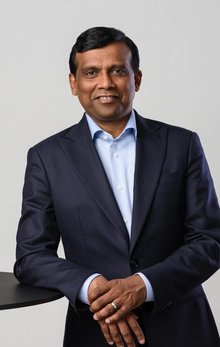
Not every leader is shrinking the front door. Cognizant CEO Ravi Kumar S is hiring more than 20,000 graduates this year and dismisses warnings of an AI job collapse as “fearmongering”, he told Fortune.
Ravi argues the winners will measure AI by outcomes rather than usage, a view that cuts against the hiring freezes spreading through the sector.
There is data behind his scepticism. Gartner research published in May found companies that cut workforces around AI showed returns nearly identical to those that did not.
The split gives CHROs two live models to weigh. One reshapes the workforce gradually through attrition and redeployment. The other keeps hiring young talent and bets AI will make them productive faster.
Both approaches share one assumption: the era of treating AI as a side project is finished. Jamie expects the technology to touch every job at the bank, and his peers are budgeting accordingly.
The question for people leaders is no longer whether AI changes the workforce mix. It is whether their organisation manages that change deliberately, through attrition, redeployment and reskilling, or has it forced upon them.
Company portals




Executives
Bill Winters
Group Chief Executive
Jamie Dimon
Chairman of the Board
Ravi Kumar S
Chief Executive Officer