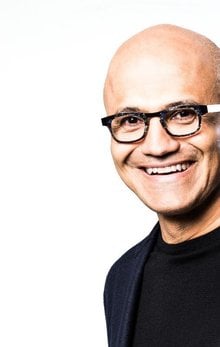
How Satya Nadella is Transforming Microsoft’s Culture
When Satya Nadella became CEO of Microsoft in 2014, the company was well known for its competitive culture.
According to the company, previous measures of success were centred on employees “showcasing their own individual achievements and how their accomplishments exceeded their peers”.
Satya, who first joined Microsoft in 1992, made transforming this culture a priority by reinventing the company's leadership model and encouraging an environment where employees could learn from one another.
Many of these changes were brought about through the work of Kathleen Hogan, who was appointed Chief People Officer of Microsoft in 2015, shortly after Satya was made CEO, and Amy Coleman, who became Chief People Officer after Kathleen transitioned into her current role as Executive Vice President of Strategy and Transformation in March 2025.
Discussing her approach to people strategy on LinkedIn, Amy says she is "dedicated to making Microsoft an exceptional workplace for employees and fostering a culture that attracts and inspires the world’s most passionate talent.”
Rebuilding a leadership model
Microsoft has developed a new leadership framework called ‘Model, Coach, Care’, centred on growth under Satya’s leadership.
Focused on three pillars – setting an example (modelling), fostering growth (coaching) and showing empathy (caring) – the approach has been designed to empower employees, foster innovation and deliver business success.
This framework was developed over two years through employee feedback, and by using focus groups and surveys.
In a 2025 conversation on digital growth with Microsoft, Satya said of this culture shift: “Achieving our mission requires us to evolve our culture. It all starts with a growth mindset – a passion to learn and bring our best every day to make a bigger difference in the world.”

Celebrating employee impact
As part of these changes to the company’s leadership strategy, the company has also made changes to its approach to performance management and evaluation.
Under its previous system, managers used ‘Stack Ranking’, where managers were asked to rank employees against each another. With this system, managers had to categorise a fixed percentage of their team as underperformers.
The company’s new approach, called ‘Talent Talks’ instead focuses on an employee's overall impact and contribution to their team, rather than individual metrics.
Senior leaders will meet with the CHRO and Satya for these talks to discuss employee growth and high potential within their teams, exploring opportunities for internal mobility and leadership development.
When this new framework was brought in in 2018, Kathleen said: “We needed some way for our leaders to be accountable to building organisational capability, to ensure that our processes were rigorous and our CEO could get an end-to-end view of the depth of our talent,”
This “forward-looking” approach, she explained, makes it easier for Microsoft to “avoid being blindsided and also helps cultivate talent in a way that encourages career growth.”
Creating a space for employees to ‘learn it all’
For Satya, one of the most important things to build when encouraging growth in this way is a culture of learning.
This means encouraging employees to think differently, by giving them space to fail – which he describes as a ‘learn-it-all’ approach.
On the Hello Monday podcast, Satya said of this model: “If you take two kids at school, one of them has more innate capability but is a know-it-all. The other person has less innate capability but is a learn-it-all. The learn-it-all does better than the know-it-all”,
A culture of learning, Satya says, is even more important as the company furthers its AI capabilities. In a conversation with the MD Meets podcast in 2025, he explained: “Even today as I sit around this entire weekend, I spent all the time trying to get myself to understand how new compares are building products which are different than say how we built our products.”
Adding that Microsoft is built around trust and empowerment reinforced with a culture of learning, he said: “I always go back to a sense of purpose and mission and culture, reinterpreted for what is a new world of technological shift and business model shift.”
Company portals

Executives
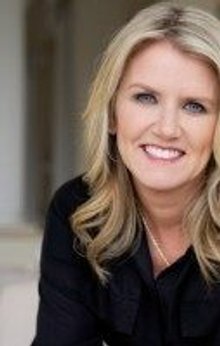
Amy Coleman
Executive Vice President, Chief People Officer
Satya Nadella
Chairman and CEO