
Jason Desentz: The Power of Authenticity

Jason Desentz: The Power of Authenticity
It’s only 7.30am in the US. But Jason Desentz is, in his own words, “already pumped up for the day ahead”. Spend any amount of time speaking with the seasoned HR exec, and it’s hard to not feel the same. He is a leader passionate about serving others, using his own hard-earned early experiences to provide opportunity and a culture that inspires risk takers, and nurturing the next generation of leaders.
They’re a set of rules that have underpinned a career spanning more than 25 years of leadership in industries such as automotive, manufacturing, healthcare and financial services, where Jason has driven HR innovations that enhance organisational performance and position the role as a strategic enabler.
Over this time he has led global integrations and scalable HR frameworks, aligned talent, operations and strategy in complex environments, and used data-driven insights to build high-performance cultures and lead organisational change.
Not bad, considering it may never have worked out like that. “I wanted to be a police officer… well, a detective. Like you see on TV,” says Jason, of the formative years and early upbringing that both shaped his approach to human capital and taught valuable lessons he passes on in the workplace today.
Jason began life in a humble environment, growing up in a low income family – a background he avoided talking about until recently. “Over the years, I’ve just learned to not care,” he says, of the vulnerability and authenticity that are a key part of his leadership style.
“If you use it properly, vulnerability is a real gift in any environment. I teach it and advocate for it with my teams and in my work; the ability to put yourself out there, be unafraid to take the initiative and grasp something outside of your space is one of the most important lessons.”
Jason leads people based on his lived experience. He is passionate about hard work and a relentless drive, continuous learning and a ‘no one’s coming to save you’ approach to grasping opportunities with vigour and ambition
“I’ve always done all I can to educate myself, and that really helps me to influence those I work with and for – I always try to serve before I lead,” he says. “I’ve been in the shoes of people early in their career and I know what it’s like, and that having that empathy helps me support our teams. For me, HR leadership is about how I can impact others rather than about my own career or ambitions.
“More than anything else, growing up taught me about drive: not to always rely on others for success and to go get it,” he adds. “It’s a big lesson I try to pass on because, too often today, people are looking for the company to move them rather than moving themselves.
“My experiences influence me all the time. I always think of what kind of impact I’m having based on two philosophies: anything that HR does should have little to no disruption to the business, and it should absolutely increase employee experience and create an environment that people want to come work and succeed in.”
Courage for taking risks
Jason “fell into HR” after his brief flirtation with law enforcement ended courtesy of his wife. “She told me ‘you’re a little clumsy, I don’t think you and a gun is a smart idea. You may want to try something else’,” he laughs. “And, in hindsight, she was right.”
After early work at the Ford Motor Company providing technical training programmes to workers, Jason progressed through other training roles at Chrysler before becoming immersed in the world of HR courtesy of several key mentors who recognised and nurtured his abilities.
It was at this point his innate drive and self-determination took over. “I remember,” he says, “there was a long row of offices at Chrysler’s HQ in Detroit and I just went for it – literally knocked on the doors of each of the directors across the HR departments, introduced myself and told them I wanted to learn as much as I could about what they did.
“I ended up having dedicated time with every single director over the course of about six months and, after that, every time there was a job opening, nine out of 10 times I got a call and got the job,” he recalls.
““Vulnerability is a real gift in any environment” ”
Today, Jason’s HR philosophy is still powered by actively taking risks and accepting that failure builds strength. He also expects the same of the HR teams he builds and hires. “I call them mustangs,” he says of the people that make a successful unit. “They take the initiative, have ideas and embrace the freedom to run with it. I don’t want a camel that I have to push and lead.
“As a leader you get so much out of that type of person, rather than building a team of individuals that don’t buy into your philosophy,” he explains. “It creates a working environment where there is engagement, participation and innovative ideas.”
To create an environment where mustangs flourish, Jason advocates for an organisational culture centred around trust, vulnerability and communication. At Toshiba, his team works in an open forum, a space where ideas can be shared honestly and without fear of repercussion.
“I’ve been pushed down plenty of times when I was younger,” he says, “and I always said that once I got to the top I’d never do the same. It’s a funny thing being in HR, people are afraid to talk to us at a certain level, but my door is always open.
“As leaders, we have to talk to people, to get around the company, walk the plants and meet employees,” says Jason. “It helps us to coach and mentor, but also ensure the environment is right and ensure our companies provide space, autonomy and opportunity. As soon as we lose that vulnerability we lose ideas, thought or creativity.”
Lessons in leadership
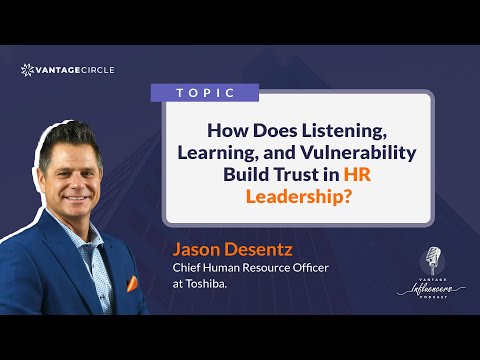
With the workplace evolving rapidly, Jason believes that HR must continuously adapt to stay ahead of the curve. Key to this ongoing evolution, he says, is how leaders build genuine trust and leverage their skills to influence both people and decision-making.
Underpinning this is a concept he calls the ‘leadership influence zone’, an environment where leaders focus on the fundamentals and build strong foundations, use data and intelligence to hone strategy and be “authentically vulnerable”.
As part of this, Jason advocates for a ‘Listen, Learn, Lead’ philosophy. Influencing strategy can only happen with a firm understanding of the current state of the organisation, assessed by focused and active listening. Leaders should be endlessly curious, shaping their decision-making by learning not just the ‘how’ or ‘when’, but the ‘why’. Lastly, leadership should be built on questions not commands and creating a shared sense of purpose around change or success.
““Growing up taught me about drive: not to always rely on others for success and to go get it” ”
“It’s challenging being a CHRO, and you have to find a way to achieve balance across the creative and the process or implementation,” Jason says. “Too often, leaders favour one side over the other but it means you end up not well rounded enough and, in all likelihood, not able to rise to the top. I work hard to create an environment where my teams bounce across both approaches – a big part of our role is bringing people together.”
While experienced in building high performance culture, Jason is well aware that transformation – evolution, even – takes time. He is a proponent of an HR maturity model and process that begins with a basic, compliance-driven function that lacks HR strategy and processes.
The early shift from this to an improving then established HR function is centred around process improvement, talent and performance management, evolving and enhancing the working environment, then improving strategic functions to ensure HR is working more closely with the business. Work through this evolution, says Jason, and you mould a strategically optimised HR team that drives business, provides continuous workforce innovation and organisational performance alignment.
Moving HR forward
Jason joined Toshiba, renowned for its technology leadership and culture of innovation and invention, in the summer of 2024. He oversees all aspects of the human capital chain across facilities in the Americas, shaping and executing HR strategies that align with Toshiba’s mission to support modern life and society through technological advances.
Joining during a time of transformation, Jason has helped drive change, honing and evolving the company’s human capital processes and strategy. Work along the way has centred on strengthening the company’s already strong foundations around people and talent, including programmes around training and skilling and a learning initiative called Toshiba University.
““HR leadership is about how I can impact others rather than about my own career or ambitions” ”
“Any change is about supporting the business when it comes to HR’s role,” he says. “For example, I often think of myself as a business person who ‘does’ HR rather than an HR person who works in business. Change is always tough, wherever you work, but it’s about fostering a mindset where everyone is prepared to get into it and take risks. The beauty of change is that every generation brings something new to the table.”
AI is the newest toy at the table. Jason takes a practical approach to the technology, loving its scope and possibilities but knowing there must be a return on investment for any application.
“My first use case is ‘how is the business going to benefit from whatever I’m implementing?’,” he says. “Stick to the business principals but know how you want to innovate from an HR perspective and you’re on the right track. There are two main areas I see great ROI at the moment: recruitment and AI training or coaching. There’s so much value in what I’ve seen there so far.”
With the pace of change not slowing in HR teams across industries, that value may be realised quickly. For Jason and his team, to maximise the benefit, the key is to keep evolving. “At the end of the day, all this isn’t really about me,” he says. “It’s about teams I can build and what the larger culture we influence can do. We're not going to survive driving the car with the rear view mirror. We're going to look through the front windshield and we're only going to keep moving forward.”
Company portals

Executives
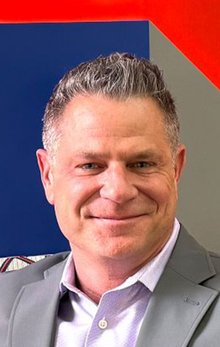
Jason Desentz
Chief Human Resource Officer