
This Week's Top Five HR Stories

Why is Grant Thornton Increasing its Graduate Recruitment?
Professional services firm Grant Thornton is reportedly planning on bringing 340 graduates and school leavers in the UK into the firm this year – a 30% increase from its 2025 recruitment efforts, and its highest number in three years.
Abigail Fisher, Chief People Officer of Grant Thornton, told Financial News that this increase in numbers is because the company is remaining “invested in trainees.”
The recruitment drive follows a significant 2025 investment in the company from Cinven, which made Grant Thornton UK the largest UK professional services firm to take external equity investment.
It has already appointed more than 100 new senior leadership positions, which included 20 new directors, a new Chief Financial Officer and Abigail as the company’s first ever Chief People Officer.
ADP: Workforce Anxiety Rises as 22% of Employees Feel Secure
Employees across the globe are feeling insecure about their job security, as only 22% of workers strongly agreed that their job is safe from elimination, according to new research from ADP.
In the company’s latest report, Today at Work 2026, Issue 1, ADP found that lower-paid repetitive task workers and employees at the bottom of the management hierarchy were found to have the highest levels of anxiety around job security.
Employees who believed that they had the skills needed to advance in their careers were five times more likely to feel secure in their role, and those who felt their employer invested in their skills development were 5.3 times more likely to feel secure.
“Where we are today is that AI is entering a workforce that is anxious,” Jay Caldwell, ADP Chief Talent Officer, said exclusively to HR Chief Magazine. “And the importance for HR professionals right now is not as much about the technology.
“It's more around how we lead through technology, how we bring our own workforce along on the transformation that comes with that. So, skill development is important.”
Jay continues to state that HR leaders also need to "think like marketers", in terms of promoting loudly and asking: ‘How are we investing in skills?’
“Very often that kind of falls behind the wayside,” he adds. “Historically, you’ll offer skill development programs, and adoptions have been low. So HR has to think very carefully about how to make it valuable, clear, and create the space in the organisation for people to spend the time to invest in themselves.”
Additionally, Jay encourages “tried and true change leadership,” as he explains that leadership roles within every organisation are “only getting harder in this transformation”.
Businesses must therefore invest in the skills of leaders to help them “lead change,” such as discussing fear with their team openly.
He highlights: “I think naturally, leaders struggle with these types of things, because they feel risky, but this is the moment to lean into that or help their team understand, ‘here's how your job might be reshaped or here’s how it will shift and how we’ll support you in the transition.’ And being very clear on the why.”
Inside Microsoft's HR Restructure
Microsoft is revamping its HR team.
In a memo to employees Chief People Officer Amy Coleman shared that, as organisational structures evolve, the company’s HR function needs to evolve alongside it to scale for adaptability and help to set a new pace for Microsoft.
She wrote: “To accelerate the business, we have to simultaneously build experiences that reflect how employees and leaders actually work today and that anticipate their needs tomorrow.”
The changes include a series of promotions and the departure of Lindsay-Rae McIntyre, Chief Diversity Officer of Microsoft, who is taking on a Chief People Officer role at another company.
How is McKinsey Upskilling its Leadership Team?
Disruption is becoming more prevalent across businesses.
According to a survey from AlixPartners, 40% of CEOs feel more anxious in their roles, and 72% say it is becoming more challenging to decide what disruption their company should focus on.
Key areas of disruption include global disruption – such as supply chain pressures and geopolitical uncertainties – and widening AI adoption.
Perhaps this is why McKinsey is increasing its leadership training for senior executives – with participation doubling in just under two years.
The company invests heavily in learning and development opportunities, and has even put together training inspired by Navy SEALs.
KnitWell Strengthens Leadership with Sarah Evans as CHRO
Sarah Evans has been named as Knitwell’s new CHRO, while also joining the executive committee to lead HR operations across the company’s portfolio of eight American apparel brands: Ann Taylor, Chico's, Haven Well Within, Lane Bryant, LOFT, Soma, Talbots, and White House Black Market.
Through taking the role, Sarah will take charge of the full HR portfolio for KnitWell and its brands, while leading HR business partnership, talent strategy and acquisition, total rewards, and HR information systems.
By joining KnitWell, Sarah will bring extensive HR experience, after years of working in large, complex, multi-channel businesses across both public and private company environments.
Sarah will also help guide KnitWell’s corporate communications, belonging, and philanthropy efforts.
The KnitWell Group, a holding company established by Sycamore Partners, comprises several prominent fashion brands and generates approximately $6 billion in annual sales.





Executives

Abigail Fisher
Chief People Officer
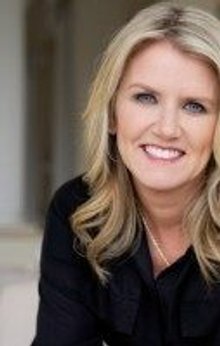
Amy Coleman
Executive Vice President, Chief People Officer
Heather Stefanski
Partner, Chief Learning and Development Officer

Jay Caldwell
Chief Talent Officer

Sarah Evans
CHRO