
Valor Hospitality: HR Must Lead Teams With Authenticity

Learning at work has changed dramatically, yet many organisations are still clinging to approaches that no longer reflect how people actually learn. Employees now expect flexibility, relevance and autonomy, not generic programmes delivered on a fixed schedule.
In hospitality especially, where every interaction shapes the guest experience, development has to feel personal, practical and continuous. That’s why Valor Hospitality has moved away from one‑size‑fits‑all training and towards a culture where learning is woven into daily work, supported by technology, strengthened by leadership and shaped around each individual’s needs, ambitions and real-time responsibilities.
Here, People and Culture Director Moira Laird tells HR Chief more about how people-focused training, learning and leadership create a culture that helps deliver exceptional customer experiences.
Considering traditional training approaches, what feels most out of step with how people actually learn today?
Many businesses still rely on a one-size-fits-all sheep-dip approach to learning and development. This wouldn’t be acceptable in any other form of business operations, so why is it when it comes to learning? At Valor Hospitality, we’ve adapted our approach, ensuring that individuals have a personalised e-learning journey for their job role and every Hotelitarian has access to a variety of other tools.
Some have digital training, or face-to-face, while others are offered qualifications, or in-house development to ensure they receive the support they truly need throughout their career, both as an individual and in their job role. The two go hand in glove for me.
When can you tell that an organisation is relying too heavily on formal training?
In the hospitality industry, it becomes clear when businesses don’t have a learning culture. The gap between ‘training’ and ‘culture’ is often the difference between average service and a genuinely memorable guest experience.
We don’t want our team members to feel constrained; we want them to feel confident and empowered to make the right decisions for the benefit of our guests and deliver them in their own authentic way.
This confidence is gained through experience and continuous learning, and ensuring leaders are inspiring and embracing this approach too.
There are certainly benefits to formalised training, and our Hotelitarians have access to a wide range of training opportunities. But, people must also be encouraged to learn and innovate through their peers and their own experiences too.
Which learning approaches have you moved away from?
Learning has to reflect real-life experience – to the point, concise and relevant to the individual. It became clear that a more time-efficient approach to training was essential to team engagement, so several individuals undertook specialist training in preparation for delivering engaging digital content. Allowing team members to access training via a device gives them more flexibility to balance development and the delivery of a high-quality guest experience.
We have also said goodbye to annual performance reviews and introduced regular ‘Valor check-ins’. Waiting for a learning and development conversation once a year can leave challenges unnoticed and development stalled. With a more structured ongoing feedback and coaching process, our team can access support when they want or need it.
What organisational barriers get in the way of building a learning culture?
At Valor, learning starts from the top. We ensure that we are regularly developing and challenging ourselves, to ensure our appreciation, knowledge and understanding are relevant to the current world of work. We commit to providing all senior team members opportunities to develop and ensure they feel comfortable and adequately supported to lead in a learning culture.
Without buy-in and engagement from management, it’s unlikely that learning cultures will develop.
Creating a culture within a business takes work and appreciation that every member of the team who walks through the door is part of curating our culture. It’s not ‘delivered’ – the entire team needs to nurture it. Businesses can’t afford to let it slip and must be prepared to put in extra effort in an authentic way when new team members join.
Culture can never be seen or expected to be the responsibility of a people function, and it’s in danger if it’s perceived to be the enthusiasm of one person. Therefore, senior leaders need to be provided with the headspace to maintain and grow the learning culture. This is something we regularly review on an individual basis.
How do you give people autonomy in their learning while still keeping development aligned with business priorities?
This is where line-manager check-ins are key. We want people to feel empowered to progress their own development, but this shouldn’t be done alone. Regular individual check-ins between team members and their managers ensure that training and development aren’t falling by the wayside.
The sessions can be used to refresh an existing development plan to make sure it still fits with the priorities of the business and the individual still feels motivated to progress.
What new skills or mindsets do you think L&D teams need to stay relevant and effective?
As with any business operation, L&D professionals need to keep on top of evolving industry trends, requirements, and opportunities. This requires a passion for learning and an ambition to develop both their own and others' skills.
Staying on top of technological changes has been something the team have been great at in recent years. They have encouraged me to move towards a more digital-led, flexible learning and development programme, which can easily be updated to include the latest ideas.

Businesses across sectors are also placing greater emphasis on the ROI of learning and development. The L&D teams that can clearly evidence the benefits of their processes at a time when most organisations are facing financial strain will be the most successful.
Empathy is another key skill for L&D team members. Those with greater empathy have more understanding of people’s individual needs and preferences for learning, which increases the chances of L&D being effective.
What does the future of learning look like in your organisation?
We’ll never go back to the level of face-to-face learning we once had. I was proven wrong by my L&D team to move to a part-digital onboarding solution for greater take-up and engagement.
I’m glad I took my team’s advice, as they were right. The future will continue to have a variety of options, more user-driven, less prescribed and a whole lot more learning from others, coaching and mentoring. I will never be quoted again saying, ‘We’re in the hospitality and service industry, we need to develop through in-person modern learning techniques that will work for us all.’
Company portals

Executives
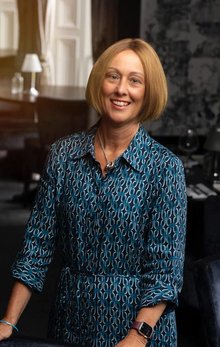
Moira Laird
People & Culture Director