What Does "Always On" Mean for Uber's People Strategy?

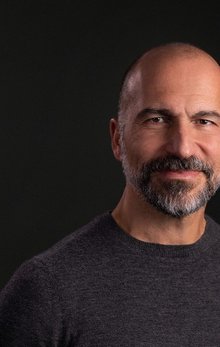
Dara Khosrowshahi, CEO of Uber, has said he expects an unparalleled work ethic from his employees.
In an appearance on the Diary of a CEO podcast, Dara shared that he has an "always on" philosophy when it comes to the company’s people strategy, saying that he expects employees to work hard.
He says: “Part of working hard is sending emails to the team on a Saturday. And if I don’t get a response on Saturday, sending them an email on Sunday with a question mark. 'What’s going on?'”
Since becoming CEO of Uber in 2017, Dara has developed a culture of high performance within the company, saying on the podcast: “To me, the most important skill in life is a skill of working hard”.
Cultural transformation at Uber
Uber revamped its company culture in 2017 following the departure of its previous CEO – including the elevation of its HR function from a recruiting tool to a key growth driver of the company in order to improve employee experience.
This included the hiring of its first ever Chief Human Resources Officer Liane Hornsey, who was replaced by Nikki Krishnamurthy.
Upon her appointment, Nikki said she was “excited to help build a company where the highest-performing and most diverse talent comes to solve some of the world’s toughest problems.”
An expectation for high performance
The company has also adopted an approach that values "ideas over hierarchy", which is designed to encourage innovation from all levels of the business.
This, combined with the expectation that employees "act like owners" of the business, is designed to facilitate growth and encourage high performance from all employees.

Dara says that as part of this culture, the company is “going to be really demanding”.
He says: “If you’re not performing, we’re going to let you know. And if you don’t fix it, we’re going to push you out.”
Before Dara’s CEO appointment, the company had lost US$4.5bn, according to its financial results. In Q4 2025, the company saw a 130% year on year increase in net income from its operations.
Dara says: “While you will have worked hard, you’re going to have a great time. But don’t come here if you want to coast.”
Can work-life balance drive productivity?
While Uber’s CEO expects employees to be consistently available, other companies have taken a different approach.
At Kickstarter, employees are fully remote and work four days a week – or just 32 hours.
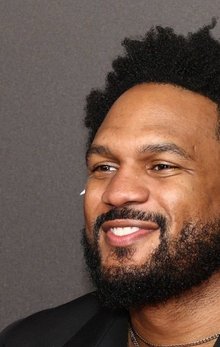
According to CEO Everette Taylor, however, this does not impede productivity or business performance.
In an interview with the New York Times, Everette said that he has “a very high bar for work and excellence” in the company.
Kickstarter has found that a shortened schedule encourages teams to eliminate non-essential tasks and improve their focus on high priority outcomes.
Staff are likely to work harder with Everette saying: “The level of intensity, intention and velocity that you have to bring in everything that you do is extreme.”
The company reports that adopting this model allows it to reach 90% of its objectives – compared to just 70% before the implementation of the four day working week.
Company portals


Executives
Dara Khosrowshahi
CEO
Everette Taylor
Chief Executive Officer

Nikki Krishnamurthy
Chief People Officer