
Why is Sweden a Leader of Gender Equality in the Workplace?

Nordic countries are continuing to lead in gender equality in the workplace, according to the Economist’s annual glass ceiling index.
The research, which ranks 29 members of the Organisation for Economic Co-operation and Development (OECD) across 10 indicators, finds that Sweden has high female labour-force participation rates and strong parental rights coverage, creating the best environment for women in the workplace.
Other Nordic countries follow closely behind, while countries such as Germany and the US find themselves towards the bottom of the leaderboard.
Mariana Mota, Manager of Policy and Research, Economic Development and Culture for the City of Toronto, commented on the Index on LinkedIn following Canada’s ranking at 13th place.
She said: “No ‘one’ individual indicator can illustrate how good things are for women in the workplace and – no – work is not done.
“Achieving equal political representation does not mean closing the wage gap, hiring more women does not mean they are in leadership positions, having them in leadership positions does not mean they have fair work conditions.”
The 10 indicators of women in the workforce
The Index covers 10 indicators, which the Economist says is designed to “reflect each stage of a women’s career”.
This includes the number of women who graduate from tertiary education, the level of female-labour force participation and the percentage of women in leadership positions.
It finds that two-thirds of women in OECD countries work on average, compared to four-fifths of men.
Iceland, Sweden and the Netherlands are beating this average, with female participation in the workplace above 82%, while Turkey sits at the bottom of this indicator with just 58% of women in the workforce.

Developing leadership opportunities
The Economist reports that women hold a third of managerial positions on average across the OECD, with the research suggesting that women tend to be less likely to climb the corporate ladder than men.
This can be partially attributed to high childcare costs and a lack of employer parental support.
In America, women hold just 34% of seats on company boards – compared to France’s 46% – and the country is the only one on the list to offer no paid parental leave on a federal level, as well as having the highest childcare costs in the OECD.
Improving female representation in the workforce
Many companies are striving to improve the gender balance in their workforce through targeted programmes for women – particularly in fields that have been historically male dominated.
Worldwide, women make up between 5% and 6% of all airline pilots, a number American Airlines is looking to increase through its Women’s Leadership programme.
Designed to develop and support women in the aviation industry – both in leadership and pilot roles – the company is providing learning and mentoring opportunities to help increase the representation of women in this space.
The company has also partnered with Women in Aviation International as of February 2026, to be its official airline for the Women in Aviation International Conference.
Cole Brown, Chief People Officer of American Airlines, commented on the partnership, saying: “At American, we believe building a culture where women and girls are represented, empowered and able to thrive as leaders is vital to the future of our industry.
“As we celebrate our centennial year, we’re proud to partner with WAI – and welcome its supporters to our hometown of Dallas-Fort Worth – to honor our legacy of innovation and reinforce our commitment to developing the future of the aviation workforce.”
Company portals


Executives
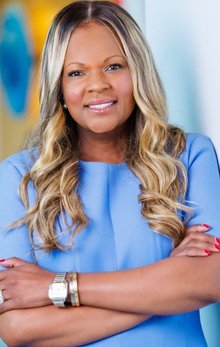
Cole Brown
Chief People Officer
- PwC UK Named a Top 50 Employer for Gender EqualityEmployee Experience
- LinkedIn: Why Internal Mobility for Women is SlowingOrganisation & Culture
- McKinsey: AI is Not Showing Returns for 80% of BusinessesEmployee Experience
- Is Culture Behind 100 Years of Success at American Airlines?Employee Experience