
Apple’s AI Talent Exodus Shadows Tim Cook’s Last WWDC
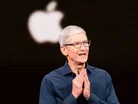
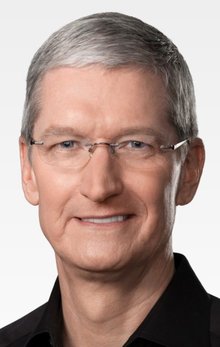
Tim Cook takes the stage today for his final Worldwide Developers Conference as Apple CEO, with the company trying to prove it can compete in AI. The pressure follows a run of senior departures that recruiters describe as a “crisis of confidence” in the company’s AI future, the Financial Times reports.
The keynote, the final one before Tim hands the company to Hardware Chief John Ternus in September, is expected to showcase a reimagined Siri and an expanded Apple Intelligence platform. Yet, the more revealing story is not the software roadmap but the org chart behind it.
"They have a bias to doing everything in-house," Jack Gold, Principal Analyst at J. Gold Associates, told CNBC ahead of the event, naming the instinct that left Apple short of the AI talent and technology its rivals raced to secure.
Apple employs roughly 164,000 people and is valued near US$3tn. Even at that scale, its AI challenge now narrows to winning back the specialists who matter most to its ambitions

An exodus that hollowed out the AI team
Ruoming Pang, the distinguished engineer who led Apple’s foundation models team, left for Meta in a package deal reported at around US$200m. He did not leave alone.
Apple’s foundation models team has shed roughly 10 members in recent months, with at least a dozen AI specialists departing since January. John Peebles and Nan Du went to OpenAI, while Zhao Meng joined Anthropic.
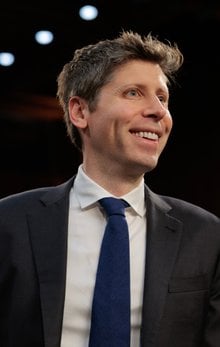
The pay gap is stark. OpenAI CEO Sam Altman has said Meta was offering signing bonuses as high as US$100m to lure AI talent, a figure Apple has shown little appetite to match. Apple is only marginally increasing pay for its foundation models team, well short of its rivals.
For any HR leader, the lesson is uncomfortable. In a specialist market, a competitor with a chequebook can dismantle a critical capability faster than an incumbent can rebuild it.
When build versus buy becomes a talent decision
The exodus is already reshaping how Apple builds. A company famous for doing everything inhouse is now, out of necessity, choosing to buy.
Apple already uses Google’s Gemini to help power some Apple Intelligence features. Bloomberg’s Mark Gurman reports that it is now opening its platform so developers can draw on outside models, a philosophical shift for a business built on tight control.
The reframing is one every CHRO running an AI strategy will recognise. Build versus buy is rarely just a technology choice; it is a verdict on whether the organisation can attract and keep the people needed to build at all.
Gadjo Sevilla, Senior Analyst at Emarketer, calls 2026 a “transition year” for Apple and expects an agentic Siri that could “become as ubiquitous as features like AirDrop and Handoff”. Whether Apple builds that capability or partners for it now depends as much on talent as on engineering.
Tim’s final act and the legacy question
Bloomberg has framed the AI push as Cook’s “final act”, reporting that the chief executive convened a high-level meeting to sharpen the Apple Intelligence roadmap and the Siri overhaul.
Apple is recovering from an enviable position. A US$3tn company with vast cash reserves, a billion-device user base and a CEO personally driving the reset has formidable tools to close the gap.
Cook announced his retirement in April, capping a 15-year tenure that added more than US$4tn to Apple’s market value. He hands John a balance sheet and a brand few rivals can match, plus a pragmatic strategy that brings in outside models where they help.
For HR leaders, the lesson is constructive: a talent setback is recoverable when a strong employer brand is paired with a willingness to partner, reskill and rebuild. Apple has rarely been first to a technology, yet it has often turned fast-following into market leadership.


Executives
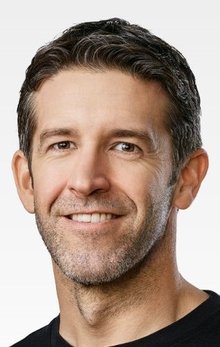
John Ternus
CEO
Sam Altman
Tim Cook
Executive Chairman