GM Korea Ends Strikes With Pay Rise and Job-Security Deal

GM Korea has ended a summer of strikes with a tentative wage deal, and the part that mattered most to its workers was not the pay. It was a promise about which cars its factories will build next.
The agreement, reached on 22 July after 17 rounds of talks, makes the South Korean subsidiary of General Motors the first of five Korean automakers to settle this bargaining season.
GM exports most of what it builds in Korea, and a new US tariff on those cars had left workers worried the plants could be wound down. They wanted a guarantee of future work, and they got one.
Management and the Korea GM chapter of the Korean Metal Workers' Union reached the deal on the ground, as the parent group leans harder on its Korean plants for export volume.
"Korean plants have long been efficient and capable of delivering quality vehicles. The vehicles produced there remain in high demand and contribute positively to our margins."
The centrepiece is a promise
The proposed settlement rests on three planks.
- A base pay rise: Monthly basic salary climbs by 92,000 won (US$63) for each worker.
- A lump-sum bonus: Every employee receives a settlement and performance package worth 15 million won (US$10,300).
- A job-security pledge: GM Korea commits to finalising the allocation of a new vehicle model to its Bupyeong and Changwon plants by the third quarter of 2027.
For the union, pay was never the whole fight. Its members wanted certainty that the Bupyeong and Changwon lines would build the next generation of cars rather than wind down.
"GM Korea still has not announced any plan to produce a new model of future cars like electric vehicles from its two plants," says Ahn Kyu-baek, who heads the Korea GM chapter of the Korean Metal Workers' Union. The dated pledge answers that fear directly.
On money, the union took less than it sought. Its opening demands ran to a 149,600 won (US$100) monthly rise and an annual bonus of 30 million won (US$20,240) per worker, close to double the final terms. In exchange, it won the guarantee that carries most weight in a plant town, that the work will still be there.
A summer of stoppages
The dispute had hardened through July. Unionised workers downed tools for four hours across all shifts on 21 and 22 July, the latest in a run of five partial strikes that began when earlier talks collapsed. Each was partial by design, enough to press management without halting the export lines that now underpin the business.
Members vote on the agreement on 27 and 28 July. Approval would end weeks of industrial action and lift the partial strikes suspended on 23 July while the ballot runs.

The rest of the industry holds out
GM Korea has broken the deadlock early, but the wider industry has not. Hyundai Motor, Kia and Renault Korea remain locked in their own disputes, with unions across the sector weighing strike action.
At Hyundai, 15 rounds of talks have yet to produce a deal, and industry estimates put strike-related losses there at about 15,800 vehicles.
That makes GM Korea's settlement an early marker for the season, pay restraint bought with firmer promises on jobs.
The backdrop explains the union's focus. GM Korea's global sales rose 10.5% to 275,523 units in the first half of 2026, driven by a 12% jump in exports to 270,252 units, most bound for the US. Domestic sales fell more than 35% to 5,271 units over the same period.
The company is targeting 500,000 vehicles this year, up from 462,310 in 2025, and in March pledged US$600m to upgrade its Korean plants for next-generation models.
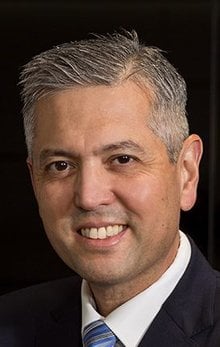
"The export market success of models such as the Chevrolet Trax Crossover means that GM's Korean operations have established themselves as a core global production hub for compact SUVs," says Hector Villarreal, President and CEO of GM Korea. "This investment is a symbolic decision that demonstrates confidence in our Korean operations."
For a workforce whose output is now overwhelmingly for export, a written commitment to build tomorrow's models at home is worth more than a few thousand won a month. GM Korea has bought its labour peace by naming a date.